Top Automated Candidate Screening AI Tools
On this page
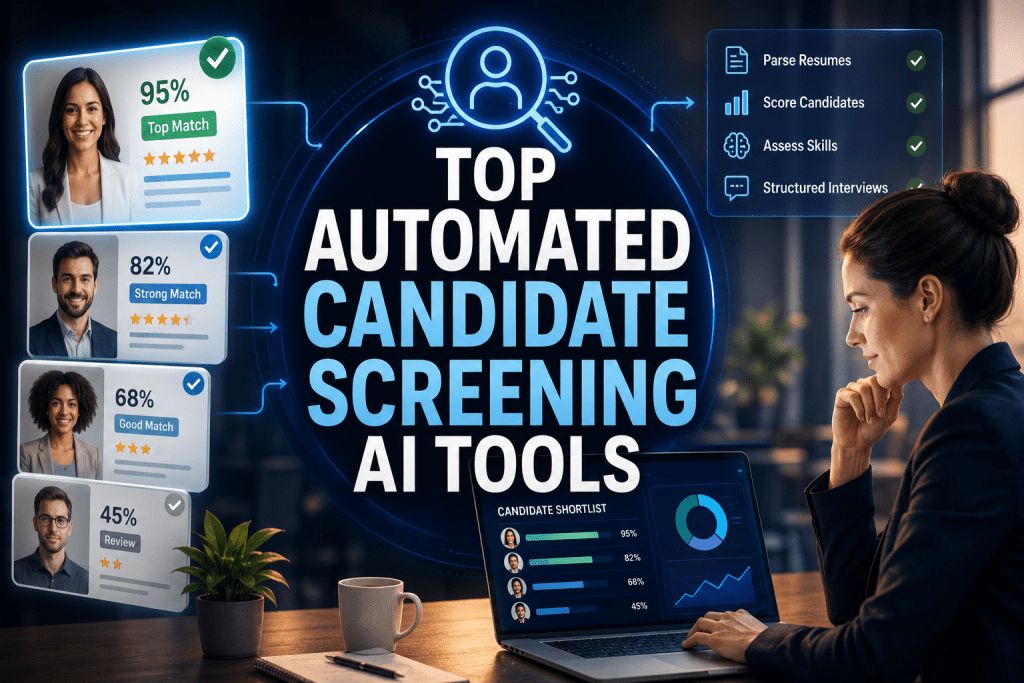
Automated candidate screening uses AI to parse resumes, score them against job criteria, run assessments or structured interviews, and surface a ranked shortlist, cutting time-to-hire while letting recruiters focus on conversations rather than paperwork. This guide compares the best automated candidate screening platforms of 2026, explains how to choose the right one, and covers the compliance practices that keep AI hiring fair and legal.
What Automated Candidate Screening Does
Modern screening platforms go well beyond keyword matching:
-
Parse and rank. Read resumes at scale and score them against role requirements, surfacing the strongest matches first.
-
Assess. Run skills tests, cognitive assessments, or structured questions to measure ability, not just claims.
-
Interview. Conduct one-way video or conversational chat interviews automatically, then summarize them.
-
Integrate. Sync results into your applicant tracking system so shortlisted candidates flow through the pipeline.
The payoff is speed and consistency: every candidate is evaluated against the same criteria, which, done right, is both faster and fairer than manual review.
The Best Automated Candidate Screening Tools
1. HireVue
Official website: hirevue.com
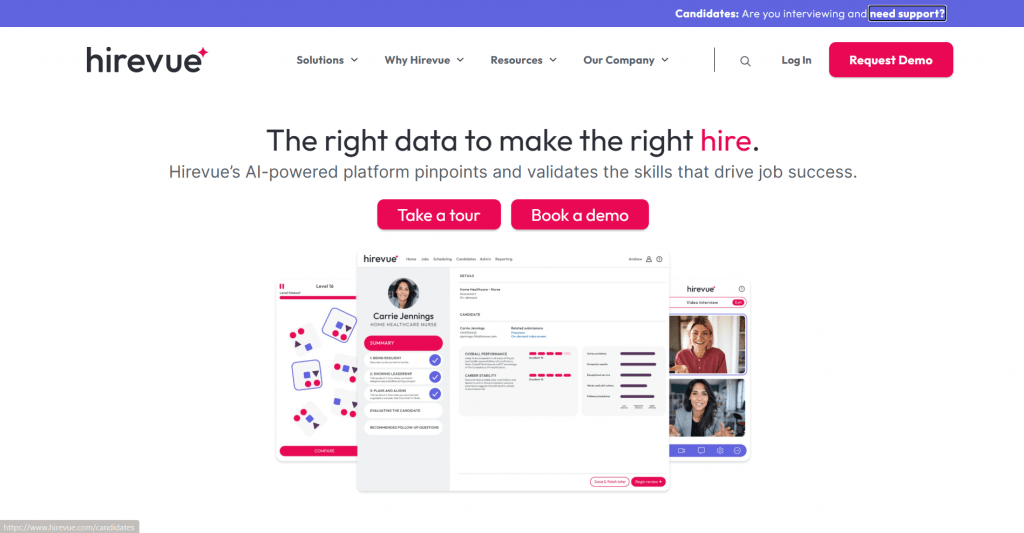
Platform: Enterprise video interviewing and assessment.
Features: HireVue is the enterprise standard for structured video interviews combined with science-backed assessments. It runs one-way video and game-based assessments, scores responses against consistent criteria, and automates high-volume top-of-funnel screening, making it a fit for large organizations hiring at scale.
Pricing:
|
Plan |
Price |
Notes |
|
Quote-based |
Contact sales |
Enterprise pricing by volume and modules |
Public feedback: Respected for structure and scale in enterprise hiring, though some candidates find automated video interviews impersonal.
-
Structured, consistent evaluation at enterprise scale
-
Science-backed assessments beyond the resume
-
Strong ATS integrations and automation
-
Established, widely adopted platform
-
Enterprise pricing, not for small teams
-
Automated video can feel impersonal to candidates
2. Paradox (Olivia)
Official website: paradox.ai
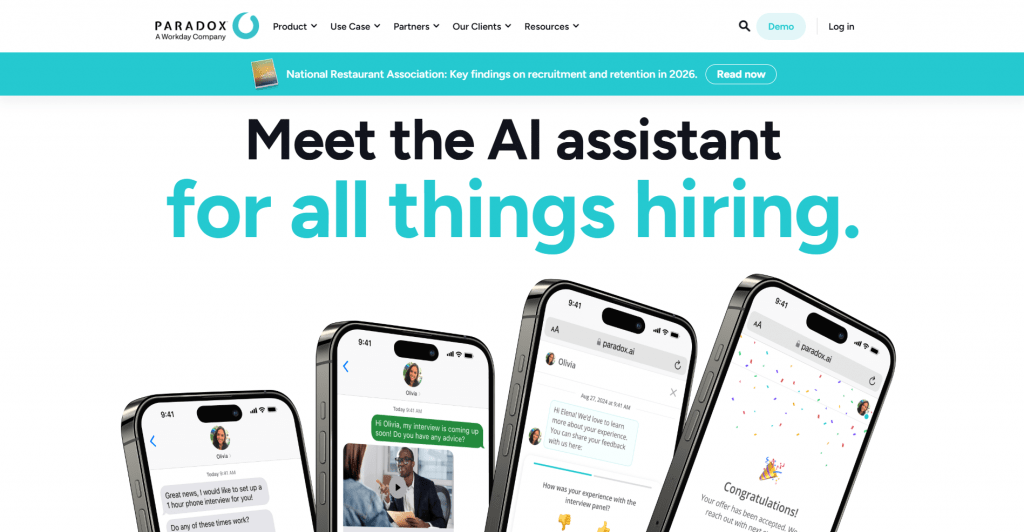
Platform: Conversational AI screening assistant.
Features: Paradox’s assistant Olivia handles high-volume screening through conversation, chatting with candidates over web, SMS, and messaging in many languages to ask qualifying questions, screen, and schedule interviews automatically. It excels at hourly and high-volume hiring where speed and candidate experience matter most.
Pricing:
|
Plan |
Price |
Notes |
|
Quote-based |
Contact sales |
Enterprise pricing by volume |
Public feedback: Praised for a smooth, personal candidate experience that reduces drop-off, with effectiveness depending on careful configuration.
-
Excellent for high-volume and hourly hiring
-
Conversational screening reduces candidate drop-off
-
Automates qualifying and interview scheduling
-
Multi-channel and multilingual reach
-
Conversational focus, not deep skills assessment
-
Results depend heavily on good setup
3. Sapia.ai
Official website: sapia.ai
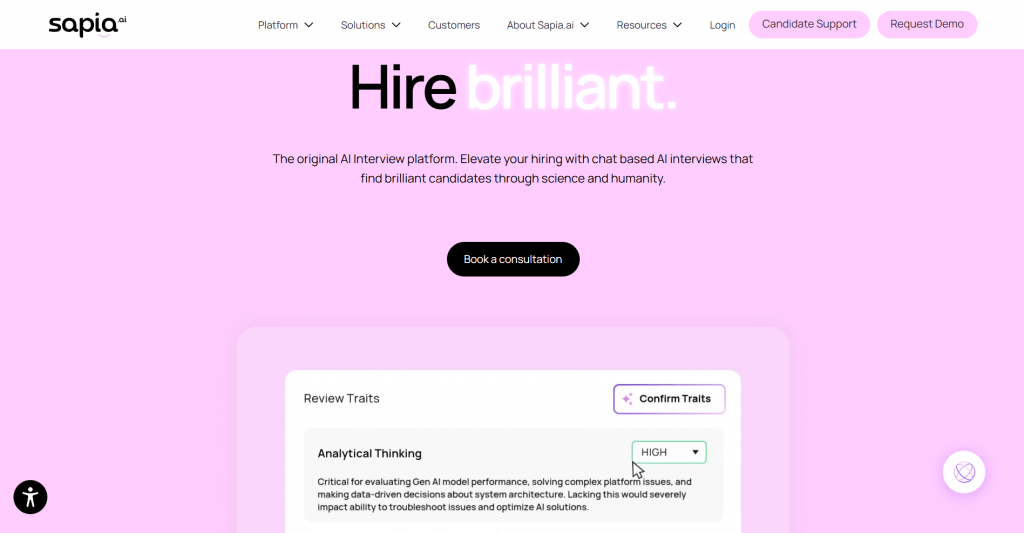
Platform: Blind, chat-based screening for fairness.
Features: Sapia.ai runs structured, chat-based interviews with blind scoring that excludes demographic attributes, built specifically to reduce bias. It evaluates every candidate against consistent criteria and produces explainable insights, positioning fairness and audited AI as its core differentiator at enterprise scale.
Pricing:
|
Plan |
Price |
Notes |
|
Quote-based |
Contact sales |
Custom enterprise pricing |
Public feedback: Valued for its fairness-first, blind approach and audited models, seen as one of the more compliance-conscious options.
-
Blind screening designed to reduce bias
-
Structured, consistent, explainable scoring
-
Strong fit for compliance-focused teams
-
Enterprise scale
-
Enterprise pricing and setup
-
Chat-based format suits some roles better than others
4. Eightfold.ai
Official website: eightfold.ai
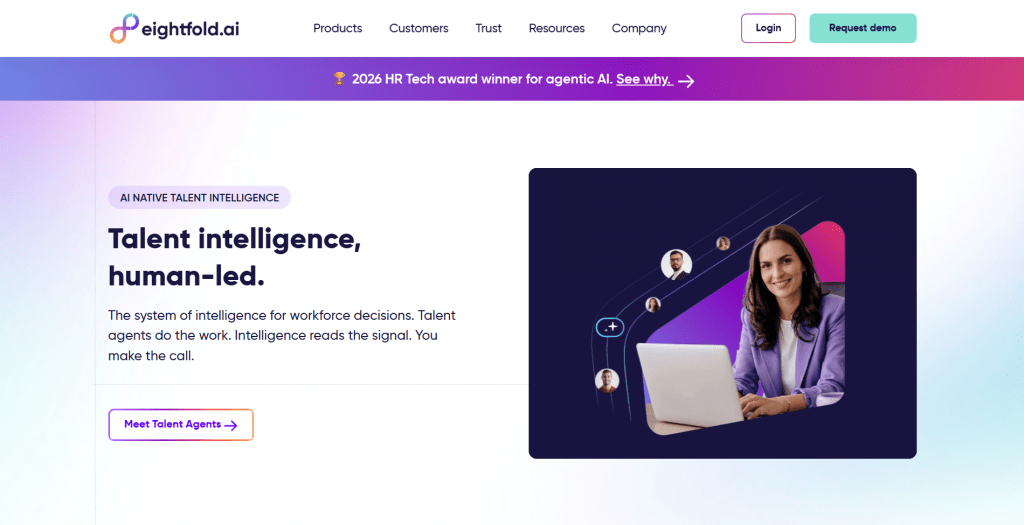
Platform: Skills-based talent intelligence.
Features: Eightfold uses talent-intelligence AI to match candidates on skills and potential rather than keywords, drawing on a large data model to rank applicants and surface internal-mobility matches. It suits large organizations wanting deep, skills-based matching across external and internal talent.
Pricing:
|
Plan |
Price |
Notes |
|
Quote-based |
Contact sales |
Custom enterprise pricing |
Public feedback: Regarded for depth of skills matching and talent intelligence, with the trade-off of complexity and enterprise cost.
-
Skills and potential matching beyond keywords
-
Powerful talent-intelligence data model
-
Supports internal mobility, not just external hiring
-
Built for large-scale, strategic hiring
-
Complex and enterprise-priced
-
More than smaller teams need
5. Harver
Official website: harver.com
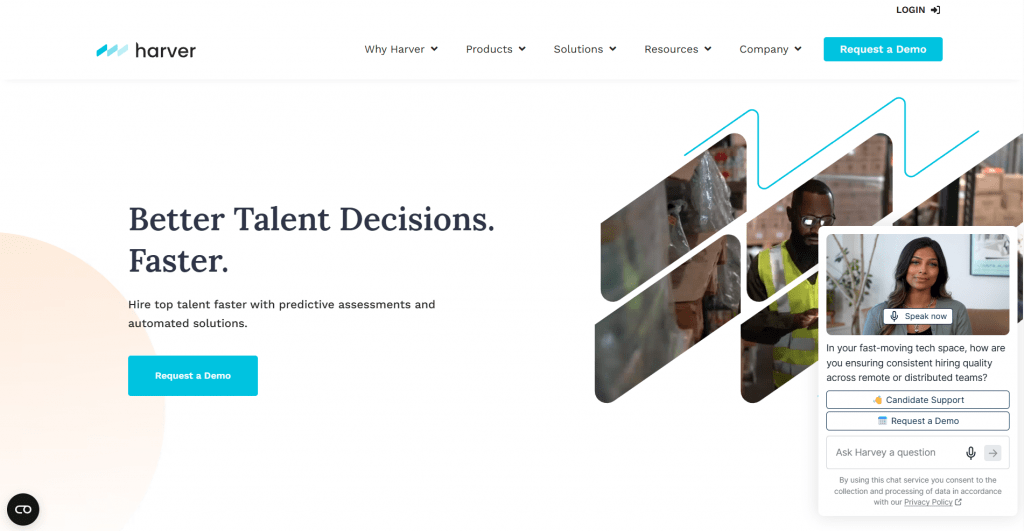
Platform: Assessment-driven volume screening.
Features: Harver centers on pre-employment assessments, situational judgment, cognitive, and skills tests to screen high volumes on ability and fit rather than resumes alone. It is a strong fit for volume hiring where predicting on-the-job performance matters.
Pricing:
|
Plan |
Price |
Notes |
|
Quote-based |
Contact sales |
Custom enterprise pricing |
Public feedback: Liked for validated assessments and volume screening, with implementation effort noted as the main consideration.
-
Validated, science-based assessments
-
Predicts fit and performance, not just keywords
-
Strong for high-volume hiring
-
Consistent, structured evaluation
-
Assessment focus needs thoughtful role mapping
-
Enterprise pricing and setup time
6. Workable
Official website: workable.com
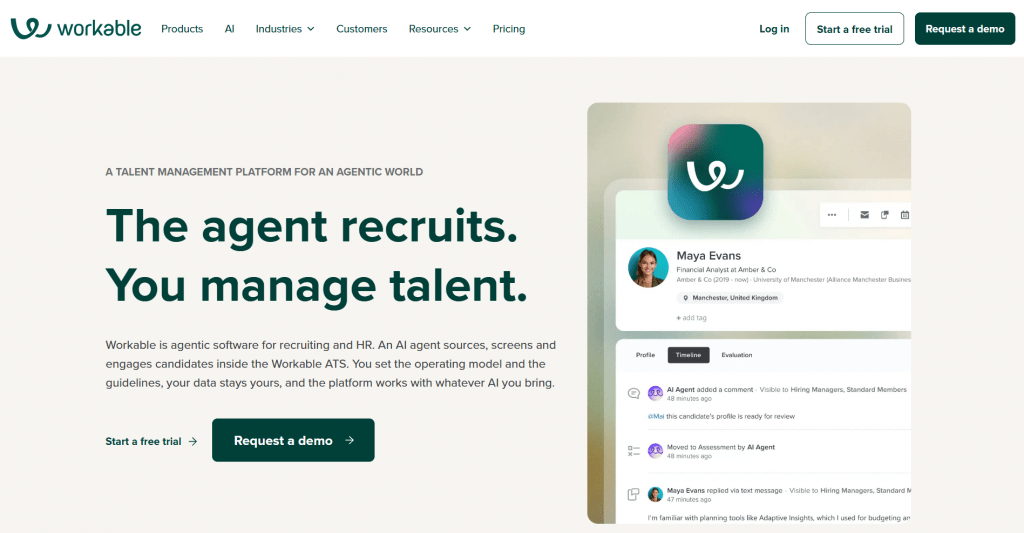
Platform: ATS with built-in AI screening.
Features: Workable bundles AI screening into a full applicant tracking system, with resume parsing, AI matching, a large candidate database, and cognitive and personality assessments. For teams wanting screening and their ATS in one tool rather than a separate point solution, it is the accessible, all-in-one option.
Pricing:
|
Plan |
Price |
Notes |
|
Paid |
From published per-month tiers |
More transparent pricing than enterprise-only tools |
Public feedback: Popular with small and mid-sized teams for combining ATS and AI screening affordably, with fewer deep assessment features than specialists.
-
Screening and ATS in one accessible platform
-
More transparent, published pricing
-
Large candidate database and AI matching
-
Good fit for small and mid-sized teams
-
Less deep on assessments than specialists
-
Best as an all-rounder, not a niche tool
Comparison Table
|
Tool |
Best for |
Approach |
Pricing |
|
HireVue |
Enterprise video screening |
Video + assessments |
Quote-based |
|
Paradox (Olivia) |
High-volume, hourly |
Conversational |
Quote-based |
|
Sapia.ai |
Fairness-focused teams |
Blind chat |
Quote-based |
|
Eightfold.ai |
Skills-based matching |
Talent intelligence |
Quote-based |
|
Harver |
Assessment-led volume |
Pre-employment tests |
Quote-based |
|
Workable |
All-in-one ATS + screening |
ATS-native AI |
Published tiers |
Best Practices for Automated Candidate Screening
Choosing a tool is only half the job. To screen faster without creating problems:
-
Use structured, consistent criteria. Score every candidate on the same job-relevant factors; this is what makes AI screening fairer than ad-hoc manual review.
-
Prefer blind and explainable scoring. Tools that exclude demographic attributes and explain their scores, like Sapia.ai, reduce bias and are easier to defend.
-
Keep a human in the loop. Use AI to rank and shortlist, but keep human judgment on final decisions rather than auto-rejecting.
-
Audit for bias. Regularly test outcomes across demographic groups; models trained on skewed historical data can introduce bias if left unchecked.
-
Integrate with your ATS. Screening that syncs into your pipeline saves far more time than a standalone tool.
A Note on Bias and Compliance
AI hiring is legally sensitive, and honest coverage has to say so. AI screening can reduce bias when it uses structured criteria, blind scoring, and audited models, but it can amplify bias if trained on skewed data without controls. Regulation is tightening: New York City’s Local Law 144 requires bias audits of automated hiring tools, the EU AI Act classifies hiring AI as high-risk with strict obligations, and US EEOC guidance holds employers responsible for discriminatory outcomes even from third-party tools. Before deploying any platform, confirm it supports bias audits, keeps a human in the loop, and meets the rules in your jurisdiction.
Conclusion
The best automated candidate screening tool depends on how you hire. HireVue and Harver lead on structured interviews and assessments, Paradox excels at conversational high-volume screening, Sapia.ai is the fairness-first choice, Eightfold brings deep skills matching, and Workable bundles screening into an accessible ATS. Whichever you choose, the winning approach is the same: structured, explainable, human-supervised screening that speeds up hiring while staying fair and compliant. Scope your volume and roles, shortlist two or three, and demo them against your real pipeline.
❓ Frequently Asked Questions
Answers to relevant questions about this AI tool