Best Essay Typer Tools & AI Essay Generators
On this page
Typing a topic and getting a structured essay used to be a punchline; now it is a product category. A modern essay typer builds the outline, writes a thesis, fills the body, and formats citations. The real differences show up after the first draft.
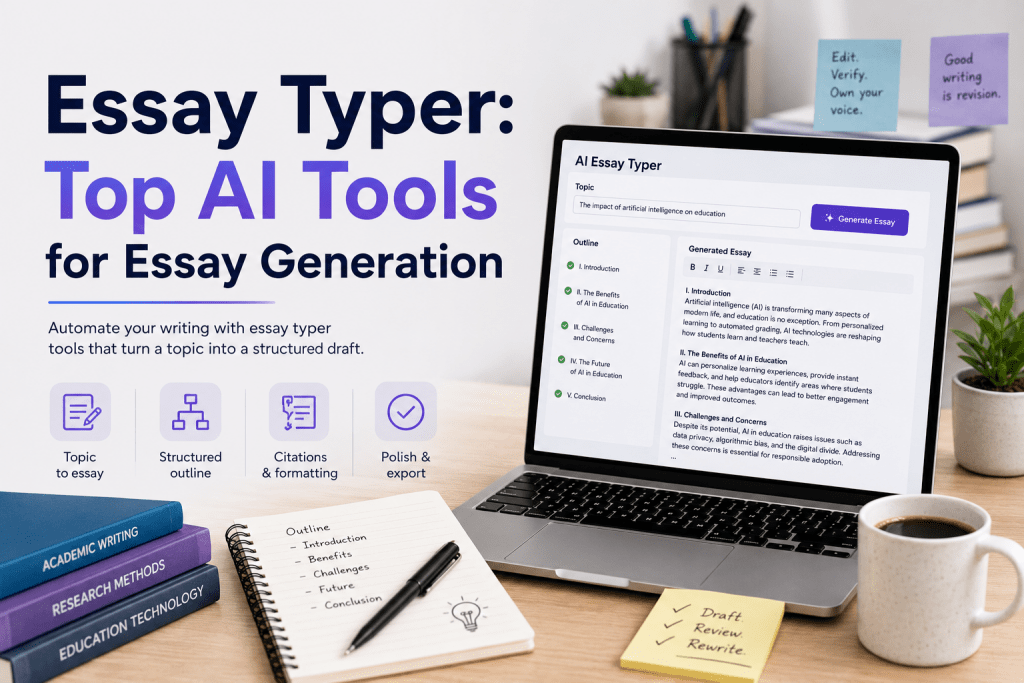
In 2026, picking the right tool decides whether the draft saves an evening or costs a grade. One thing to note: these are drafting aids, not necessarily submission machines. You can generate, verify, and rewrite in your own voice.
What Is an Essay Typer and How Does It Work?
An essay typer is an AI writing generator that turns a short prompt (topic, length, type) into a structured draft. The workflow is similar everywhere:
- Input. Enter the topic, length, and level.
- Outline. The tool proposes a structure: thesis, body sections, and conclusion.
- Generation. The model writes each section; better tools regenerate paragraphs individually.
- Post-processing. Citations, plagiarism check, paraphrasing, and export.
They suit students under a deadline, ESL learners, and anyone treating a draft as a skeleton.
Top 6 AI Essay Generators
1. ChatGPT
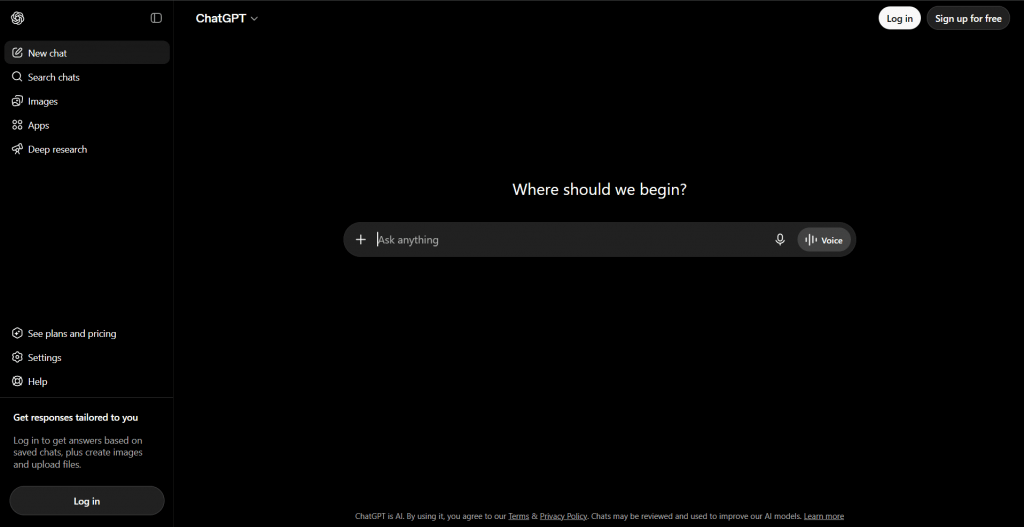
Official website: chatgpt.com
Platform: Universal AI chatbot, web and mobile.
Features: Not a dedicated essay generator, but the default one: outlines, drafts, and rewrites in dialogue form, so revision is natural. The weak spot is sources, since it can invent citations.
|
Plan |
Price |
Key features |
|
Free |
$0 |
Drafts and outlines, limits |
|
Plus |
$20/mo |
Higher limits, file uploads |
Public feedback: Valued for flexibility; knocked for generic phrasing and invented sources.
- The free tier is capable enough to draft outlines and full essays without paying
- Revision is conversational: ask it to sharpen the thesis or cut a paragraph, and it obliges
- Handles any topic, essay type, and tone, from argumentative to reflective
- Widely documented, so prompts and workflows are easy to find
- Invents citations and sources, so every reference must be verified by hand
- Official access is restricted in some regions and during peak load on the free tier
2. Smodin
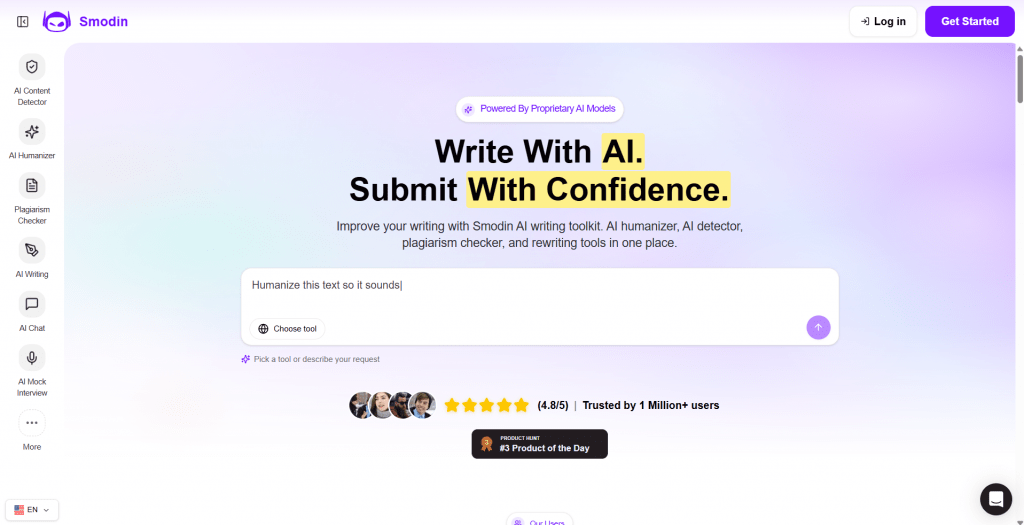
Official website: smodin.io
Platform: Web-based student writing suite.
Features: The closest thing to a classic essay generator: pick a type, set the length, and get a draft. Smodin bundles an AI detector, humanizer, plagiarism checker, and references and supports over 100 languages.
Pricing:
|
Plan |
Price |
Key features |
|
Free |
$0 |
Limited daily generations |
|
Starter |
~$10/mo (annual) |
More credits, longer texts |
|
Premium |
~$16/mo (annual) |
Full toolset, higher limits |
Public feedback: Rated the strongest free generator in its class; complaints target credit limits.
- One of the strongest free tiers among dedicated essay generators
- Bundles an AI detector, humanizer, and plagiarism checker in one workflow
- Generates a full structured essay from a topic, type, and length in one pass
- Supports over 100 languages, so non-English writers aren’t shut out
- The credit system is opaque, making it hard to predict how far the free tier goes
- Output quality drops on narrow or highly technical topics
3. Aithor
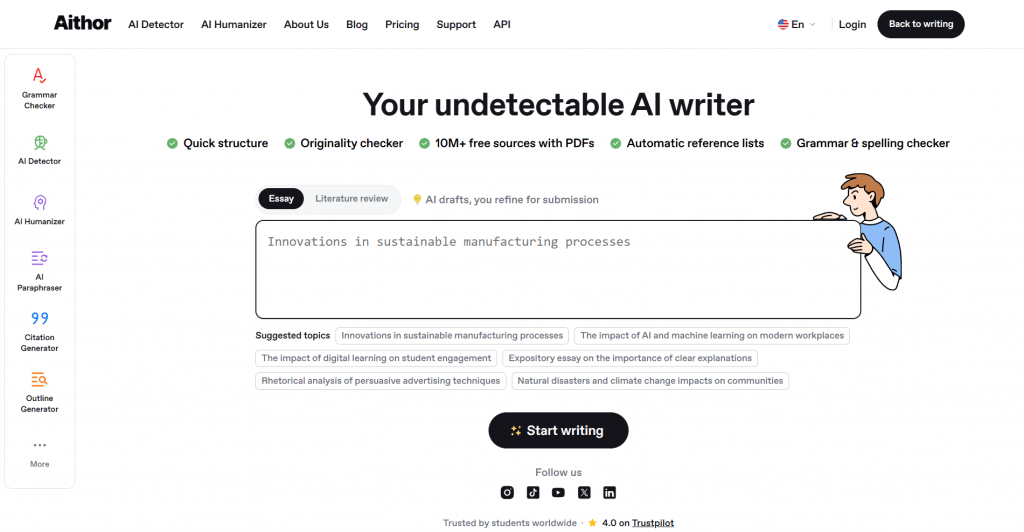
Official website: aithor.com
Platform: Essay writer with an outline-first workflow.
Features: Aithor starts where essays start: with structure. Enter a title, pick a citation style, and it builds a detailed outline; you activate only the sections you want, paying tokens per one. Citations cover five styles (APA, MLA, Chicago, Harvard, Vancouver), plus a plagiarism checker and style adaptation.
Pricing:
|
Plan |
Price |
Key features |
|
Free |
$0 |
100 tokens/day, no account |
|
Premium |
$24.99/mo (less annually) |
Unlimited content, editing |
Public feedback: Praised for outline quality; token accounting and stiff wording draw criticism.
- Outline-first workflow gives real control over structure before any text is written
- Covers five citation styles: APA, MLA, Chicago, Harvard, and Vancouver
- Works instantly with no account required
- Built-in plagiarism checker and style adaptation from your own past writing
- Token-per-subsection billing is hard to track against a normal word count
- The free tier only stretches to short essays before tokens run out
4. Jenni AI
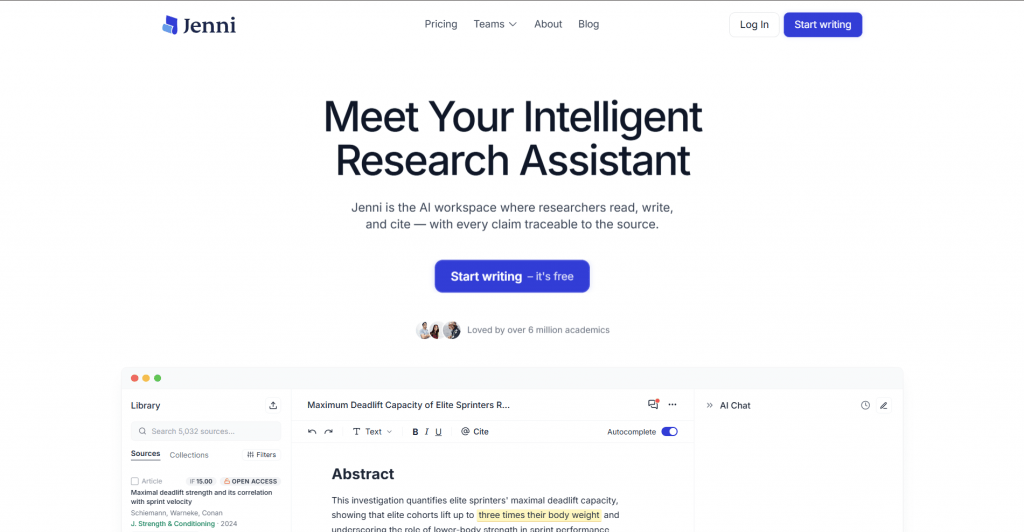
Official website: jenni.ai
Platform: Academic editor with AI autocomplete.
Features: Jenni writes with you, not instead of you; it suggests the next sentence, and you accept or redirect. Citations are the core: APA, MLA, Chicago, Zotero, and Mendeley sync and chat with PDFs. Built for research essays.
Pricing:
|
Plan |
Price |
Key features |
|
Free |
$0 |
200 words/day, 10 PDFs |
|
Unlimited |
$12/mo annual, $30/mo |
No limits, full export |
Public feedback: Praised for autocomplete and citations; the free tier feels like a demo.
- Genuine citation management with in-text references and Zotero/Mendeley sync
- Sentence-by-sentence autocomplete keeps the writer in control of every line
- Built for research and thesis-level work, not just quick drafts
- Chat-with-PDF lets you pull directly from uploaded sources
- The free plan caps output at 200 words a day, closer to a demo than a working tier
- The interface is English-only, with no localization
5. JotBot
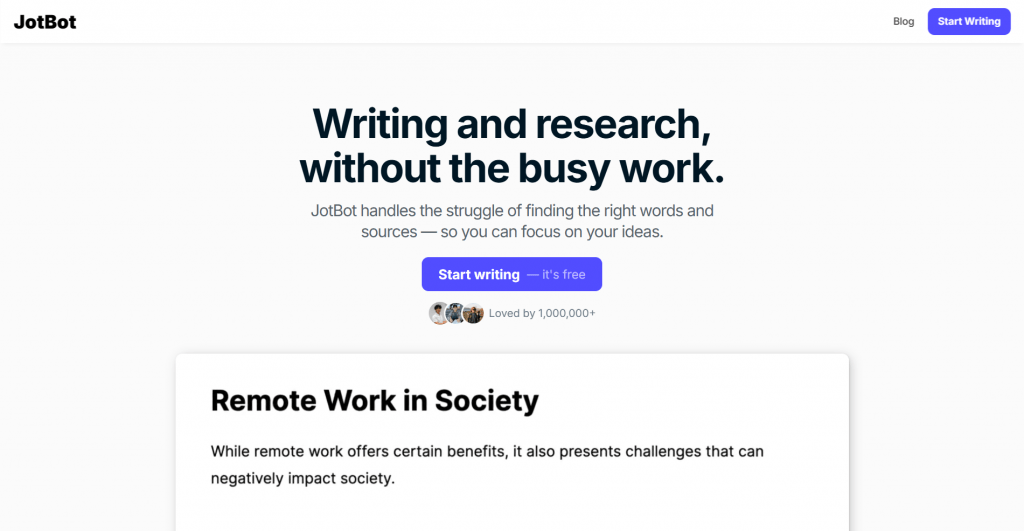
Official website: myjotbot.com
Platform: AI editor that mimics your writing style.
Features: JotBot’s edge is style training: upload past essays, and it drafts in your voice. Every sentence can be accepted or rejected individually.
Pricing:
|
Plan |
Price |
Key features |
|
Free |
$0 |
10 credits/day |
|
Paid |
$14/mo |
Unlimited credits, autocomplete, sources |
Public feedback: Personalization is liked, but output can still trip AI detectors.
- Learns your writing style from uploaded essays and drafts in your voice
- Sentence-level accept/reject control over everything it generates
- Sidebar suggests subtopics you can drag straight into the draft
- Paid plan adds source integration and unlimited autocomplete
- Credit accounting is vague, so it’s unclear how fast the free tier drains
- Output can still be flagged by AI detectors and needs editing before submission
6. Quillbot (bonus)
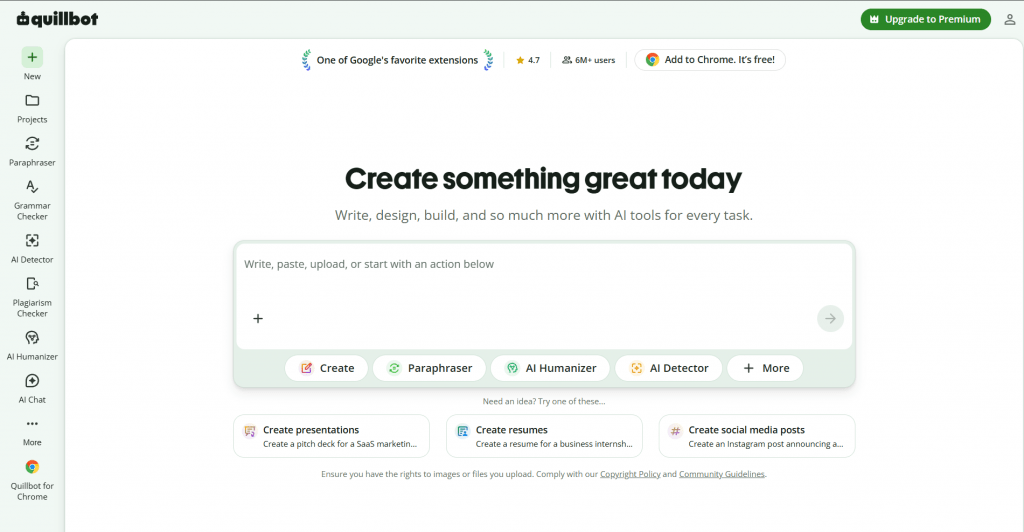
Official website: quillbot.com
Platform: Paraphrasing and editing suite.
Features: Quillbot doesn’t generate essays; it upgrades them. The paraphraser reworks clunky passages, the summarizer condenses sources, and a free citation generator formats references, the natural final step for any draft above.
Pricing:
|
Plan |
Price |
Key features |
|
Free |
$0 |
Limited paraphrasing, citations |
|
Premium |
$9.95/mo |
All modes, plagiarism checks |
Public feedback: The paraphrasing standard; free limits push users to Premium.
- Polishes any draft regardless of which tool produced it
- Free citation generator formats references in APA, MLA, and Chicago
- Cheapest paid plan of the six at $9.95/month
- Paraphraser and summarizer speed up both editing and source condensing
- Doesn’t generate essays from scratch, only refines existing text
- The plagiarism checker sits behind the Premium paywall
Comparison Table
|
Service |
Free tier |
Paid from |
Citations |
Best for |
|
ChatGPT |
Yes |
$20/mo |
Manual check |
Any-topic drafts |
|
Smodin |
Yes |
~$10/mo |
Yes |
Free full-cycle generation |
|
Aithor |
100 tokens/day |
$24.99/mo |
5 styles |
Outline-first structure |
|
Jenni AI |
200 words/day |
$12/mo (annual) |
Zotero/Mendeley |
Research essays |
|
JotBot |
10 credits/day |
$14/mo |
Via sources |
Your own voice |
|
QuillBot |
Yes |
$9.95/mo |
Free generator |
Polish and paraphrase |
Conclusion
For most students, the stack is two tools: Smodin or ChatGPT for the draft and Quillbot for the polish. And if the finished essay needs a class defense, an AI presentation maker like Gamma turns it into slides in minutes. Aithor wins when the grade rides on structure, Jenni AI when it rides on sources; JotBot suits anyone worried about sounding robotic. Free tiers make testing cheap, so run one topic through two services and keep the better draft. The essay still has to be yours; these tools just make the blank page less blank.
❓ Frequently Asked Questions
Answers to relevant questions about this AI tool