Best AI Vocaloid Song Generators: 4 Tools That Sing
On this page
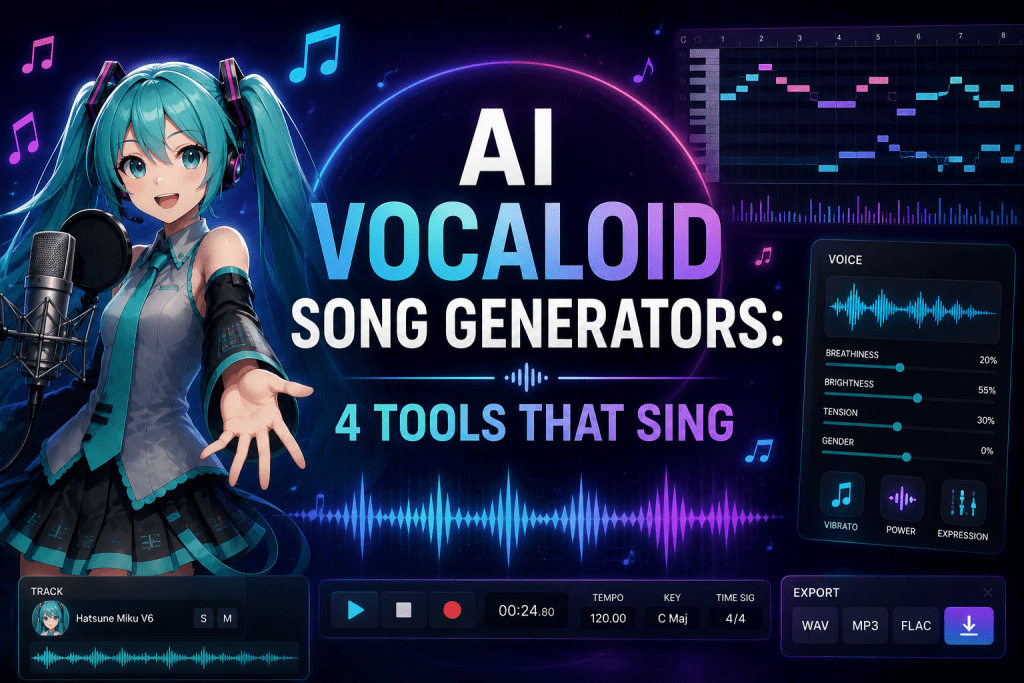
The most famous pop star in this category has been sixteen years old since 2007. Hatsune Miku sells out arenas as a hologram, and her voice has always been software you can buy. What changed recently is the engine room: the new generation of AI song generators runs on neural synthesis, so the robotic edge that once defined the genre is now a stylistic choice. This guide compares the best AI vocaloid song generators available now, with prices checked in July 2026.
What These Tools Actually Do
Keep one distinction straight and the whole category makes sense. A prompt-to-song service like Suno writes the music for you. A vocaloid-style generator works the other way around: you place the notes and type the lyrics, and the software performs them in a synthesized voice you choose, down to the syllable. “Vocaloid” is technically Yamaha’s trademark, though it now names the whole genre, so the list below includes Yamaha’s software and its rivals.
Top 4 AI Vocaloid Song Generators
The picks split the territory: the original brand, the realism leader, the volume studio, and the free route.
1. VOCALOID6 with Hatsune Miku V6

Official Website: vocaloid.com
Yamaha’s editor is the genre’s namesake, powered by the VOCALOID:AI engine. Feed it a melody and lyrics, and multilingual voicebanks can sing Japanese, English, and Chinese inside one vocal line. The editor ships with 25 voicebanks of its own, a doubling feature builds instant harmonies, and Vocalo Changer re-voices your own sung takes. The 2026 headline: Hatsune Miku V6 arrived on April 14 from Crypton Future Media, in Original and Soft profiles, singing English and Japanese with a free Chinese update planned.
Platform: Windows and macOS (VST3, AU, ARA2); a Mobile VOCALOID Editor on iOS runs $3.99 a month with a 14-day trial.
Pricing:
|
Item |
Price |
|
VOCALOID6 Editor, 25 voicebanks included |
$225 ($202.50 in the current sale) |
|
Hatsune Miku V6 Starter Pack (voicebank, editor, Cubase AI) |
$199.40 |
|
Hatsune Miku V6 voicebank alone |
$78 |
|
Editor trial |
Free for 31 days, all features |
-
The deepest catalog of famous character voices, plus 25 voicebanks in the editor itself.
-
Multilingual voicebanks mix three languages in one vocal line, and the 31-day trial is the longest here.
-
Character voicebanks are separate purchases, so costs stack as your cast grows.
2. Synthesizer V Studio 2 Pro
Official Website: dreamtonics.com/synthesizerv
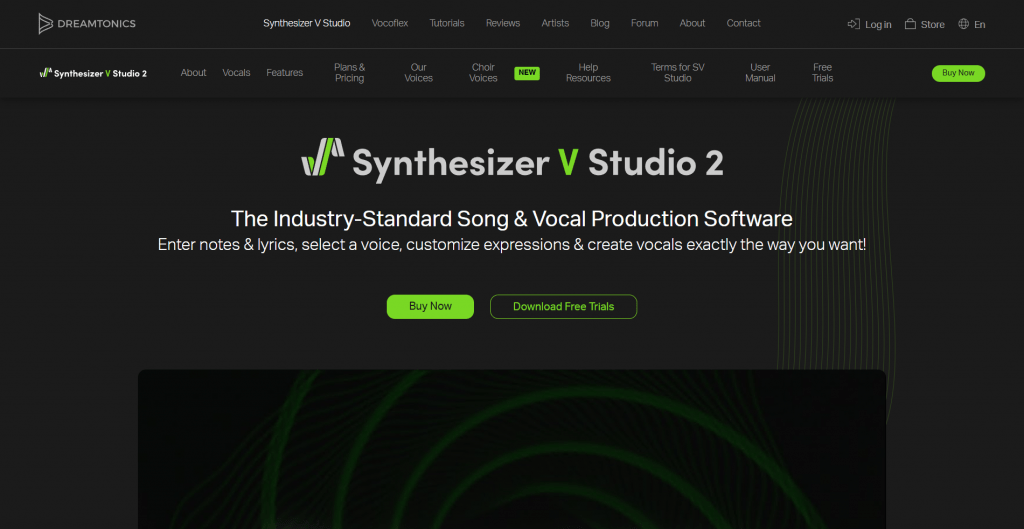
Dreamtonics has become the realism benchmark: enter notes and lyrics, pick a voice, and the output regularly passes for a human singer. The $99 license includes one complimentary voice (Liam, Mo Xu, or Mai 2), and cross-lingual synthesis lets any voice sing all six languages: English, Japanese, Mandarin, Cantonese, Korean, and Spanish. Vocal modes shape pitch, timbre, and pronunciation, phoneme timing gets its own panel, and everything renders locally. The license is lifetime, with no subscription anywhere.
Platform: Windows 10/11 and macOS; standalone or VST3, AU, AAX, and ARA plugin. The older Studio Pro ($89) still covers Linux.
Pricing:
|
Item |
Price |
|
Studio 2 Pro, one voice included |
$99 one-time |
|
Additional voices |
$79 each |
|
Studio 2 Pro + one extra voice |
$149 |
|
Studio 2 Pro + Vocoflex |
$249 |
A 14-day trial and 7-day refund guarantee cover the doubts.
-
The most human-sounding output in the category, with phoneme-level control for perfectionists.
-
One-time lifetime license with a voice included, and audio never leaves your computer.
-
Extra voices at $79 each make a multi-singer cast the real budget line.
-
Studio 2 Pro dropped the Linux support its predecessor still has.
3. ACE Studio
Official Website: acestudio.ai
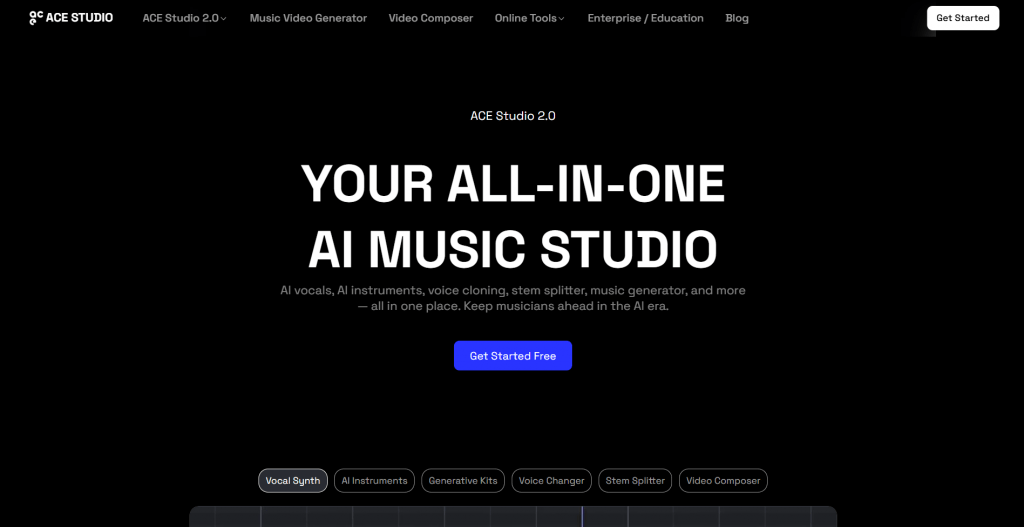
ACE Studio 2.0 answers with volume: more than 160 royalty-free AI singers across eight languages, 40+ AI instruments, a drag-and-drop choir mode, a stem splitter, and voice cloning that trains a model on your own singing. Vocal generation is unlimited on both plans; monthly credits cover extras like music video tools. The pricing twist: rent-to-own converts to a lifetime license after two years at no extra cost, or you buy outright on day one.
Platform: Desktop app for Windows and macOS.
Pricing:
|
Plan |
Subscribe (rent-to-own) |
Buy outright |
|
Artist (1 cloning slot, 2,500 credits/mo) |
$16.58/mo billed yearly |
$398 one-time |
|
Artist Pro (5 slots, 5,000 credits/mo) |
$22/mo billed yearly |
$528 one-time |
Prices reflect the current 20 percent summer discount; a 7-day money-back guarantee applies either way.
-
The largest roster here, 160+ voices in eight languages, all cleared for commercial release, plus AI instruments in the same app.
-
Voice cloning turns your own timbre into an instrument, and every payment path ends in ownership.
-
No free plan on the pricing page, so the 7-day refund window is the practical trial.
-
Cancel a subscription before the two-year mark and your custom voice slots lock until you resume.
4. OpenUtau with DiffSinger
Official Website: openutau.com
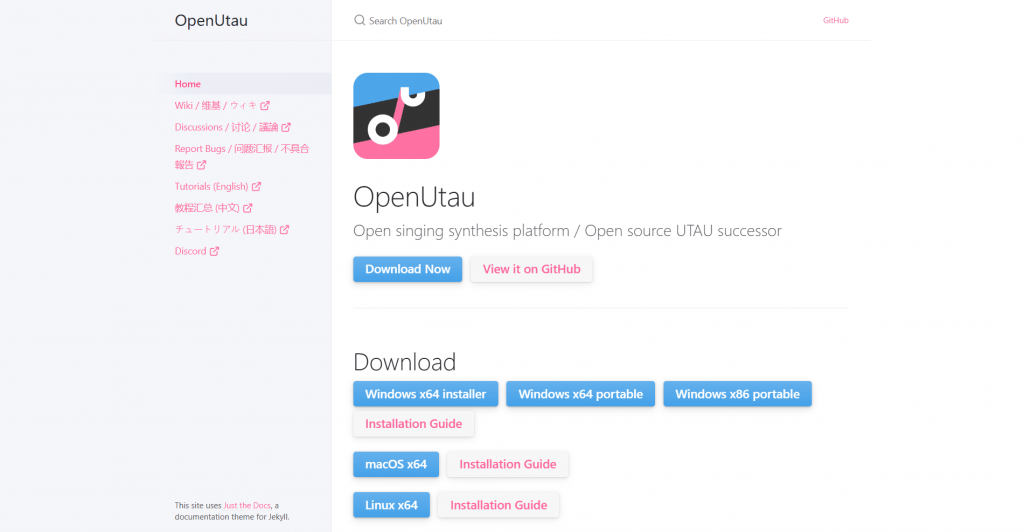
The free route, and the community’s workshop. OpenUtau is the open-source successor to UTAU, and paired with community-made DiffSinger AI voicebanks (grab the beta build for those) it produces neural singing for exactly nothing. It imports Vocaloid 4 tracks and ships phonemizers for English, Japanese, Chinese, Korean, Russian, and more. The catch is the open-source bargain: you hunt voicebanks yourself, quality swings from startling to rough, and nobody owes you support.
Platform: Windows, macOS, and Linux; free and open source.
Pricing: Free, including the community voicebanks.
-
Zero cost, no account, and it works offline on Windows, macOS, and Linux.
-
Community voicebanks cover languages the commercial engines skip.
-
Setup and voicebank hunting take an evening and some forum reading.
-
Output quality depends entirely on which voicebank you find.
Comparison Table
|
Tool |
Best for |
Entry cost |
Singing languages |
Free option |
|
VOCALOID6 + Miku V6 |
Character voices, the classic sound |
$199.40 starter pack |
JP, EN, ZH |
31-day editor trial |
|
Synthesizer V 2 Pro |
Maximum realism |
$99 with one voice |
6, cross-lingual |
14-day trial |
|
ACE Studio |
Volume and voice cloning |
$16.58/mo or $398 |
8 languages |
7-day refund only |
|
OpenUtau + DiffSinger |
Zero budget, tinkering |
$0 |
Varies by voicebank |
Everything |
Picking Your Synthetic Singer
Match the tool to the job:
-
Fan works and the Miku sound: VOCALOID6, because the character catalog lives there.
-
A vocal that passes for human: Synthesizer V, and budget for one good extra voice.
-
Steady output for releases: ACE Studio, where the roster and commercial clearance justify the price.
-
Learning the craft for free: OpenUtau, plus patience.
One planning note: the commercial engines skip Russian, so Cyrillic lyrics mean transliteration. OpenUtau is the loophole, with Russian phonemizers and community voicebanks to match. And whichever singer you pick, the melody, the words, and the taste still come from you. The voice is synthetic. The songwriting never is.
❓ Frequently Asked Questions
Answers to relevant questions about this AI tool