Outreach AI is the enterprise platform that turns scattered sales activity into structured, measurable pipeline. We cover what the Outreach AI toolset does, its AI forecasting and engagement features, who it fits, the real cost, and where the trade-offs sit.
Outreach AI: Sales Automation & Engagement
On this page
Between a rep’s inbox and a leadership forecast, most sales activity loses its shape: touches go untracked, follow-ups slip, and the pipeline number becomes a guess. Outreach AI is built to close that gap, an enterprise sales engagement platform that unifies multi-channel outreach, deal management, conversation intelligence, and AI-driven forecasting in one system.
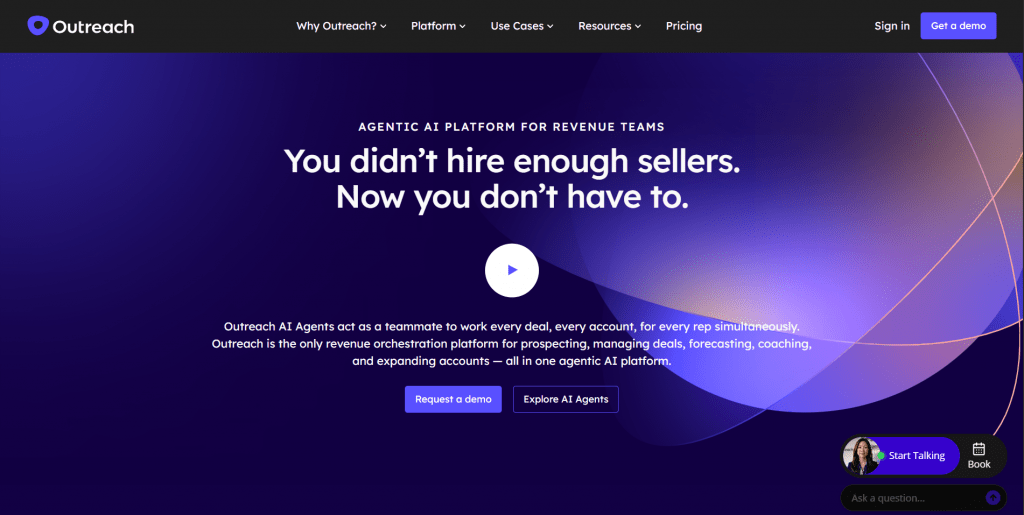
Founded in 2014 in Seattle and now on the outreach.ai domain, it has grown from an email-sequencing tool into a full revenue workflow suite. The AI layer is the current headline, powering deal and forecast insights, sequence optimization, and the Kaia conversation assistant.
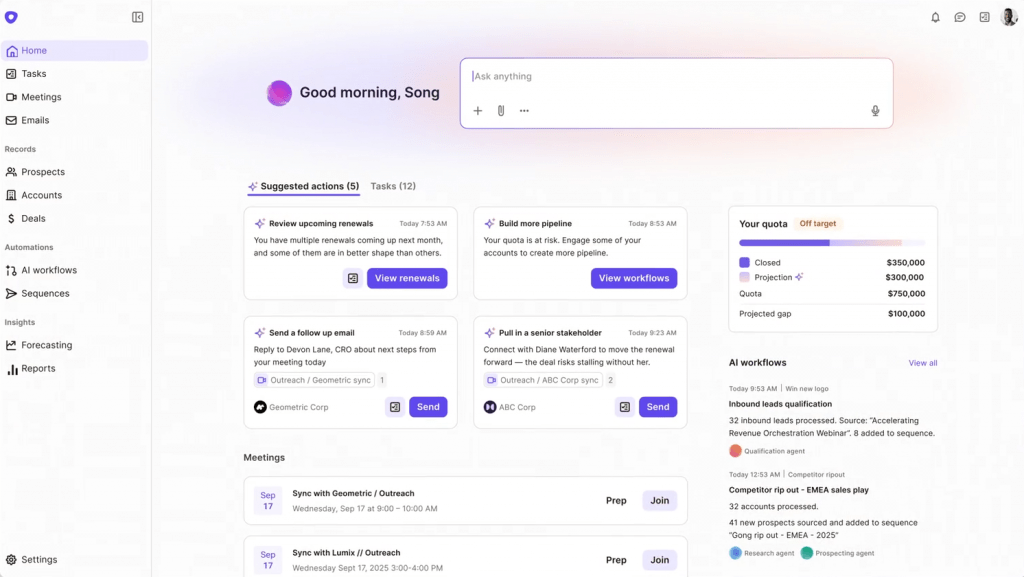
How the Outreach AI Platform Works
Outreach AI runs the full outbound and deal cycle from one workspace:
-
Build sequences. Combine email, calls, LinkedIn, and manual tasks into multi-step sequences with triggers, delays, and exit criteria.
-
Engage across channels. Reps work prospects through email, phone, and social from a single view, with the Outreach Everywhere browser extension pulling it into the inbox and CRM.
-
Let AI assist. AI insights suggest the best times to engage, optimize sequences, and surface deal risks, while Kaia transcribes and analyzes calls.
-
Manage deals. Track deal health, next steps, and risk across the pipeline rather than in a spreadsheet.
-
Forecast. AI forecasting rolls rep activity and deal signals into a projection leaders can act on, with engagement analytics underneath.
Everything syncs bi-directionally with CRMs, Salesforce especially, so the platform centralizes data instead of adding another silo.
The AI Features in Focus
The AI in Outreach AI is not one tool but a layer across the workflow:
-
Deal and forecast insights. Machine learning scores deal health and rolls signals into a forecast, aiming to replace gut-feel projections with data.
-
Kaia (conversation intelligence). Records, transcribes, and analyzes calls, surfacing action items and coaching moments.
-
Sequence optimization. Suggests timing and content changes based on what actually gets responses.
-
AI agents. Automate routine steps in the outbound motion, handling repetitive actions so reps focus on live conversations.
This breadth is the selling point: engagement, conversation intelligence, deal management, and forecasting in one system, not four tools stitched together.
Who It’s For
Outreach AI fits enterprise and upper-mid-market B2B teams that want to standardize their go-to-market motion on one platform, especially those with:
-
Large sales teams, typically 50 or more reps needing structured sequence management.
-
Salesforce at the core, since the deep bi-directional sync is a major strength.
-
A combined need for engagement, deal management, and forecasting in one place.
-
Sales ops staff to configure and optimize the platform over time.
Who should look elsewhere: small teams and startups, where lighter tools like Apollo, Salesloft, or Instantly deliver simpler outbound at lower cost.
Outreach AI Pricing
Outreach AI does not publish a price list, which is itself worth knowing. Pricing is quote-based, built on a per-seat model with consumption-based AI credits, and modules stack on top of the core engagement seat.
|
Element |
What it covers |
Rough cost |
|
Engage (core seat) |
Sequences, engagement, analytics, CRM sync |
$100 to $140/user/mo |
|
AI credits |
Consumption-based AI usage |
Varies by volume |
|
Add-on modules |
Meet, Deal, Forecast, Amplify |
Negotiated per module |
|
Professional services |
Onboarding, training, integrations |
Often negotiable |
Buyer estimates place the effective cost around $100 to $160 per user per month before implementation and add-ons. Two tips from buyers: negotiate AI and module add-ons into the initial contract, since bundled pricing runs lower, and bring a competitor quote, because Outreach’s biggest discounts go to buyers evaluating alternatives.
Pros & Cons
-
Combines engagement, deal management, conversation intelligence, and forecasting in one platform
-
AI forecasting and deal insights give leaders real pipeline visibility
-
Deep, bi-directional Salesforce integration
-
Strong multi-channel sequencing across email, phone, and social
-
Kaia conversation intelligence adds call analysis and coaching
-
Expensive, with opaque quote-based pricing and stacking add-on modules
-
Complex to implement, often needing sales ops staff to run well
-
Mixed user sentiment on support and platform clunkiness in public reviews
-
Overkill for small teams that lighter, cheaper tools serve better
Languages and Access
Outreach AI is a cloud platform accessed through the browser, with the Outreach Everywhere extension bringing its tools into the inbox and CRM. It is built for global enterprise sales, with the interface oriented around English. Access is sales-led rather than self-serve: you book a demo, scope your team and modules, and receive a quote, so there is no instant free trial.
Final Thoughts
Outreach AI earns its place as a top-tier sales engagement platform by unifying execution, conversation intelligence, deal management, and AI forecasting so a whole revenue org works from one source of truth. For a large, Salesforce-based team with the ops resources to run it, that breadth is the value. The caveats are just as clear: pricing is high and opaque, setup is complex, and public sentiment on support is mixed, so smaller teams get more, faster, from a simpler tool. Scoped to the right buyer, Outreach AI is powerful; matched to the wrong one, it is expensive weight.
❓ Frequently Asked Questions
Answers to relevant questions about this AI tool
Sources
-
Outreach Legal Documents — outreach.ai
-
Outreach API - Get Started with Outreach's API — outreach.ai
-
Privacy and Data Protection - Outreach — outreach.ai
-
Outreach Reviews - G2 — g2.com