Best AI Story Continuers for Writers
On this page
You have written three pages of a story, developed an interesting character, and reached the moment when something needs to happen. The problem is that you cannot decide what comes next.
A good AI story continuer can help you move past that point. Instead of generating an entire story from scratch, these tools build on your existing writing to suggest the next scene, develop character dialogue, introduce plot twists, or explore alternative directions.
The best option depends on how you write. Some platforms focus on sentence-level assistance, while others offer story bibles, character databases, and tools for managing long manuscripts. Others are designed to generate complete chapters or interactive fiction.
In this guide, we compare five AI story continuers for writers who want to overcome writer’s block without giving up control of their stories.
What Can an AI Story Continuer Do?
An AI story continuer uses your existing text, instructions, and story context to suggest what could happen next. Depending on the platform, it can help with:
-
Continuing unfinished stories: Generate the next paragraph, scene, or chapter based on your draft.
-
Developing plot ideas: Suggest conflicts, twists, and possible resolutions.
-
Writing character dialogue: Continue conversations while following established character traits.
-
Maintaining narrative consistency: Remember important characters, locations, and story details.
-
Exploring alternatives: Produce different directions for a scene or ending.
AI-generated continuations are suggestions rather than definitive answers. Writers should review the output for continuity, originality, pacing, and consistency with their intended voice.
Best AI Story Continuers: Top 5 Tools
1. Sudowrite
Official website: Sudowrite
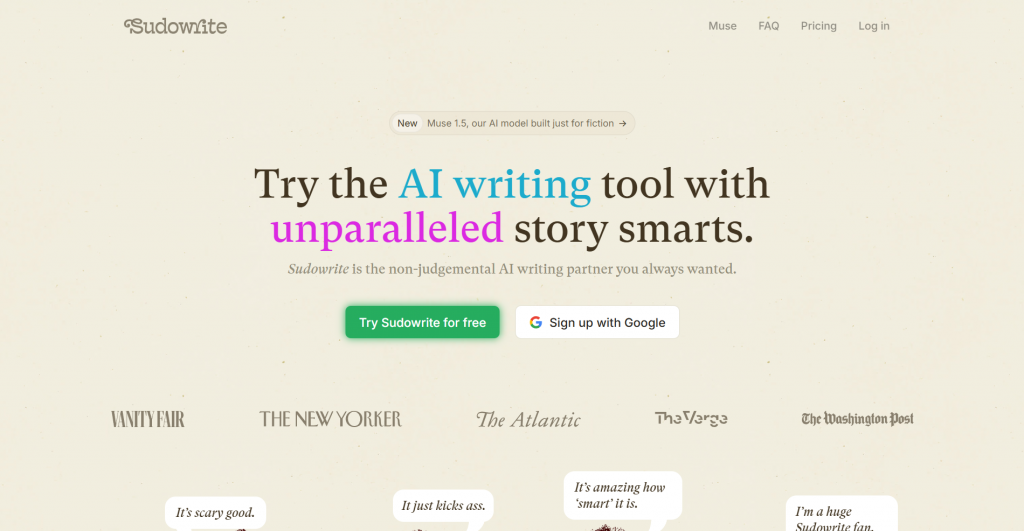
Best for: Fiction writers who want scene-level assistance and creative drafting tools
Platform: Web
Pricing: Paid plans start at approximately $19 per month when billed monthly, with lower rates available through annual billing. A free trial may be available.
Sudowrite is designed specifically for fiction writing. Rather than functioning as a general-purpose chatbot, it provides tools for developing scenes, expanding descriptions, rewriting passages, and brainstorming what happens next.
Its Story Bible helps writers organize information about characters, settings, and plot details. This can be useful when continuing a story that contains multiple characters or interconnected storylines.
The platform is particularly suitable for writers who already have a draft and need help developing the next beat. You can provide a scene, describe the intended direction, and use AI suggestions to explore possible continuations.
-
Built specifically for fiction writing.
-
Tools for expanding, rewriting, and developing scenes.
-
Story Bible for organizing important story information.
-
Useful for overcoming writer’s block without generating an entire manuscript.
-
Credit-based usage can require monitoring.
-
Paid plans may be expensive for occasional writers.
-
Generated text still requires editing and stylistic refinement.
Our take: Sudowrite is worth considering if you want an AI writing partner that supports the creative process at the scene level rather than simply producing long passages of text.
2. Novelcrafter
Official website: Novelcrafter
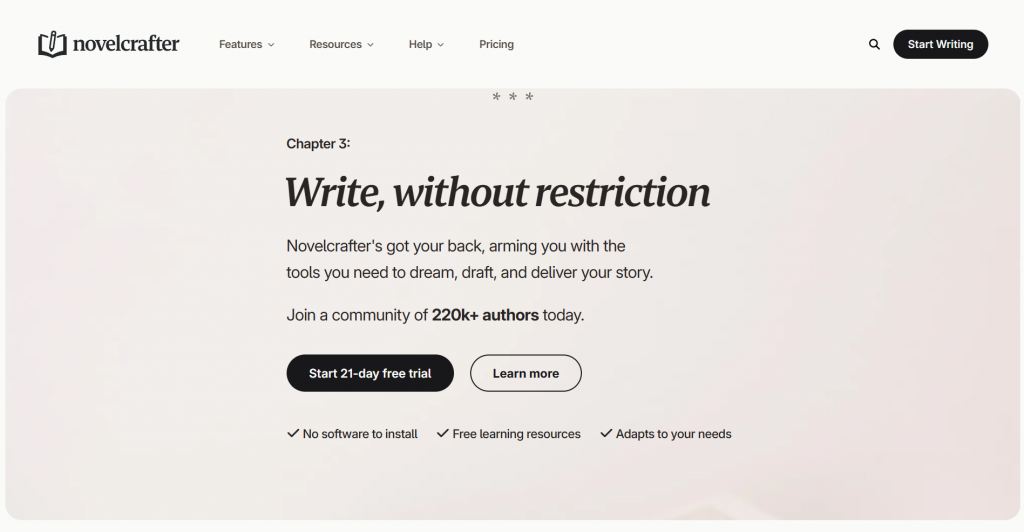
Best for: Writers working on complex novels, series, and detailed fictional worlds
Platform: Web
Pricing: Plans start at approximately $4 per month. AI model usage is billed separately because Novelcrafter uses a bring-your-own-API-key system.
Novelcrafter combines a manuscript editor with tools for planning and managing fictional worlds. Its central feature is the Codex, which allows writers to organize information about characters, locations, objects, and other story elements.
The Codex can provide relevant information to the AI before it generates a scene. This approach is helpful for writers who want to continue a story while maintaining details established earlier in the manuscript.
Novelcrafter does not provide all AI model usage within its subscription price. Writers need to connect an AI provider and pay the associated usage costs. That adds an extra setup step but gives users more control over the model they choose.
-
Structured Codex for characters, locations, and worldbuilding.
-
Useful for long-form fiction and series.
-
Allows writers to choose their AI model.
-
Low subscription starting price.
-
Requires separate AI API setup.
-
Model usage creates additional costs.
-
May feel complicated for beginners who want instant generation.
Our take: Novelcrafter is a practical option for writers who prioritize story continuity, detailed planning, and control over the AI model behind their writing workflow.
3. Squibler
Official website: Squibler
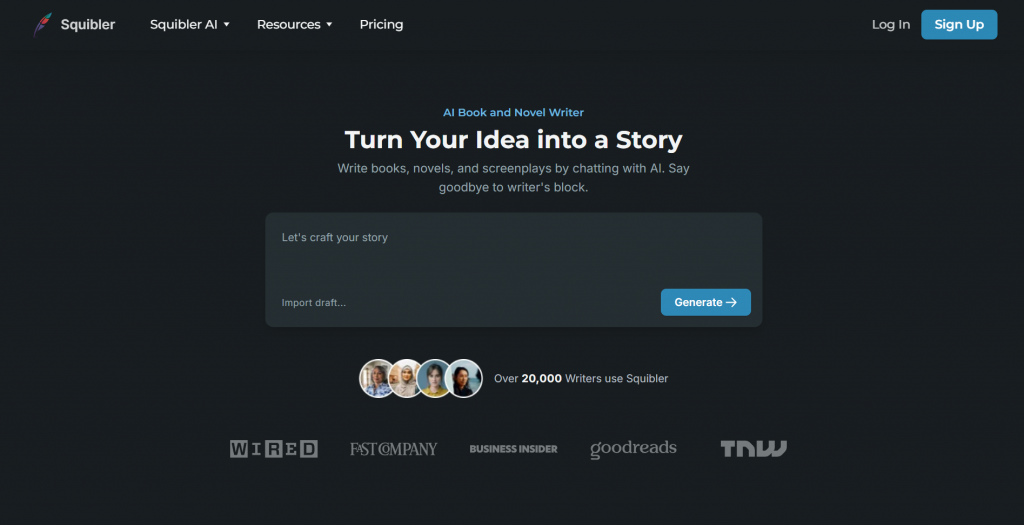
Best for: Writers who want to generate larger drafts and organize manuscripts
Platform: Web
Pricing: A free plan is available. Paid plans and usage limits vary, with annual subscriptions offering lower monthly prices.
Squibler is an AI writing platform that supports novels, screenplays, and other long-form projects. Unlike tools that primarily suggest the next sentence, Squibler focuses on helping users develop larger sections of a manuscript.
The platform includes AI generation, rewriting, editing, and project organization features. Writers can use it to develop an outline, generate draft material, and organize chapters in one workspace.
This makes Squibler relevant for writers who are stuck beyond a single paragraph and need help expanding a broader story concept. However, longer AI-generated drafts often require substantial revision to improve pacing, character depth, and narrative originality.
-
Supports larger writing projects.
-
Includes manuscript and chapter organization.
-
Can generate and revise story content.
-
Offers a free option for testing the platform.
-
Longer generated drafts may need significant editing.
-
Higher usage can require a paid subscription.
-
Full-length generation may produce generic or repetitive passages.
Our take: Squibler is worth exploring if you want an AI-assisted workspace for expanding story ideas into larger drafts, rather than focusing exclusively on individual scene continuations.
4. NovelAI
Official website: NovelAI
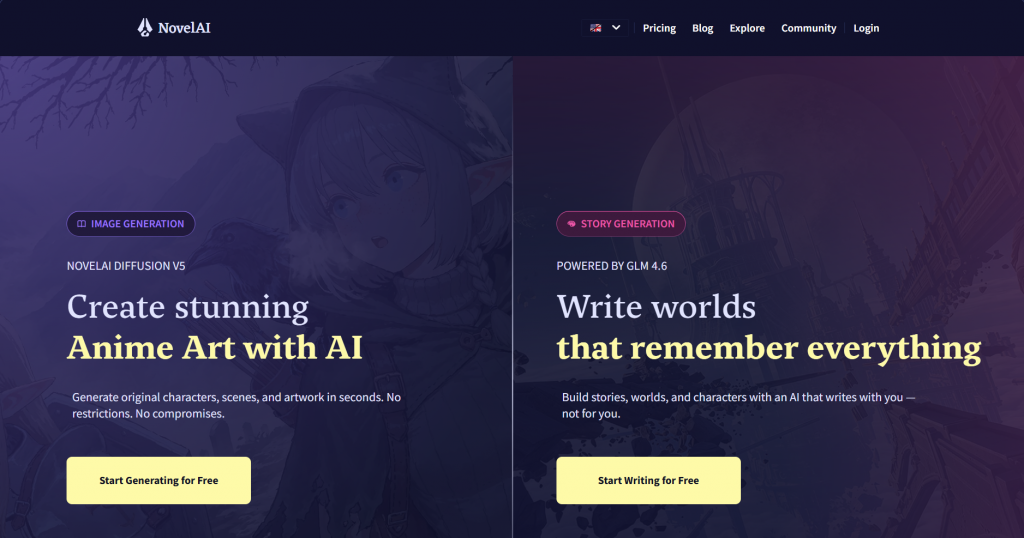
Best for: Writers who want flexible genre fiction and interactive storytelling
Platform: Web
Pricing: Paid plans start at approximately $10 per month. Available features and generation limits depend on the subscription tier.
NovelAI is an AI storytelling platform built around open-ended text generation. Writers can use it to continue passages, develop fictional scenarios, and explore different narrative directions.
Its Lorebook feature allows users to store information about characters, settings, and recurring concepts. Relevant entries can be used to provide additional context during generation.
NovelAI is also associated with interactive fiction and roleplaying workflows. This makes it suitable for writers who want to experiment with alternative scenes, speculative storylines, and less conventional narrative structures.
The platform requires active context management. Writers should maintain important story details and check whether generated passages follow the established plot and character motivations.
-
Designed for open-ended storytelling.
-
Lorebook supports recurring story information.
-
Useful for interactive fiction and genre experimentation.
-
Offers multiple subscription tiers.
-
Requires users to manage story context carefully.
-
Less focused on traditional manuscript organization.
-
Generated passages may drift from the original plot without clear instructions.
Our take: NovelAI can be useful when you want to explore different fictional possibilities, continue a scene, or experiment with interactive storytelling.
5. Claude
Official website: Claude
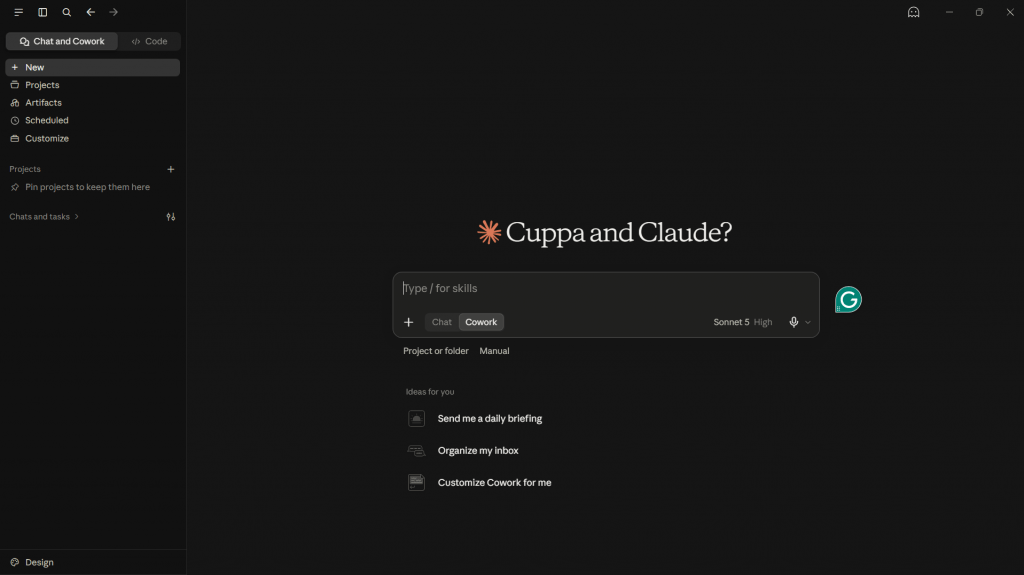
Best for: Writers who want a flexible AI partner for continuation, outlining, and revision
Platform: Web and mobile
Pricing: A free plan is available. Claude Pro costs approximately $20 per month, although plans and usage limits can change.
Claude is a general-purpose AI assistant rather than a dedicated fiction-writing application. However, writers can use it to continue unfinished stories, brainstorm plot developments, review scenes, and rewrite passages in a particular style.
You can provide an excerpt and explain what you want to happen next. For example, you might ask Claude to continue a tense conversation while keeping the characters’ motivations consistent, or to propose three possible directions for the following chapter.
Claude does not offer the same dedicated story-management system as Novelcrafter. Writers working on long projects may need to provide summaries, character notes, and relevant excerpts manually.
-
Useful for story continuation and brainstorming.
-
Can analyze existing scenes and suggest improvements.
-
Supports outlining, dialogue development, and revision.
-
Offers free access with paid upgrades.
-
Requires manual context management for long stories.
-
Not designed specifically as a manuscript editor.
-
Output quality depends heavily on the prompt and supplied context.
Our take: Claude is a flexible choice for writers who want to use one AI assistant for story continuation, feedback, planning, and editing.
AI Story Continuers Compared
|
Tool |
Best for |
Story memory |
Free access |
Starting price |
|
Sudowrite |
Scene-level fiction writing |
Story Bible |
Trial may be available |
About $10/month annually |
|
Novelcrafter |
Long novels and worldbuilding |
Codex |
Trial period |
$4/month + AI usage |
|
Squibler |
Larger drafts and manuscripts |
Project-based tools |
Yes |
Varies by plan |
|
NovelAI |
Interactive and genre fiction |
Lorebook |
Limited trial access |
$10/month |
|
Claude |
Flexible continuation and revision |
User-provided context |
Yes |
Free / about $20 monthly |
Prices and features can change. Check each provider’s official website before subscribing.
How to Choose an AI Plot Continuation Tool
Choose a tool with story memory for long projects
If you are writing a novel or series, the AI needs access to relevant information about your characters, setting, and previous events. Story bibles, Codex entries, and lorebooks can reduce the need to repeat the same details in every prompt.
Use scene-level tools when you want to preserve your voice
If you already have a strong writing style, generating an entire chapter may produce text that feels disconnected from your original work. Scene-level suggestions allow you to select useful ideas while keeping more control over the final prose.
Check the pricing model
Some AI writing tools include generation credits in their subscriptions. Others, such as Novelcrafter, require users to pay an AI provider separately. Compare the subscription price with your expected writing volume before choosing a plan.
Test continuity before committing
Give the tool a passage containing several characters, a specific setting, and an unresolved conflict. Then check whether its continuation respects the information you provided. A visually appealing interface cannot compensate for frequent plot inconsistencies.
Tips for Getting Better AI Story Continuations
A vague prompt such as “Continue my story” may produce generic results. More specific instructions usually give you greater control.
Try including:
-
The immediate situation: Explain what has just happened in the scene.
-
The desired direction: State whether you want tension, resolution, discovery, or a character confrontation.
-
Character motivations: Describe what each important character wants or fears.
-
Narrative constraints: Mention details the AI should not change.
-
Output length: Specify whether you want ideas, a short continuation, or a full scene.
Example prompt
Continue the following scene for approximately 500 words. Keep the first-person narration and restrained tone. The protagonist has discovered that their sister has been hiding an important letter, but they should not learn the full truth yet. Build tension through dialogue and physical details rather than exposition. Do not introduce new characters or resolve the central mystery.
You can also ask the AI for several possible directions before requesting a complete continuation. This gives you the opportunity to choose a plot idea that fits your story.
Conclusion
AI story continuers can help writers move past difficult scenes, explore new plot directions, and develop unfinished drafts. The right tool depends on the type of support you need.
Sudowrite focuses on fiction-specific scene assistance, while Novelcrafter emphasizes continuity and worldbuilding. Squibler is designed for larger writing projects, NovelAI supports open-ended storytelling, and Claude offers flexible assistance across drafting and revision.
Regardless of the platform, treat AI-generated text as creative material to evaluate and refine. Your decisions about character, structure, voice, and meaning remain central to the finished story.
❓ Frequently Asked Questions
Answers to relevant questions about this AI tool