

Best AI Story Critique Tools to Improve Your Novel
On this page
A story critique AI can become a virtual consultant for every writing session. In fact, it does much more than fix grammar and improve style. It helps you spot plot holes and improve pacing. Moreover, it helps you avoid spending hundreds of hours manually planning future plot points. A story critique AI can speed up the tedious aspects of the writing process, suiting everyone from novelists to bloggers. For this review, we gathered the best tools available and highlighted their main features.
How AI Story Critique Tools Can Help You
Adapting to story length and genre becomes effortless. If you write nonfiction, you can get practical, verified insights from a story critique AI. It helps enrich your narrative with details, numbers, and statistics that are easy to verify. Fiction writers gain valuable insights regarding narrative plots and structure.
For example, if you struggle to build a character arc, you can feed your notes into the tool to get a clearer picture. Additionally, you can ask the AI to perform a scene-by-scene analysis.
This helps ensure that characters behave logically throughout. Here is more detailed info on how a story critique AI can assist you.
| Benefits | How Story Critique AI Helps |
| Structural Feedback | Identify issues in plot pacing, narrative arcs, and story cohesion |
| Character Development | Highlight inconsistencies in character behaviour, motivation, and voice |
| Style & Tone Suggestions | Suggest ways to refine tone, word choice, and clarity for your target audience |
| Grammar & Mechanics | Catch grammar, punctuation, and readability issues automatically |
| Thematic Analysis | Point out recurring themes, symbolic elements, and potential subtext |
| Audience Alignment | Offer insights on how different reader groups might perceive your story |
| Revision Guidance | Provide specific, actionable suggestions for improving weak scenes or transitions |
Sometimes, you might forget important details, and you may not be ready to share your draft with another human yet. This is where a story critique AI steps in, acting as your personal assistant to provide reminders.
You can also use it for plot guidance, which is particularly useful if you take long breaks between writing sessions. Writers working on multiple projects can rely on AI to help organize their workflow.
The Best AI Story Critique Tools to Try Out
There are many types of programs available. You can find a universal tool that analyzes texts and refines writing.
You can also choose specialized options, such as tools designed specifically for screenwriters. If you are still a student, essay assistants will be invaluable. Here are several examples of free story critique AI tools.
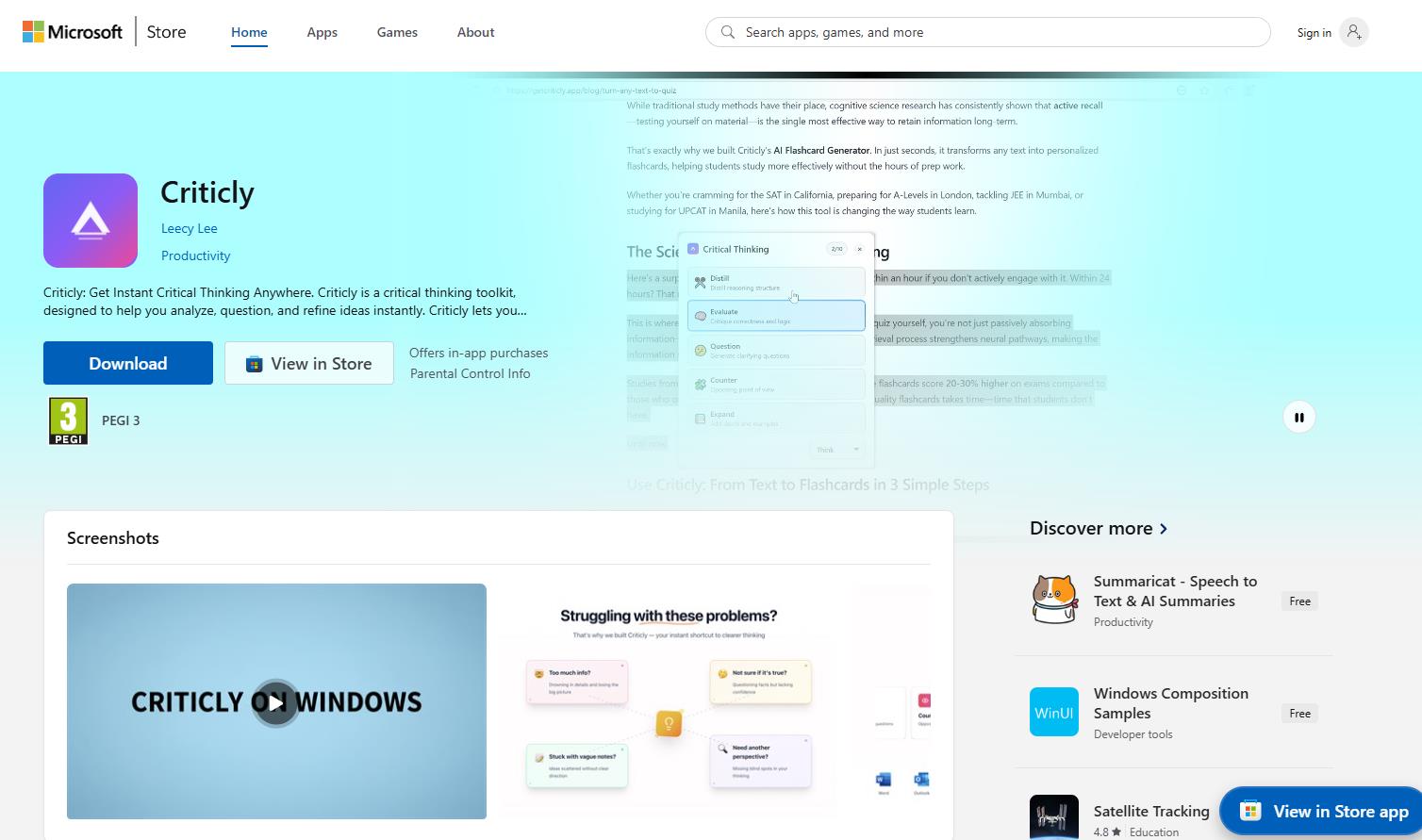
This is a versatile tool for generating and polishing ideas, not designed solely for writers. You can feed almost any type of text into it to receive a professional critical analysis.
A key feature is complete privacy; Criticly never stores your texts. However, this lack of storage can pose a challenge for authors writing multi-chapter works (as context may be lost).
-
Gives professional critical analysis on almost any type of text, not just fiction
-
Complete privacy, since it never stores your texts
-
Fast, straightforward feedback on ideas and drafts
-
Useful for polishing individual passages or concepts
-
No storage means context can be lost across multi-chapter works
-
Not purpose-built for long-form authors
-
Best for single pieces rather than whole manuscripts

It covers every aspect of writing a book. If you have nothing but raw ideas, this is the place to start. BookAI Writer helps organize your thoughts effectively.
It also assists with the actual writing process and can even help you design the perfect cover. Ultimately, your novel or non-fiction book will be fully prepared for publishing.
-
Covers the whole book process, from raw idea to publish-ready file
-
Organizes thoughts and assists the actual writing
-
Can design a cover, saving a separate freelancer
-
Exports in multiple formats: text, cover, EPUB, PDF
-
Free tier is capped at one book and about 20-something pages
-
Not built for critiquing existing drafts, more for generating
-
Full-length works require a paid plan
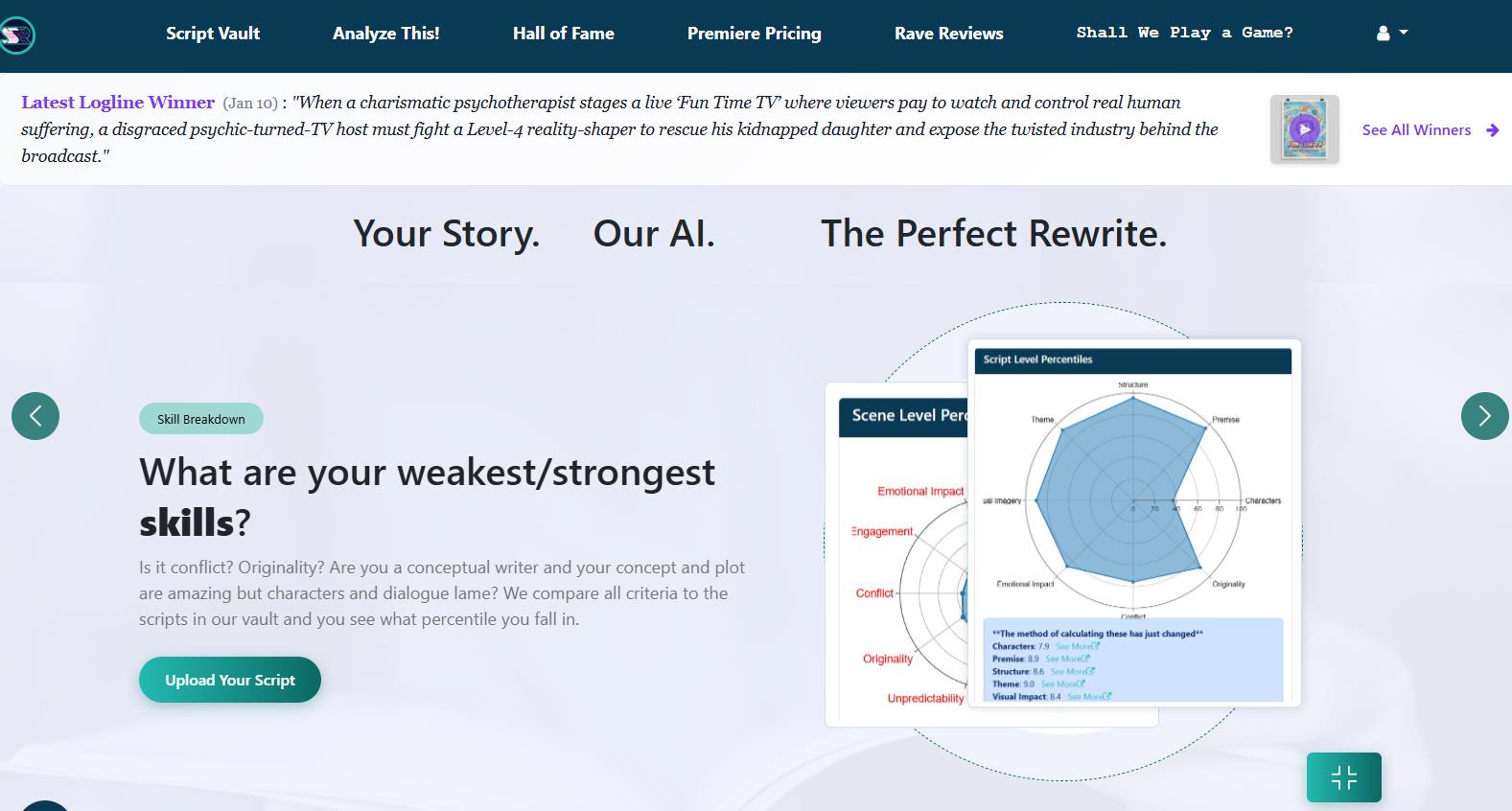
Screenplay writing is an entirely different domain. Scriptreader is an AI tool that analyzes your script drafts just like a professional would.
You can get a general assessment or opt for a logical analysis. If you need a deeper dive, ask the bot for a scene-by-scene evaluation.
-
Purpose-built for screenplays, a niche most tools ignore
-
Analyzes drafts scene by scene like a professional reader
-
Identifies specific strengths and weaknesses to guide revisions
-
Useful for both new and experienced screenwriters
-
Screenplay-only, so no use for prose or other formats
-
Detailed analysis is behind paid access
-
Niche focus means a narrower feature set

It is ideal for crafting watertight MBA application essays. Uniquely, it was built in collaboration with former admissions committee members, so you don’t need to worry about the quality of the final result.
Just upload your resume, complete the process, and identify the areas that need focus.
Just upload your resume, complete the process, and identify the areas that need focus.
-
Works like a writing coach, structuring ideas and easing the blank page
-
Highlights what is already working in your story
-
Keeps your own voice doing the work rather than rewriting for you
-
Good for planning and momentum, not just correction
-
More of a coaching aid than a deep line-by-line critique
-
Feedback is higher-level, so detail-focused edits need another tool
-
Full features require a paid plan
How AI Writing Analysis Works
Creators use these tools to extract key insights and build fictional worlds more effectively. Non-fiction authors use AI for statistics and fact-backed information.
While we still recommend double-checking every point, a story critique AI makes research much faster. Here’s how the process generally works:
- You upload a piece of writing or a draft.
- The AI analyzes your text and provides feedback based on your request.
- You use the assistant to improve parts that lack logic or depth.
- After writing, the tool helps you edit and polish your work.These apps assist in editing, fine-tuning, planning, and writing.
Some tools even assist with book editing and custom cover design.
Pricing and Terms
All tools in our analysis provide free plans. Usually, a free plan is sufficient to develop your ideas and gain deep insights.
You can opt for a paid membership for extra perks, but the free version is often enough to refine your writing and bring it to its best possible form.
Conclusion
The right story critique tool depends on what you actually need. Criticly is best for quick, private analysis of individual passages, BookAI Writer takes you from raw idea to a finished, publish-ready book; Scriptreader.ai is the specialist for screenplays; and Lyra works like a coach that structures your ideas while keeping your voice intact. None of them replaces a human editor or beta reader, but as a fast first pass to strengthen a draft, any of these can move your writing forward, so pick the one that matches your project and start there.
❓ Frequently Asked Questions
Answers to relevant questions about this AI tool
Are there any tools that specialize specifically in sci-fi worldbuilding?
Helpful guide for aspiring authors.
Are great for catching plot holes, but they lack human emotional resonance.
Yes! Getting an objective analysis of character arcs is incredibly valuable.