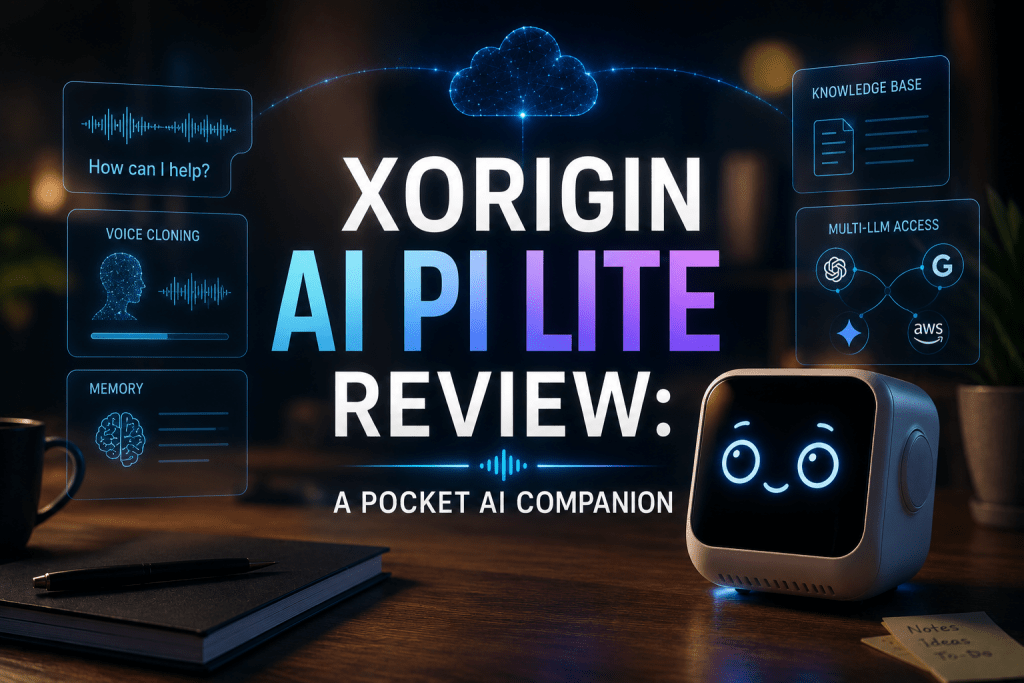
XORigin AI Pi Lite Review: A Pocket AI Companion
On this page
You already know how talking to an AI usually goes: unlock the phone, open the app, type into a box, read the reply. The XORigin AI Pi Lite removes every step in that chain except the talking. It’s a palm-sized gadget with a face, a microphone, and a speaker, and you address it out loud the way you’d address a person across the desk. At $26.99, it costs less than most phone cases, which raises the obvious question this aipi lite review sets out to answer: what do you actually get for that money?
What Exactly Is the AIPi Lite?
The AIPi Lite is a matchbox-sized desktop robot with a small square screen for a face. Under the shell sits a tiny, inexpensive computer chip called the ESP32-S3, the same kind hobbyists use to build their own electronics, which makes this an ESP32-S3 AI device in plain terms: just enough computer to listen, speak, and show a face. A microphone hears you from about 5 meters away, a small speaker talks back, and the included battery module charges over USB-C, the same cable as most phones.
Here’s the part to understand before buying: the intelligence is not in the box. The AIPi Lite is a cloud-connected AI, so the device handles listening and speaking while the actual thinking happens on servers, reached through your 2.4GHz WiFi network. Say the wake word, ask your question, and the answer comes back in the voice and personality you configured. No WiFi means no conversation, which is the honest trade behind the low price: the box is cheap because the brain lives elsewhere.
Characters, Voices, and a Memory That Sticks
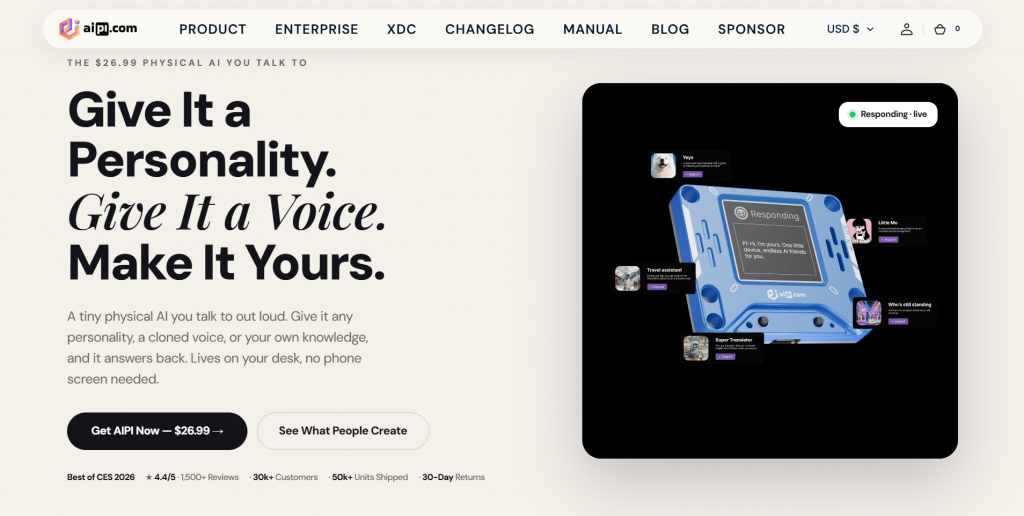
The hardware is the vessel. The product is what you pour into it through the web platform at xdc.aipi.com:
-
Character customization. You write who your companion is, up to 5,000 characters of personality description on the free tier and 20,000 on Ultra. The free plan includes 20 ready-made AI agents; paid plans unlock the full catalog.
-
Voices. 80 built-in voices ship with the platform, and the headline trick makes this an AI voice cloning device: give it about 15 seconds of audio and it speaks in that voice from then on. Cloning starts on the Pro plan.
-
Long-term memory. The companion remembers past conversations across sessions, and a separate 2,000-character memory field holds facts you always want it to know, your name, your dog, your schedule.
-
Multi-LLM access. Each character can run on a different brain: GPT-4.1, Gemini, Azure, or Amazon models on every plan, with GPT-5.5 reserved for Pro and up. Switching models per character is a genuinely practical touch.
-
Knowledge base. Upload PDFs or manuals up to 8MB and the device answers only from those documents. An Airbnb host loads the house guide; guests ask the robot where the spare keys are.
The Setup Process in Simple Steps
The out-of-box routine is short:
-
Power it on. Clip on the battery module or plug in USB-C.
-
Join your WiFi. Connect the device to a password-protected 2.4GHz network.
-
Activate it online. Register the device on the Xorigin Development Community platform, which is where your characters, voices, and documents live.
-
Start talking. The wake word “computer” opens a conversation, and a single function button covers the physical controls.
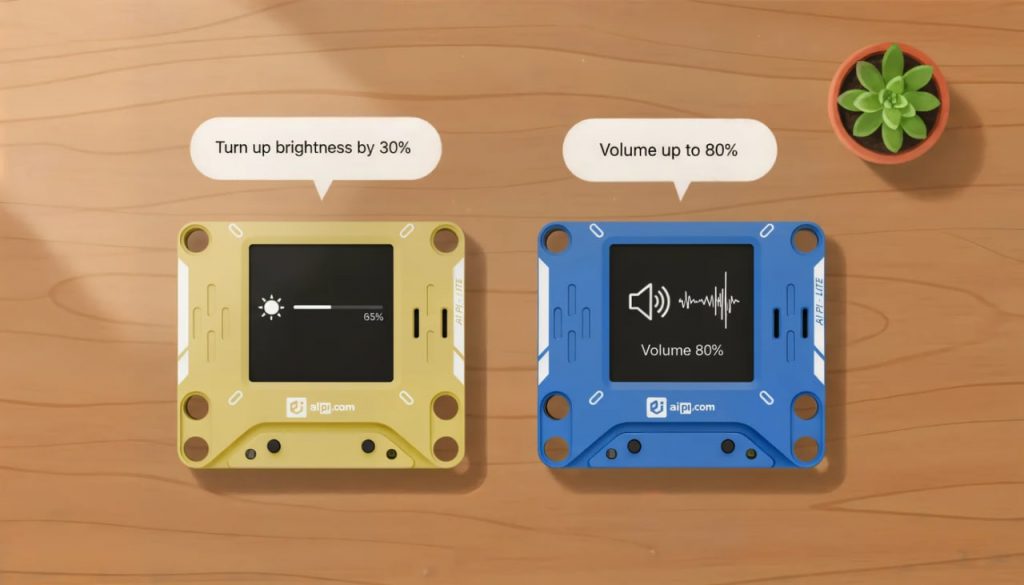
X-Origin’s own guide budgets about three minutes for the whole process, and that matches how little there is to do.
Who Is This Device For?
The maker crowd gets an open, hackable toy. Streamers and roleplayers get a portable AI assistant with a face and a personality they scripted themselves. Small operators get a desk-side expert trained on their own manuals.
Suppose you manage a climbing gym: upload the waiver rules and class schedule as the knowledge base, clone the head coach’s voice, and park the robot at the front desk. Members ask it questions all day, and it answers only from your documents. And anyone who finds phone chatbots impersonal gets a pocket AI companion that sits on the shelf and talks. One caution belongs in any honest aipi lite review: X-Origin advertises no content filters as a selling point, so this is a tool for adults to configure, not a children’s toy out of the box.
-
$26.99 for the device, with a free plan that works without any subscription.
-
Voice cloning from a 15-second sample, plus 80 stock voices.
-
Multi-LLM access (GPT, Gemini) switchable per character, a rarity at this price.
-
Open hardware with exposed GPIO and support for open-source Xiaozhi firmware, so tinkerers own it fully.
-
No auto-renewal on any plan, and a 30-day no-questions return window.
-
Nothing works offline; a 2.4GHz WPA2 WiFi network is mandatory.
-
The platform and documentation are English-only, with no Russian localization, and the store ships to North America.
-
The absence of content filters cuts both ways: fine for adults, unsuitable for unsupervised kids.
-
Voice cloning, the standout feature, sits behind the $9.99 Pro plan.
Pricing: Device Plus Subscription
The device is a one-time purchase; the subscription features live on top of it.
|
Plan |
Price |
What it adds |
|
Free |
$0 |
20 agents, GPT-4.1, basic memory, knowledge base |
|
Pro |
$9.99/month |
All agents, GPT-5.5, voice cloning (5 tracks) |
|
Ultra |
$15.99/month |
20K character descriptions, 10 clone tracks, 10 devices |
|
Lifetime |
$199 one-time |
Unlimited clones and device bindings |
Hardware bundles run from the single unit at $26.99 to a Twin Kit at $51.99 and a Full Set at $119.99, in five colors. Plans are picked on the platform after setup, not at checkout, and none of them auto-renew.
The DIY Side
This is where the aipi lite device separates itself from sealed gadgets.
For the technically minded: the dual-core chip runs at 240MHz with 8MB of PSRAM and 16MB of flash, that flash is unencrypted, the GPIO pins are exposed, and UART plus USB serial access is documented, so the community treats it as a development board with a personality.
You can flash the open-source Xiaozhi firmware and run the hardware your own way, wire it into Home Assistant, or use the MCP integration (in beta) to connect it to other tools. Marketing calls it an edge AI device; in practice the edge part is the hardware freedom, since the language models themselves stay in the cloud.
Final Thoughts
The aipi lite ai robot is two products in one shell. As a $26.99 desk companion it already works: pick a character, pick a voice, talk. As a platform it scales with your curiosity, from cloned voices to custom firmware and DIY / tinkering projects. Judge it by what it is, a cheap, open, cloud-dependent little talker, and the money asks very little. Judge it as a private offline assistant and you’re holding the wrong product. For $26.99, finding out which buyer you are is a low-stakes experiment.
❓ Frequently Asked Questions
Answers to relevant questions about this AI tool