DND AI Art Generator: 5 Best Tools for Your Campaign
On this page
Every table has one: the character described for six sessions as “kind of like Aragorn, but angrier,” because nobody at the table can draw. A dnd ai art generator closes that gap in about a minute. You type what the character sheet says, the model paints it, and your barbarian finally has a face. Five tools do this well right now, and they differ mostly in what free actually means and how much control you get. Prices below were checked in August 2026.
Top 5 DND AI Art Generators
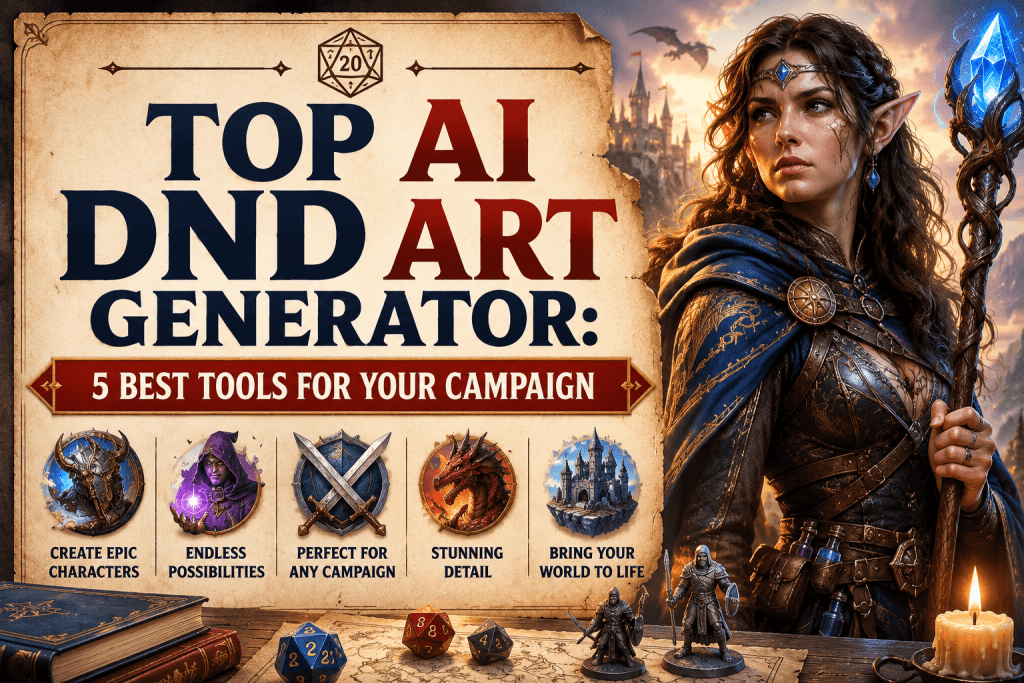
Each pick answers a different table problem: top image quality for a recurring hero, edits by conversation, daily art on a routine, a toolkit built for D&D specifically, and unlimited free basics.
1. Midjourney
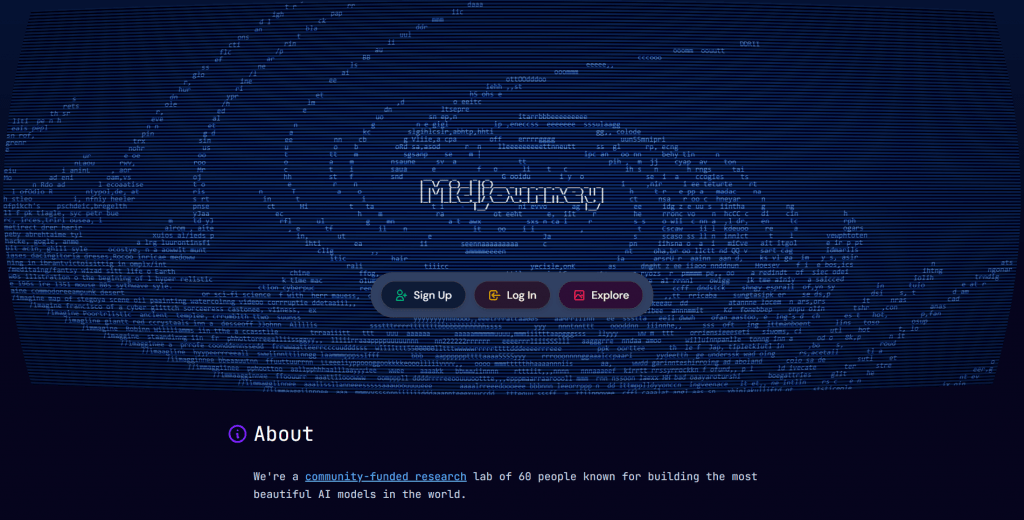
Official Website: midjourney.com
Midjourney is the quality ceiling, the tool behind most of the AI fantasy art you’ve admired online. There is no standalone app; you work in the browser or through Discord. It also solves the problem cheaper tools struggle with: character consistency. Its omni-reference feature takes an image of your paladin and holds that face across new scenes, so the portrait from session one still matches the death-save moment in session forty. The catch is the bill; there is no free tier at all.
Platform: Web, and inside Discord; no standalone app.
Pricing: No free plan; Basic at $10/month, or $8/month billed annually, for roughly 200 image jobs; Standard at 30/month(24 annually) adds unlimited relaxed-speed images.
-
The strongest image quality and fantasy aesthetics in this lineup.
-
Omni reference keeps a recurring character recognizable across scenes.
-
Commercial terms included from the Basic plan up.
-
No free tier, and images stay public until stealth mode on the Pro plan.
-
Prompting has its own grammar, so expect a learning curve.
2. ChatGPT
Official Website: chatgpt.com
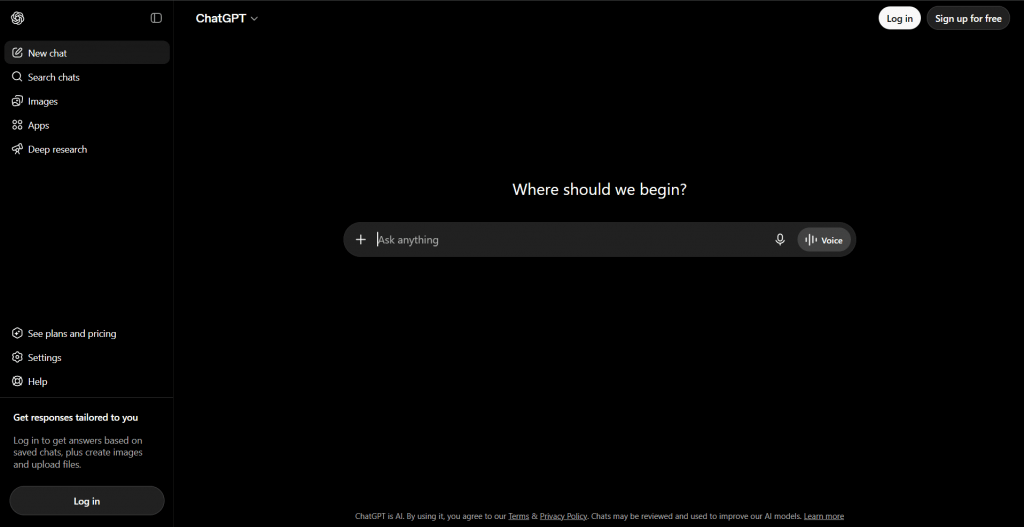
ChatGPT earns its slot by working the way a DM thinks. Paste the whole backstory paragraph and it extracts what matters, then edits by conversation: make her older, add the burn scar, put the tavern in the background. No other tool here iterates that naturally. Image limits on the free tier are tight, and Plus at $20/month raises them.
Platform: Web, plus apps for iOS, Android, Windows, and Mac.
Pricing: Free with daily image limits; Plus at $20/month for more capacity.
-
Understands long, messy character descriptions without prompt engineering.
-
Revisions by plain conversation, one detail at a time.
-
Slower per image than the dedicated generators.
-
Free-tier image caps arrive quickly on art-heavy days.
3. Leonardo.ai
Official Website: leonardo.ai
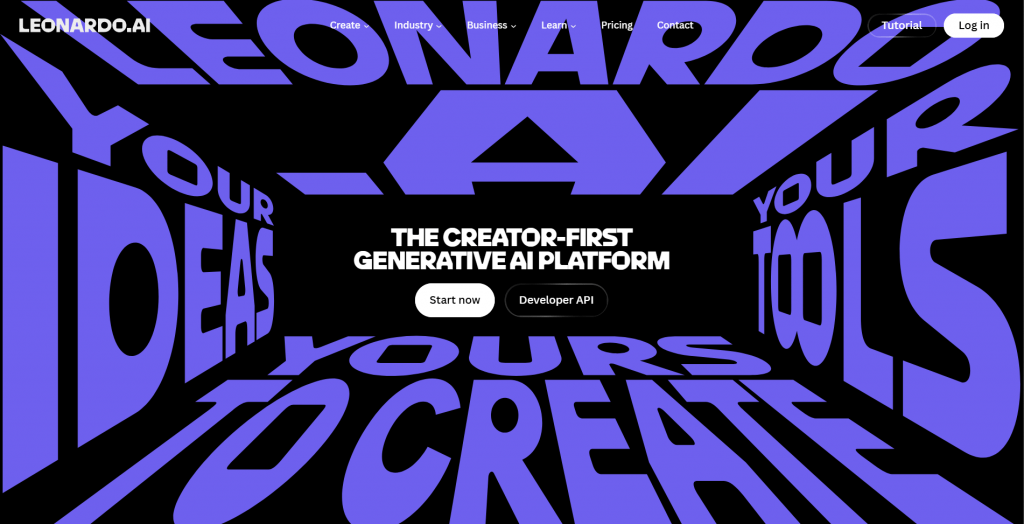
Leonardo, now part of Canva, is the workhorse for character portraits on a routine. The free plan grants 150 fast tokens every day, enough for a handful of detailed generations, and the fantasy-leaning model presets suit D&D out of the box. Feed it a reference image and image guidance nudges new art toward the same look, useful when your party wants matching portrait styles.
Platform: Web, plus mobile apps for iOS and Android.
Pricing: Free with 150 daily tokens; Essential at $12/month, about $10 on annual billing, with 8,500 monthly tokens.
-
150 free tokens renew daily, so a patient player never pays.
-
Model presets and image guidance built for consistent fantasy art.
-
Free-plan images are public; private creations start on the Essential plan.
-
Tokens drain fast at high resolutions and detail settings.
4. CharGen
Official Website: char-gen.com/character
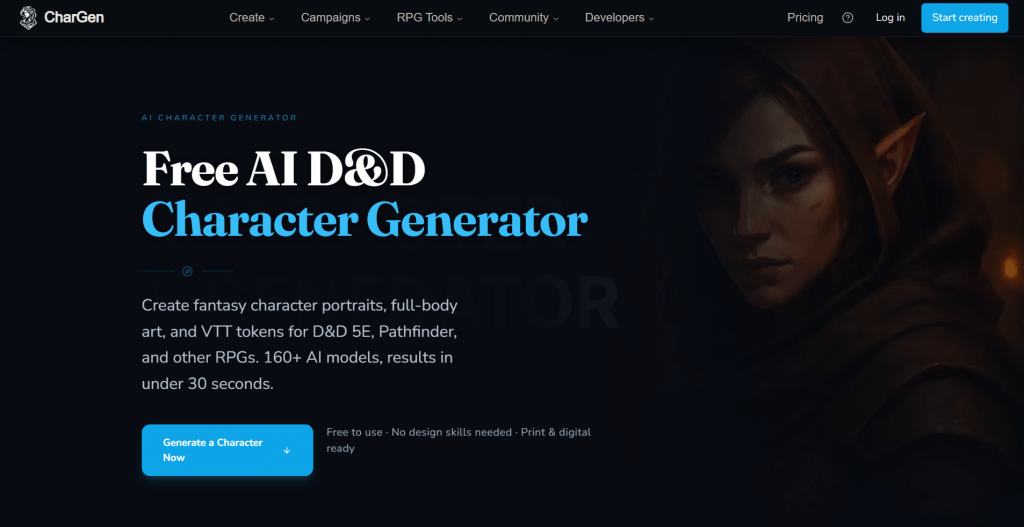
CharGen is the D&D-native pick, built for the game rather than adapted to it. Describe race, class, and gear, then output exactly what the table needs: a portrait, a full-body illustration, or a ready-to-use token for Roll20 and Foundry VTT. Under the hood it switches between 160+ image models without re-entering your prompt, and it sits next to companion tools for NPCs, battlemaps, and loot.
Platform: Web only, in any browser; no app to install.
Pricing: Free forever with 10 gold daily; Plus at £8/month billed annually for 900 gold and 40+ premium models; Elite at £16/month annually for all 160+ models and commercial rights.
-
VTT tokens and NPC headshots straight from the generator, no cropping.
-
Compare the same prompt across 160+ models, with audio and video on free too.
-
Unused gold rolls over for up to six months on paid plans.
-
The free 10 gold a day covers only a few images, and watermark-free downloads start on Plus.
-
Commercial usage rights start at the Elite tier.
5. OpenArt
Official Website: openart.ai/generator/dnd-character
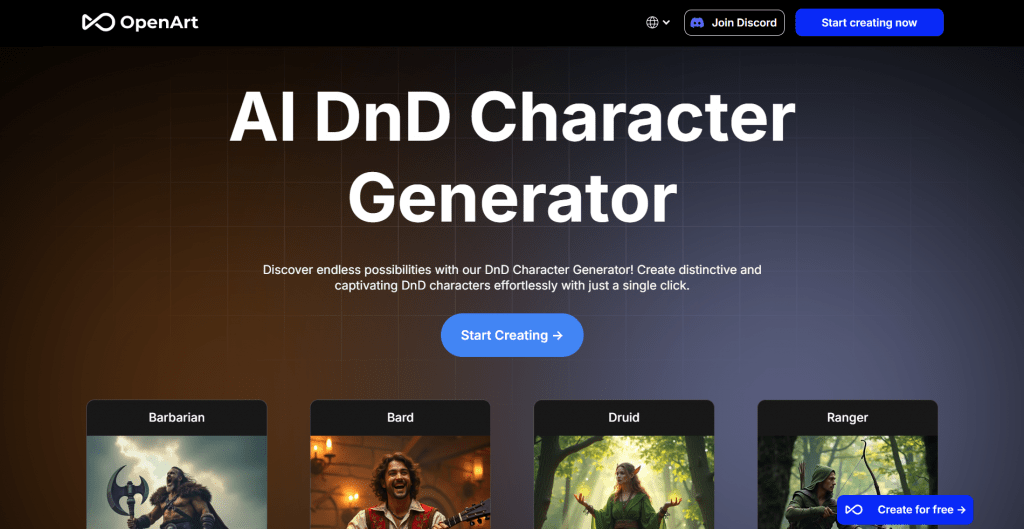
OpenArt is where you land when hunting for a dnd ai art generator free of daily anxiety: generation on its four basic models is unlimited at no cost, and new accounts get 50 trial credits for the premium ones. The dedicated D&D page ships class templates for barbarians, bards, druids, and rangers, and the consistent-character feature carries one hero across many images, the same job Midjourney charges for.
Platform: Web only, in any browser; no official Android app, so skip the lookalikes on Google Play.
Pricing: Free unlimited on 4 basic models, plus 50 trial credits; Starter at $14/month, or $13 on annual billing, for 4,000 credits.
-
Unlimited free generations on basic models, no daily cap.
-
Consistent-character tools included, roughly 13 characters on Starter.
-
Class templates give beginners a working prompt in one click.
-
An account is required for most features.
-
The top models cost credits, and heavier plans climb to $44/month and beyond.
Comparison Table
|
Tool |
Best for |
Free tier |
Paid from |
Consistency tools |
|
Midjourney |
Quality and recurring heroes |
None |
$10/mo |
Omni reference |
|
ChatGPT |
Conversational edits |
Limited daily images |
$20/mo |
Via chat memory |
|
Leonardo.ai |
Daily portrait work |
150 tokens/day |
$12/mo |
Image guidance |
|
CharGen |
Portraits plus VTT tokens |
10 gold/day |
£8/mo (annual) |
Model switching |
|
OpenArt |
Unlimited free basics |
4 models, no cap |
$14/mo |
Consistent characters |
A Prompt You Can Steal
Whichever tool you pick, the prompt does half the work. Give the model the same four things a player would tell a commissioned artist: who, what they wear, the mood, and the art style.
Half-orc paladin, broken left tusk, scratched silver plate armor with a sun emblem, weary expression, torchlit dungeon corridor, oil painting style, dramatic lighting, character portrait.
Swap the nouns for your own sheet and you have a reusable template. Keep the wording saved somewhere; reusing the exact phrasing is the cheapest character consistency trick there is, no paid features required.
Which One Belongs at Your Table?
Match the tool to how your group actually plays:
-
A recurring hero who must look the same in every scene: Midjourney, the best dnd ai art generator for consistency if the $10 fits your budget.
-
Art from backstory paragraphs, no prompting skills: ChatGPT.
-
A long campaign with weekly art: Leonardo.ai, where the daily tokens reset faster than your sessions do.
-
You play on Roll20 or Foundry: CharGen, because tokens arrive table-ready.
-
Volume on a zero budget: OpenArt’s unlimited basic models.
Your fighter’s stats live on the sheet. Now the face can too.
❓ Frequently Asked Questions
Answers to relevant questions about this AI tool