Best Random Emotion Generators: Spark Inspiration
On this page
Every creator hits the wall where every idea feels the same. Characters react the way you always write them, scenes carry the mood you always reach for, and the work goes flat. A random emotion generator breaks that loop. It hands you a feeling at random, joy, dread, nostalgia, quiet contentment, and challenges you to build something around it, forcing your imagination onto a path it would not have chosen. This guide rounds up the best free random emotion generators for writers, actors, and artists, and shows how to actually use them.
Why a Random Emotion Generator Helps
The value is not the emotion itself but the constraint. Handed a prompt you did not pick, you have to justify it, and that act of justification is where fresh ideas come from. Concretely, these tools help you:
-
Break writer’s block. A random feeling gives a stuck scene a new direction.
-
Deepen characters. Assigning an unexpected emotion to a character reveals sides you had not considered.
-
Practice range. Actors can draw a random emotion and rehearse expressing it on the spot.
-
Add variety. Artists and designers can use a feeling as the mood or palette for a piece.
Many of these tools organize emotions using Plutchik’s Wheel of Emotions, a psychological model built around eight core feelings, which keeps the results grounded rather than arbitrary.
The Best Random Emotion Generators
1. CodeItBro Random Emotion Generator

Official website: https://www.codeitbro.com/
What it does: Generates emotions from a database of 100+ feelings across eight categories, each with a description and intensity rating.
Why it stands out: It is built on Plutchik’s eight primary emotions, lets you filter by category, choose how many to generate, and copy results in one click. The cryptographically random selection means no repeated patterns across sessions.
Price: Free, no signup.
2. RandomPrompts Emotion Generator
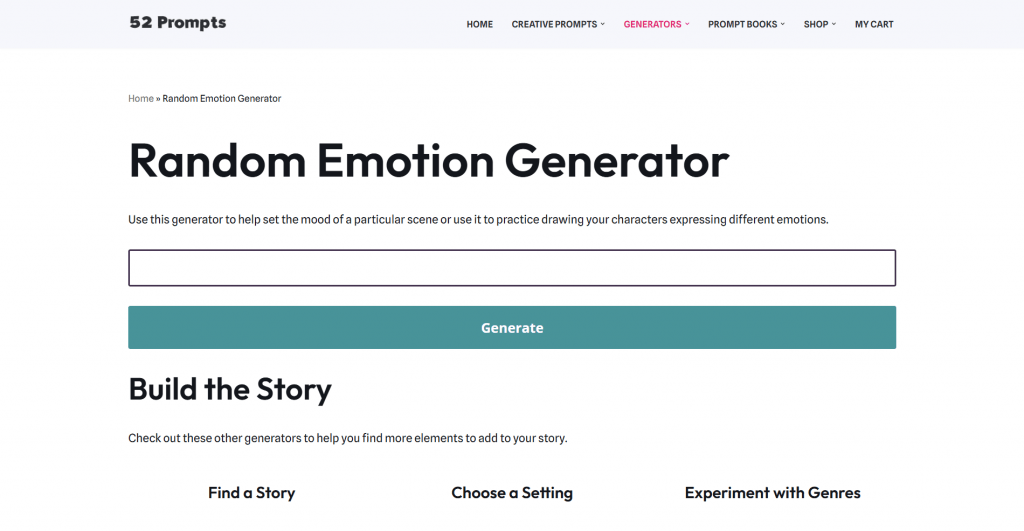
Official website: https://52prompts.com/random-emotion-generator/
What it does: Delivers a random emotion from 200+ feelings and moods with a single click.
Why it stands out: It is fast, unlimited, and needs no account, and its results are cleared for personal or commercial use, so writers and designers can use them freely in real projects.
Price: Free, no signup.
Pradoy Random Emotion Generator
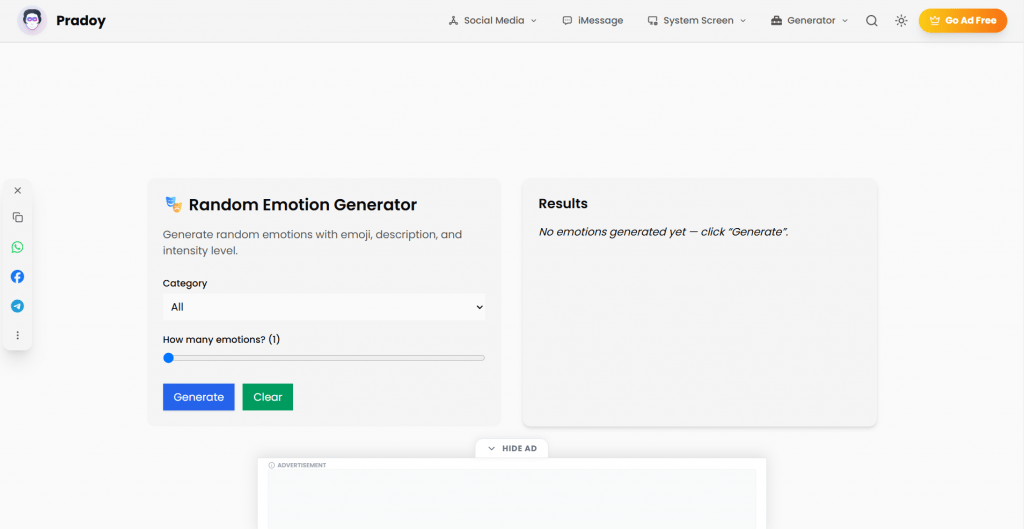
Official website: https://pradoy.com/random-emotion-generator
What it does: Instantly shows a random emotion, from Joy and Anger to Hope and Confusion, with optional category filters.
Why it stands out: It sorts feelings into Positive, Negative, Neutral, and Complex, the last covering subtle states like nostalgia and bittersweetness that are gold for nuanced writing and acting.
Price: Free, no signup.
My Random Generator Emotion Tool
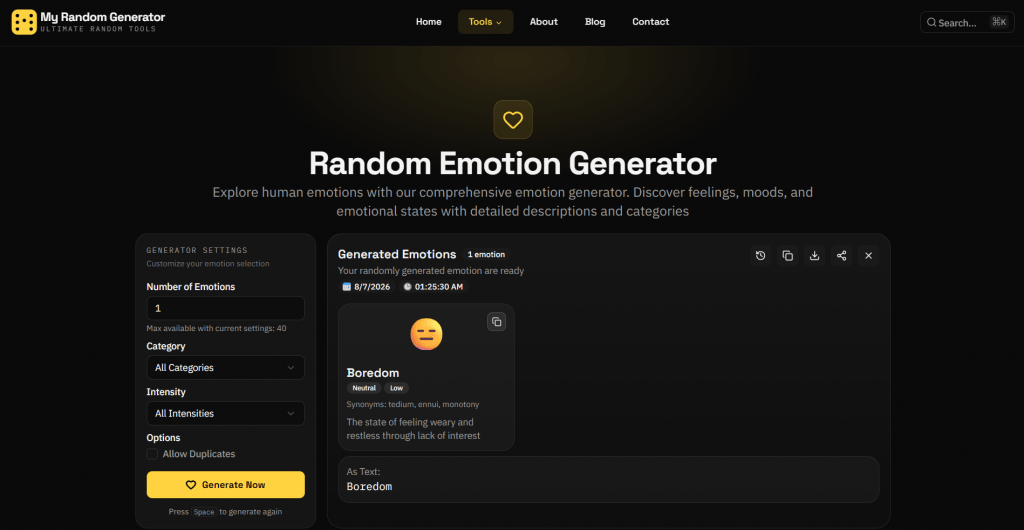
Official website: https://myrandomgenerator.com/tools/emotion
What it does: Produces an emotion with a full profile: description, category, intensity, synonyms, and an emoji.
Why it stands out: The synonyms and detail make it as much a vocabulary tool as an idea tool, useful when you know the feeling but need a sharper word for it.
Price: Free, no signup.
Vondy Random Feeling Generator
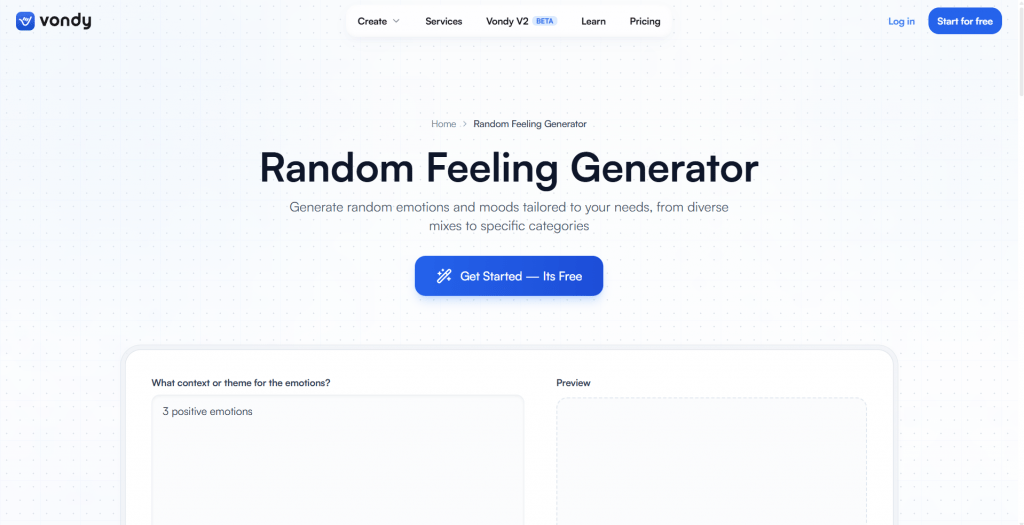
Official website: https://vondy.com/random-feeling-generator
What it does: Generates lists of feelings you can tailor to positive, negative, or mixed, then save or download.
Why it stands out: The list-and-download approach suits workshops, journaling prompts, and batch idea sessions rather than one feeling at a time.
Price: Free.
How to Use One Well
A random emotion is a starting point, not the whole exercise. To get real value:
-
Generate, then commit. Take the first result rather than rerolling until you get a comfortable one; the discomfort is the point.
-
Ask why. Instead of just noting “envy,” ask what your character envies and what they will do about it.
-
Layer two. Generate two emotions and force them into the same character at once, which creates the contradictions real people have.
-
Set a constraint. Give yourself five minutes to write or act the emotion, so instinct leads instead of overthinking.
Who These Are For
-
Writers developing characters, breaking block, or adding emotional turns to a plot.
-
Actors and performers practicing range by embodying a feeling on demand.
-
Artists and designers using an emotion as the mood, theme, or palette for a piece.
-
Educators and therapists running emotional-vocabulary and awareness exercises.
-
Roleplayers and game designers giving characters and NPCs believable emotional states.
Conclusion
A random emotion generator is a small tool with an outsized effect: it interrupts your defaults and hands your imagination somewhere new to go. The best options, from CodeItBro’s category-rich database to RandomPrompts’ fast one-click draw, are free and need no signup, so there is no reason not to keep one open the next time the work feels stale. Generate a feeling, resist the urge to reroll, and follow where it leads. The point is not the emotion you are given but what you do with the one you did not expect.
❓ Frequently Asked Questions
Answers to relevant questions about this AI tool