

Best AI Tools for Startups: Grow and Scale in 2026
On this page
Launching a startup is a very exciting experience. Unfortunately, the statistics paint a harsher picture: many new businesses will ultimately fail within the first couple of years. Today, competition is higher than ever. It is getting harder to capture the attention of customers. And today, investors are more careful when providing funding. Under these conditions, a startup’s survival and scaling depend on its team being more efficient and smart.
In this article, we will take a look at five key tools that can help your startup not only survive but also successfully scale through best practices.
Top 5 Solutions: AI-Powered Tools for Growing Your Startup
After considering the top needs of most growing businesses – from project management and product analytics to automation and creating content – we identified the top five solutions to meet the core needs of your growing business.
Tools specifically developed to help small business teams navigate the complexities of growing a business utilize AI and provide the means to streamline operations, facilitate communication across teams working remotely, and to speed up hypothesis testing and decision-making.
1. Asana: Project and Task Management
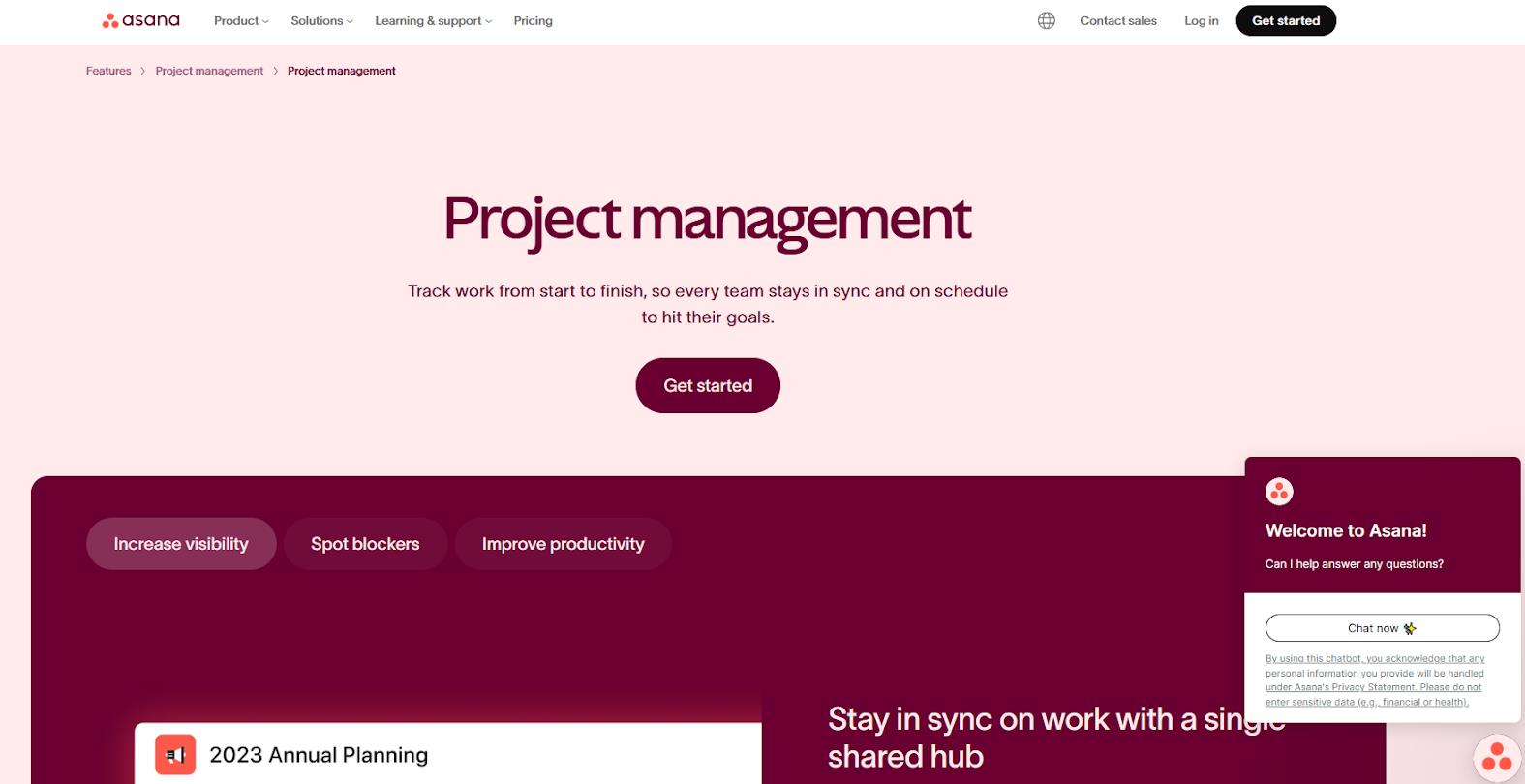
Asana is a top choice in project management, assisting teams in converting chaos into organized task completion. A good way to describe Asana is that it is a “smart, shared to-do list” for your entire company — a very accurate description. Large objectives are broken down into smaller tasks with deadlines and an owner assigned to each task.
Key Features:
- Easy to Use: All users on professional platforms consistently rate it extremely high in terms of usability and ease of adoption.
- Powerful Collaboration: Easily share files, communicate about tasks, and see team progress in real-time.
- Multiple Ways to View Projects: Projects can be viewed in the form of lists, Kanban boards, calendars, and timelines.
- AI Capabilities: Help predict roadblocks and optimize deadlines.
- Scalable: Perfect for remote teams and startups, thanks to a structured format and customizable options.
Limitations:
- Features such as Gantt charts and start dates require a paid tier to access.
- Costs associated with subscriptions increase substantially as the team increases in size.
User Ratings: Based on tens of thousands of user reviews, Asana has a 4.5/5 rating on both G2 and Capterra; however, its Trustpilot rating is significantly lower (1.5-2), primarily due to complaints regarding billing procedures and automated renewal of subscriptions.
For Startups: Asana is a favorite among early-stage companies. Many users comment on its clean interface and robust collaboration capabilities as key selling points.
2. Amplitude: Product Analytics and Growth Insights

Amplitude is a product analytics platform that provides data-driven teams with insight into how end-users truly engage with their product. Unlike traditional traffic counters, Amplitude focuses on the behavior of end-users while engaging with the application: Which buttons were clicked? Where did end-users become stuck? Why did end-users return?
Key Features:
- End User Behavior Analysis: Allows building user cohorts, analysis of funnels and retention, and identification of growth opportunities.
- Dashboards: Provides intuitive dashboards to easily identify insights and to share those insights with the team.
- Generous Free Plan allows you to collect and analyze data without an upfront investment.
- Reports & Integration Options: Offers flexible report generation for specific tasks and integration with multiple services.
Limitations:
- Requires time and a learning curve to build sophisticated queries.
- The free trial plan does not offer sufficient function as the data volume and company requirements increase.
User Ratings: 4.5-4.6/5
For Startups: Amplitude is ideal for product-led growth companies. Product managers love its analytical depth and the fact that it answers important questions regarding customer acquisition and retention.
3. Zapier: No Code Automation
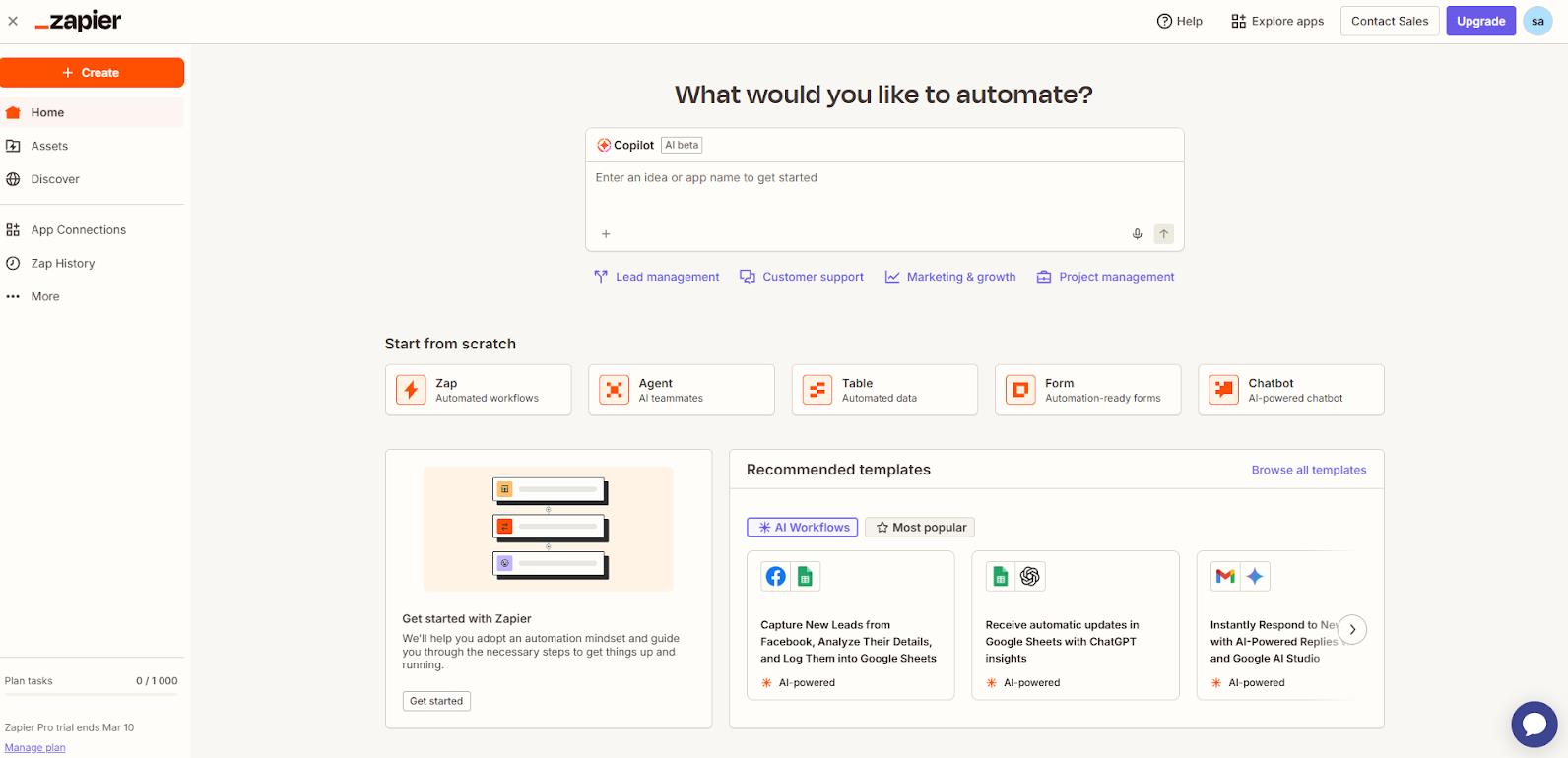
Zapier is one of the most popular no-code automation platforms. It serves as the connection or bridge between all the web applications that a startup may use. Most startups have dozens of services (CRM, email marketing, messaging).
With Zapier, startups are able to get these services communicating with each other without requiring manual intervention. For example, when a new lead completes a website form, Zapier can automatically add the new lead to the CRM system and send a message to the sales team via Slack.
Key Features:
- Vast Amount of Apps to Connect: Integrates thousands of apps, allowing for a wide range of solutions.
- Save Time: Automate repetitive processes (transfer files, send notifications, etc.) to allow for additional time to focus on work related to your business.
- Consistency and Ease of Use: Simple to understand interface. Automated workflows (Zaps) run continuously and reliably.
- Do Not Require a Developer: Project Managers, Marketing Directors, and others who do not have coding knowledge can automate their own workflows.
Limitations:
- Zapier uses a pricing model that is based on how often tasks are completed and the complexity of the scenarios being used. As the frequency of activity increases, so will the costs associated with using Zapier.
User Ratings: 4.5–4.6/5
For Startups: Zapier is a key tool for connecting multiple services that a startup utilizes. Reviewers find Zapier reliable with a wide variety of integration options. Many reviewers on Reddit express concern regarding the cost associated with Zapier. Some reviewers recommend utilizing a less expensive alternative to Zapier.
4. Copy.ai: AI-Based Content Generation Tool
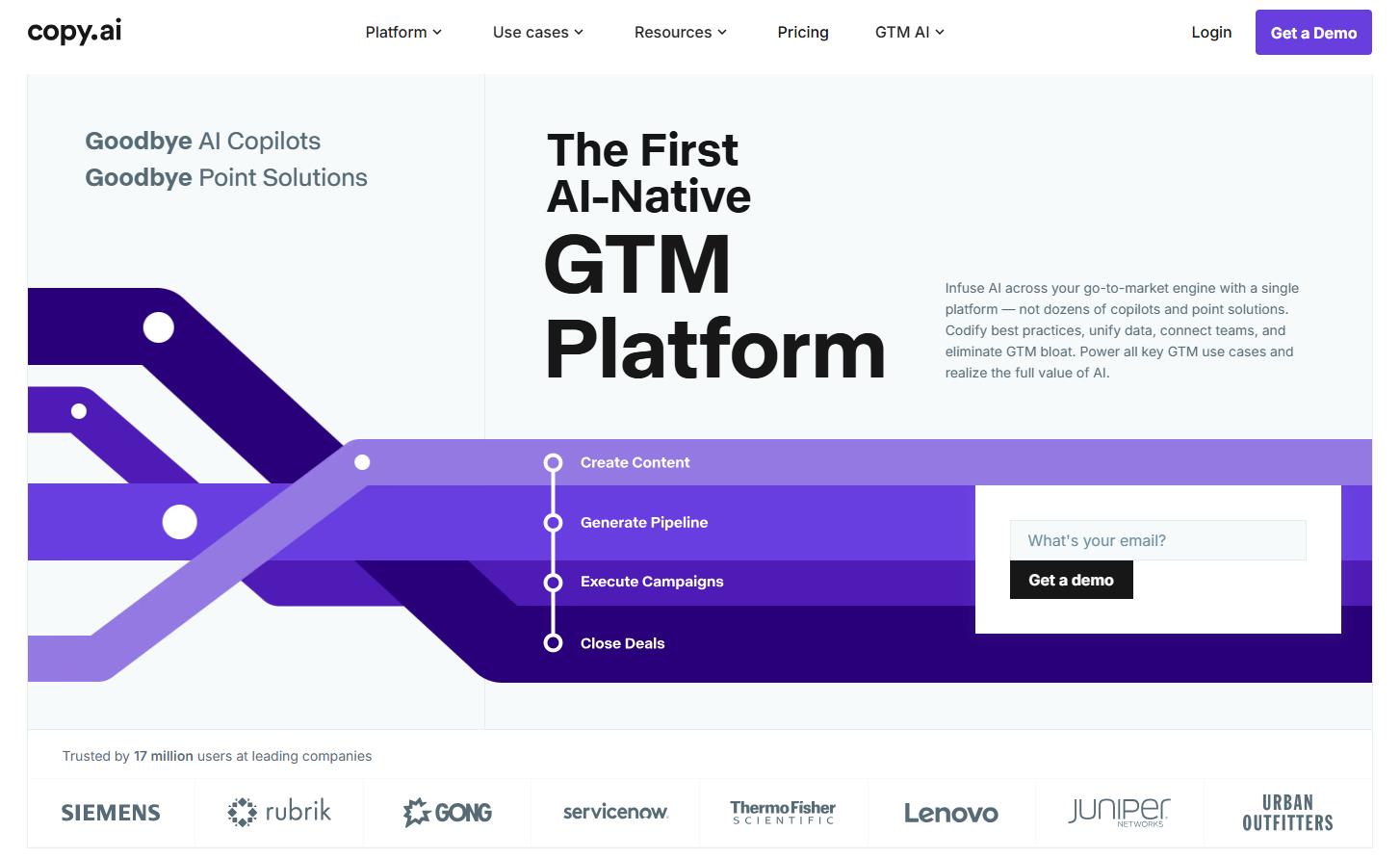
Copy.ai is an AI-based tool that was created to produce high-quality marketing copy within seconds. The tool helps to reduce creative blocks by generating a quantity of drafts for social media posts, headlines, product descriptions, and email campaigns. Simply input a small amount of information regarding the idea you want to generate, and Copy.ai will provide you with hundreds of different versions of that idea.
Key Features:
- Quick Production of Content: Reduces the time and money required to hire copywriters to create content for basic content creation tasks. Provides a multitude of ideas and phrasing to utilize for creating more content.
- Pre-Built Templates: Has pre-built templates to assist in completing a variety of marketing-related tasks.
Limitations:
- Almost every piece of generated content will require substantial editing prior to publishing.
- Users report recurring issues with customer support.
User Ratings: 4.4/5 on Capterra. User reviews on Trustpilot decrease to 2.0 stars due to user reviews criticizing the lack of customer support, difficulty accessing their accounts, and billing issues.
For Startups: Copy.ai is a beneficial tool for rapidly drafting and testing marketing messaging. Many teams combine Copy.ai with free alternatives to save money and improve the quality of the content produced.
5. Miro: Collaborative Visual Platform and Virtual Whiteboard
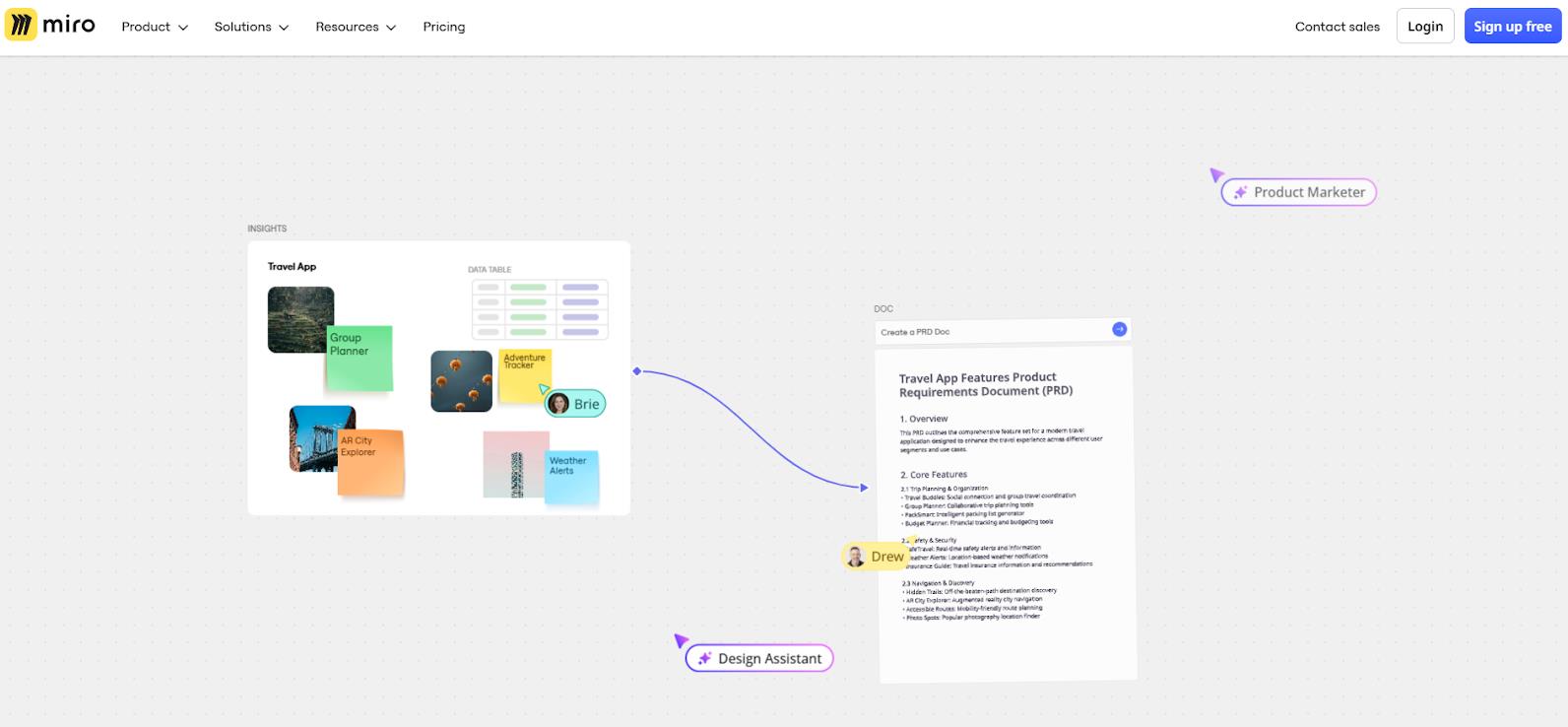
Miro is a leading provider of collaborative visual tools. Miro essentially provides a virtually endless digital whiteboard space where teams can collaborate to create product roadmaps, visualize customer journey maps, conduct workshops, and much more as if they were all in the same physical space.
Key Features:
- Visionary Ideas: Converts intangible ideas into concrete and tangible visual diagrams.
- Collaboration in Real-Time: Allows multiple users to add to a shared virtual whiteboard at the same time by adding comments, sticky notes, and voting capabilities.
- Large Template Library: Offers a library of over 400 templates for conducting Lean Canvas, Design Sprints, Retrospectives, and numerous other activities commonly conducted by startups.
- AI Capabilities: More recent versions of Miro offer the ability to help organize ideas and convert hand-drawn diagrams into structured visual representations.
Limitations:
- Limits the number of editable boards that can be created. This limitation quickly becomes a challenge for active teams.
- Large, multimedia-heavy boards may experience performance delays.
- Can be costly for bootstrapping startups.
User Ratings: 4.7/5 based on thousands of reviews.
For Startups: Miro is a top choice for product discovery, remote workshops, and strategic planning. Miro’s ease-of-use and strong collaborative features have made it a “go-to” platform for modern, dispersed teams.
Tool Comparison at a Glance
To help you decide, we’ve summarized the key characteristics of each tool.
| Tool | Primary Function | Pros | Cons |
| Asana | Project Management | Free plan, intuitive interface, visual progress tracking, AI features | Costs increase as team scales |
| Amplitude | Product Analytics | Deep behavioral analysis, growth insights, generous free tier | Steep learning curve, expensive premium plans |
| Zapier | No-Code Automation | Thousands of integrations, saves time on routine tasks, no coding required | Becomes costly at high task volumes |
| Copy.ai | AI Copywriting | Fast draft creation, overcomes writer’s block, templates | Questionable support quality, requires heavy editing |
| Miro | Visual Collaboration | Ideal for remote teams, infinite canvas, extensive templates, AI features | Limited free version, can lag on large boards |
Choosing the Best Tools for Your Startup
Selecting the best tools for your startup ultimately boils down to what challenges you face and where you are in terms of the development process. There isn’t a one-size-fits-all solution; each solution addresses a unique problem.
- Asana and Miro form the foundational layer for getting organized and facilitating communication among team members. If you need to create structure around your projects and run successful strategy sessions with a remote team, start with them.
- Amplitude is the best solution if you need to develop a growth strategy based on a deep understanding of user behavior. It is designed for mature, product-led businesses that are willing to spend time developing analytics.
- Zapier is necessary to serve as the technological link between your software stack. It is a critical component, but it requires financial prudence. If you have simple integrations, the free plan should suffice. However, as your automation needs grow, it would be wise to evaluate costs and possibly transition to lower-cost alternatives.
- Copy.ai is a helpful marketing resource, especially if you want to rapidly test marketing hypotheses and generate large quantities of draft content. Just remember: quality control is essential, and support issues can become problematic at the worst possible moment.
Editor’s Take
Of course, Google Analytics remains the undisputed leader for tracking user activity, validating product-market fit, and gathering the baseline data needed for strategic decisions. But emerging AI-powered solutions can offer deeper or more immediate insights.
The optimal strategy for most startups? Start with the free versions of Asana and Miro. Use Google Analytics for foundational metrics. Connect Zapier for simple automations. And experiment with Copy.ai for content creation. As you grow and your needs become more complex, you can gradually upgrade to paid tiers or explore more specialized tools such as Amplitude.
❓ Frequently Asked Questions
Answers to relevant questions about this AI tool



Excellent tool.
Highly recommended.
Excellent compilation.