
FaceCheck.ID: Safe and Legitimate Face Search?
On this page
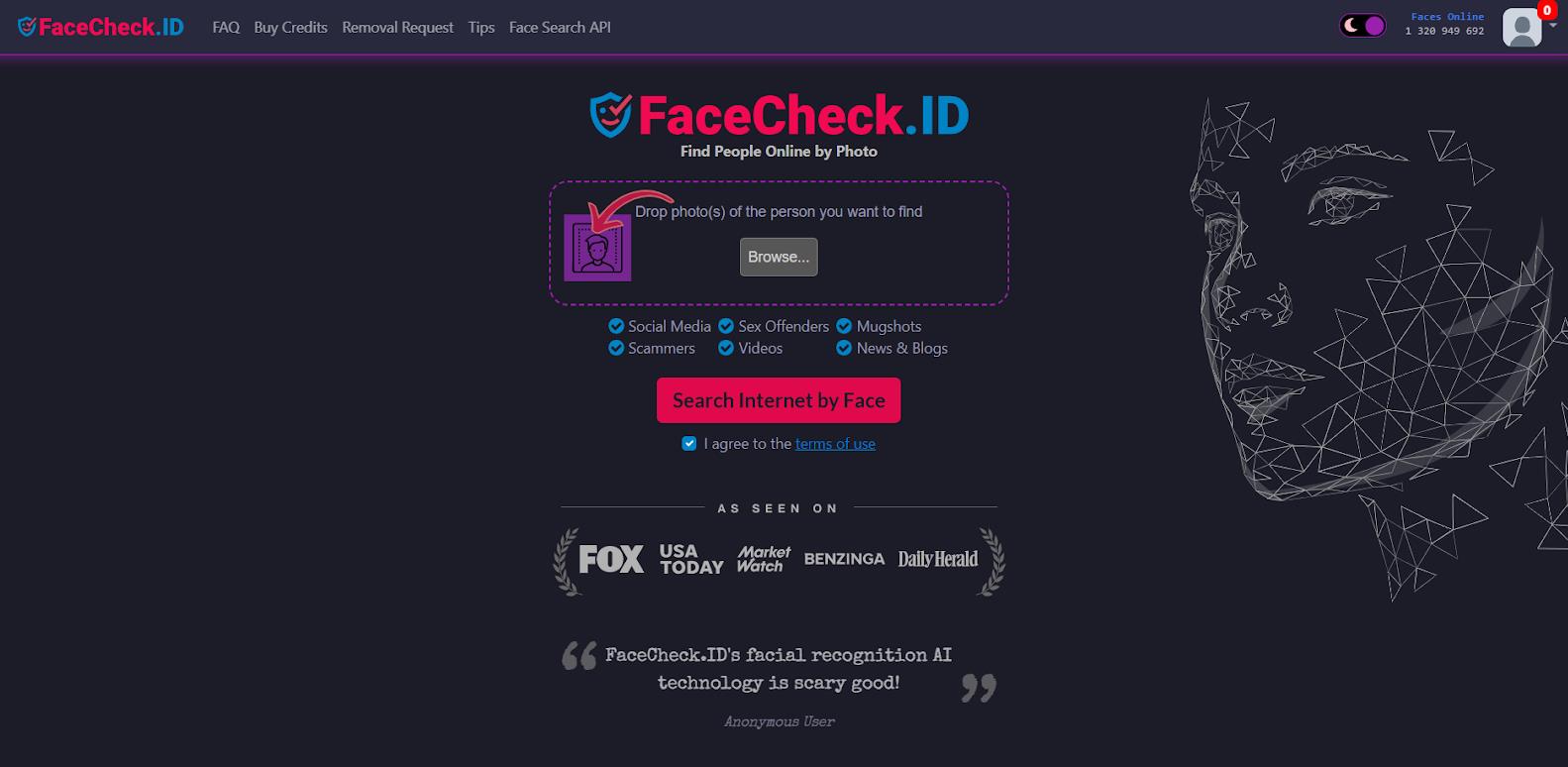
In the era of online dating and remote work, the risk of encountering fraudsters (catfishing, romance scams) is higher than ever. FaceCheck.ID is a specialized search engine that uses AI to find faces on the internet. Unlike Google Images, it doesn’t just search for similar images, but for the same face in different angles, qualities, and even across different years.
What is FaceCheck.ID and how does it work?
FaceCheck.ID is a reverse face search engine. You upload a person’s photo, and the neural network analyzes facial geometry, creating a unique digital "faceprint." This faceprint is then checked against a database of millions of indexed public images.
The tool is intended for anyone wanting to verify an online counterpart, from Tinder users to security professionals.
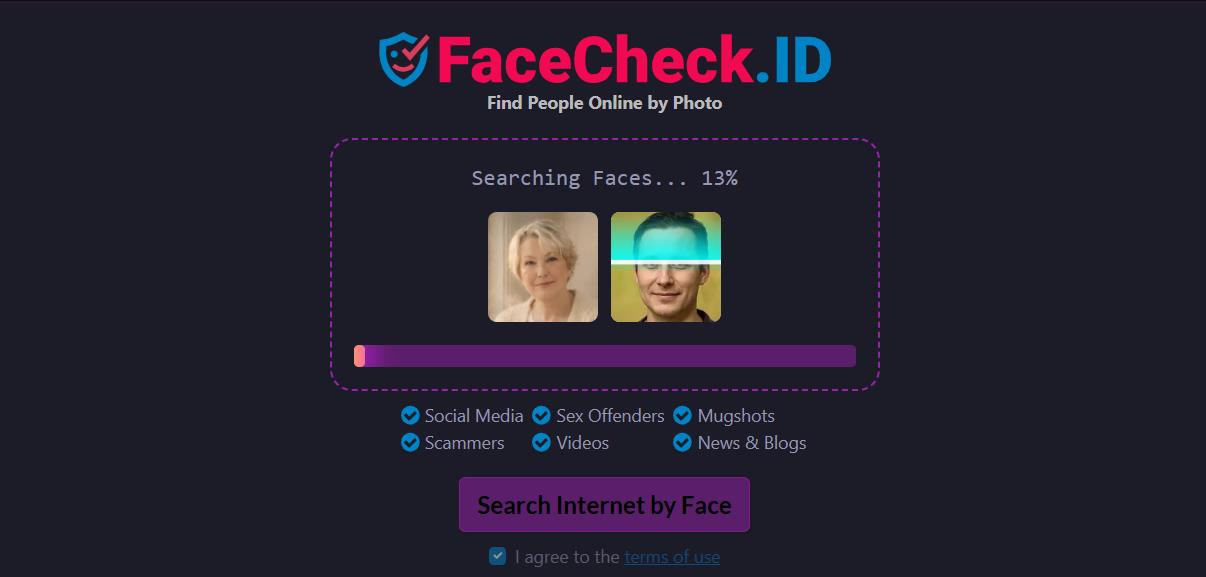
The verification process looks like this:
- Upload: You upload a clear, front-facing photo.
- Analysis: The AI detects key facial points, filtering out noise and filters.
- Search: The system scans open sources: social networks, blogs, news sites, mugshot databases, sex offender registries, and scam warning websites.
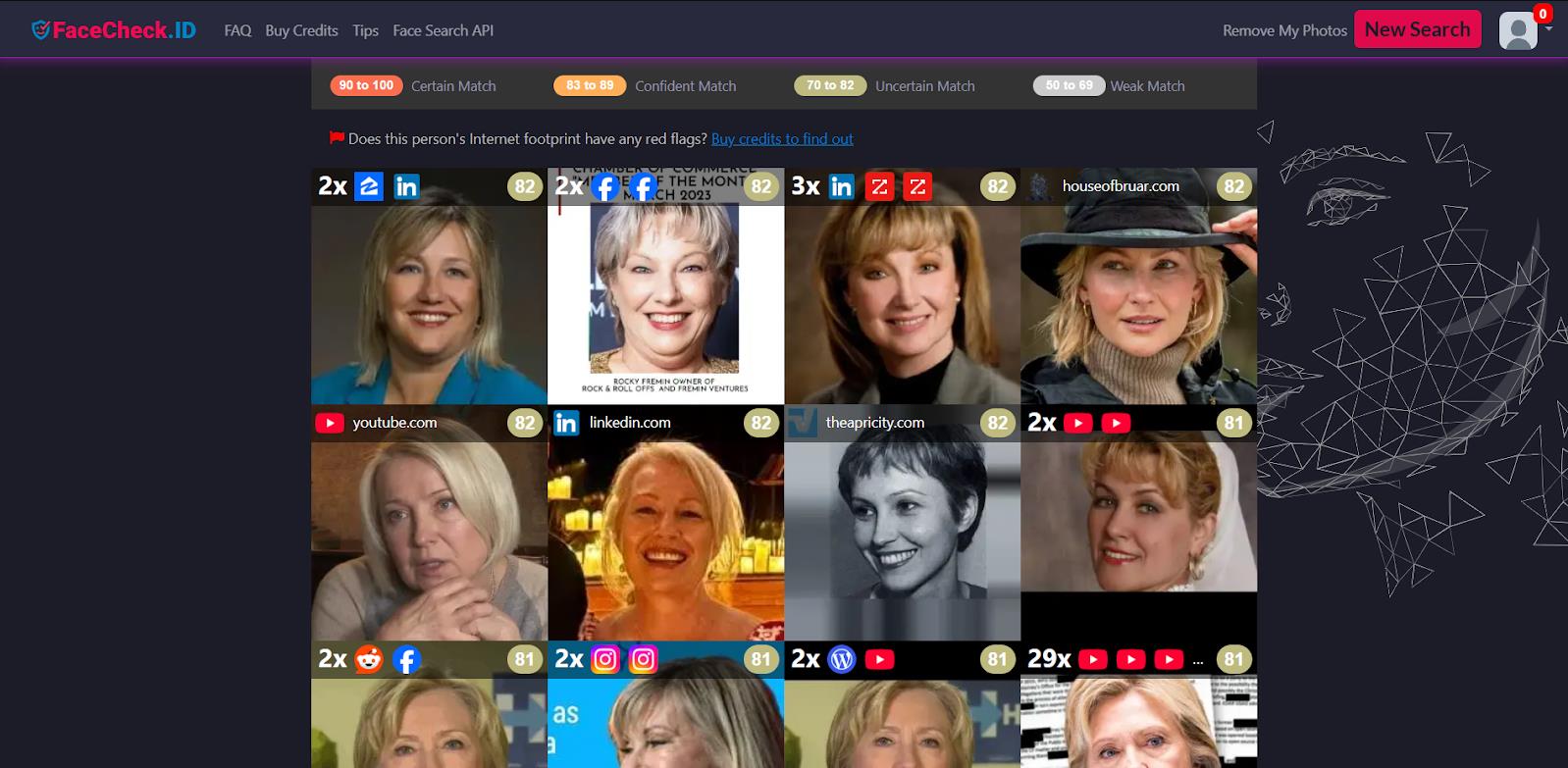
- Results: You receive a list of thumbnails of found faces with source links and a confidence rating (Match Score).
Interpreting the results:
- Certain match (90–100%, green): An almost exact match.
- Confident match (83–89%, yellow): High probability of a match.
- Below 82%: The match is not obvious; it could be a look-alike or the result of poor photo quality.
A key feature is the display of "Red flags." If a face is associated with adult content, dating sites of dubious reputation, or criminal records, the system immediately alerts you.
Platforms and availability
Currently, FaceCheck.ID is only available as a web service. The tool has no official mobile applications. Any apps named "FaceCheck" in the App Store or Google Play are likely fake and could be unsafe.
A browser extension for Google Chrome is also available.
Use cases: from personal safety to business
The tool finds application in both personal and professional scenarios.
For personal use:
- Dating verification: The most popular scenario. Met someone on Tinder or Bumble but their profile seems suspicious? Upload their photo to FaceCheck to ensure they aren’t a scammer using someone else’s pictures.
- Safe transactions: Before buying an expensive item second-hand, you can check the seller’s photo to avoid dealing with a criminal.
- Finding old acquaintances: Sometimes it’s easier to find a person by face than by name, especially if the name is common or has changed.
For business and professional tasks:
- Counterparty verification: Ensure that the decision-maker at a partner company isn’t involved in fraudulent schemes.
- HR and hiring: An additional, informal background check for remote job candidates (in jurisdictions where permitted by law).
- OSINT research: Journalists and bloggers can use the service to gather information on public figures.
- High recognition accuracy: Users unanimously call the technology “scary accurate.” The AI excels at finding the same face, even if the photos show different ages, angles, or quality.
- Focus on safety: The tool intentionally indexes criminal databases and scam sites, which is critical for identifying potentially dangerous individuals.
- Privacy policy: Your uploaded photo is not stored or added to the database. It is deleted from servers within 24 hours. Free removal of your own photos from the index is also available.
- “Red flags” system: Automatic highlighting of suspicious matches saves time and immediately draws attention to major risks.
- Free entry point: You can perform a search and see previews of the results (how good the matches are) without spending a dime.
- Cryptocurrency-only payment: This is perhaps the biggest barrier for the average user. The inability to pay by card or PayPal breeds distrust and cuts off a huge audience.
- Paywall (hidden results): For free, you only see thumbnails. To access the links and find out exactly where the photo was published, you need to purchase credits. Sometimes, after payment, you might find the matches are irrelevant.
- Not 100% accurate: The system can make mistakes. People with similar features (look-alikes) or overly blurry source photos can lead to false positives or weak results.
- Legal restrictions: The service cannot be used for making decisions affecting employment, credit, or housing eligibility. This is explicitly stated in the terms of service.
Conclusion: is It worth using?
FaceCheck.ID is a powerful, specialized tool that honestly does what it claims: searches for faces across the internet. It genuinely helps ordinary people avoid romance scams and verify suspicious contacts.
However, its legitimacy and safety are unquestionable only up to the point of payment. The cryptocurrency requirement and the developer’s offshore registration are factors that give pause.
❓ Frequently Asked Questions
Answers to relevant questions about this AI tool
Sources
-
FaceCheck ID — facecheck.id
-
Buy Credits - FaceCheck.ID — facecheck.id
-
FaceCheck.ID Review 2026: Is It Free? Does It Work? - ToolJunction — tooljunction.io
-
FaceCheck ID Review - MobileAppDaily — mobileappdaily.com