

Best Feng Shui Layout Generators
On this page
Feng Shui layout generators using Artificial Intelligence (AI) are specialized digital tools that use computer vision and machine learning technology to assess and produce harmonious interior environments. These tools work as virtual Feng Shui consultants to help users incorporate traditional Feng Shui concepts into their modern-day living and working spaces.

Most AI Feng Shui layout generators fall under two categories: they are either designed to analyze an existing space (via photographs or blueprints), or they generate optimized furniture layouts from scratch based on user-defined specifications.
The main function of all AI Feng Shui layout generators relies on massive libraries of traditional and modern Feng Shui principles—from analyzing the flow of energy (chi) and balancing the five elements to applying the Bagua map and accounting for door placement, window placement, and load-bearing walls.
How Do AI Feng Shui Layout Generators Work?
Although the exact characteristics of each AI Feng Shui layout generator differ, the fundamental process of how these systems operate follows one of two common patterns.
Analyzing a Pre-Existing Space
This option is ideal when you currently have a space you would like to optimize.
- Data Entry/Upload: The user uploads a photograph of the room, a screenshot of the room layout, or a PDF of a blueprint (JPG/PNG/PDF). A few AI Feng Shui layout generators, such as AI Feng Shui Layout Tool, also provide the capability for uploading up to three photographs for a comprehensive assessment.
- Image Analysis: Through the use of Computer Vision, the AI identifies the primary structural elements of the space: walls, windows, doors, and where the furniture is placed.
- Application of Feng Shui Principles: The system applies hundreds of parameters to the resulting diagram to assess the total environment. This includes a chi flow evaluation, a five elements balance assessment, the application of the Bagua zones, and the identification of “poison arrows” (sharp corners pointing toward the bed or workspace).
- Delivery of Recommendations: The user receives a structured report detailing the current status of the space along with practical, actionable recommendations. For example: Where should I move my bed? Which color should I add to create harmony among the five elements? What should I remove from this critical zone?
Creating a New Layout from Scratch
This method is ideal for designing a new room or planning a major renovation project.
- Configuration: The user enters the room’s measurements, identifies the location of the doors and windows, and selects the type of furniture (bed size, etc.).
- Generation of Options: The AI system, similar to LumenFeng’s Feng Shui Bedroom Layout Generator, takes the data provided and generates multiple furniture arrangement options that meet Feng Shui principles within seconds.
- Visualization: A few platforms, like Homestyler, expand on standard diagram generation to include 3D models of the interior. This provides the user with an opportunity to visualize the outcome before physically moving a single piece of furniture.
Currently Available AI Feng Shui Tools on the Market
There are many AI-based Feng Shui products on the market. Below is a brief summary of the most functional and popular products.
Note: This list contains a product focused on visual content instead of spatial analysis.
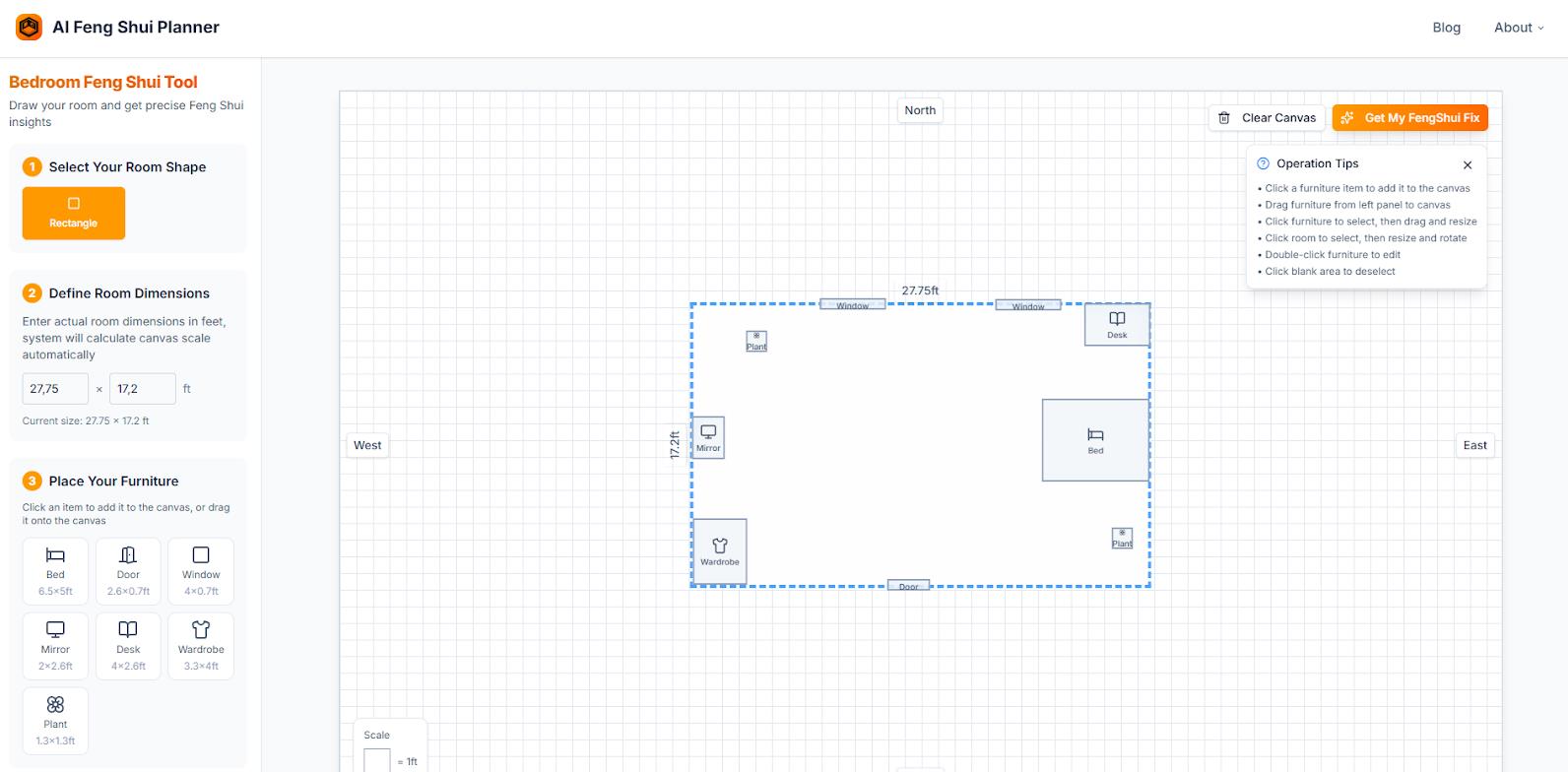
This service is positioned as a fully-fledged digital consultant. The primary attribute of this service is the ability to utilize a detailed manual modeler combined with an AI assessment. Users can manually input elements onto a virtual canvas, then take a screenshot of the canvas to submit for AI-powered assessment and recommendations.
The service is primarily geared toward providing in-depth design planning of a bedroom, however it can be utilized for a living room or office via its manual configuration. Free basic access.
Feng Shui Bedroom Layout Generator (LumenFeng)
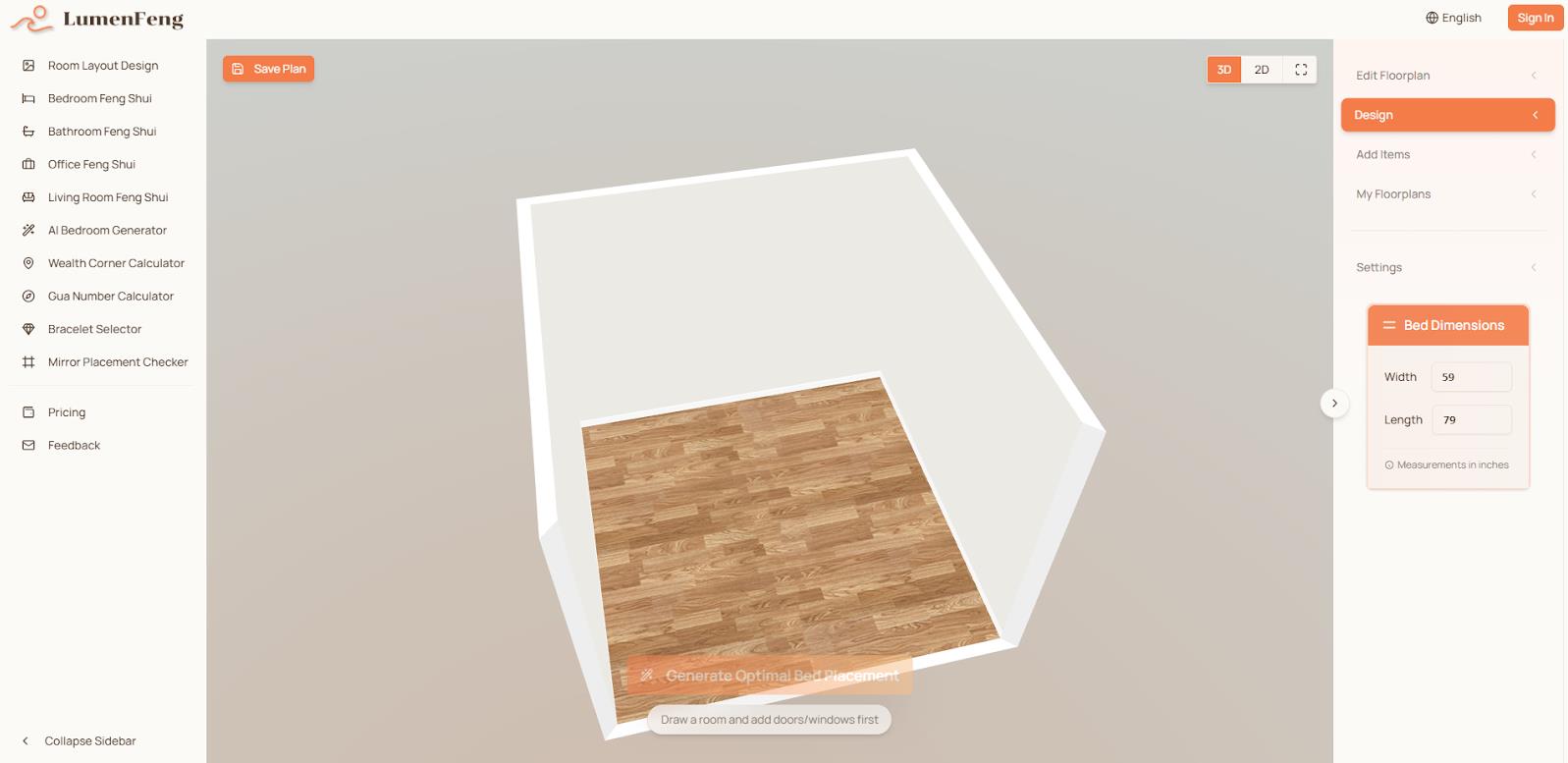
An entirely free generator specifically designed for creating bedroom layouts. Users are able to enter room dimensions, add windows and doors, select a bed, and click “Generate.” The AI, which the developers claim is based upon spatial reasoning rather than superstition, instantly produces furniture layouts that meet Feng Shui principles.
It’s an excellent solution for cost-free, expert-free bedroom design.
AI Feng Shui Layout Tool (AIFengShui.app)
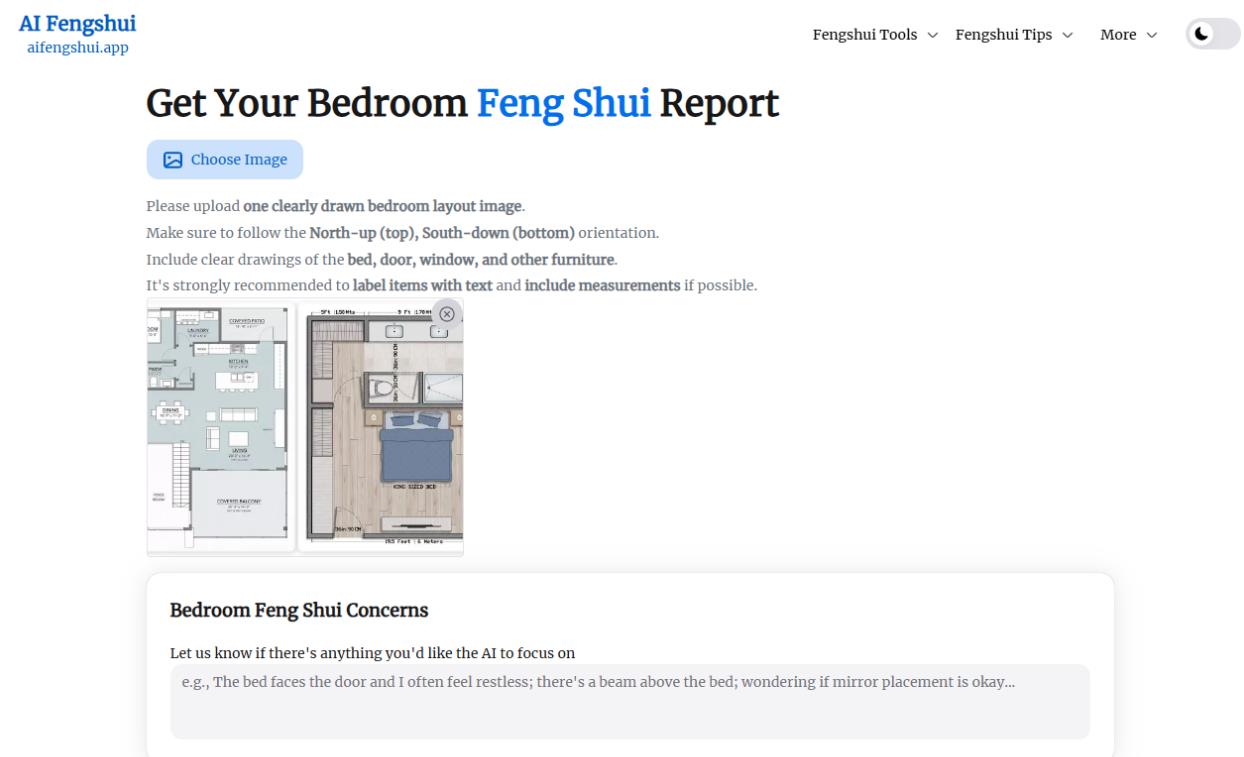
An advanced tool for conducting a comprehensive analysis of a full floor plan. The service utilizes computer vision to detect walls, furniture, and doorways, and assesses the chi flow and elemental balance of a home, including offices and living rooms.
This service is most valuable for an audit of a property before purchase or a major renovation. If there is no existing floor plan available, a built-in room designer is provided. The service is free and offers assessment in both English and Chinese.
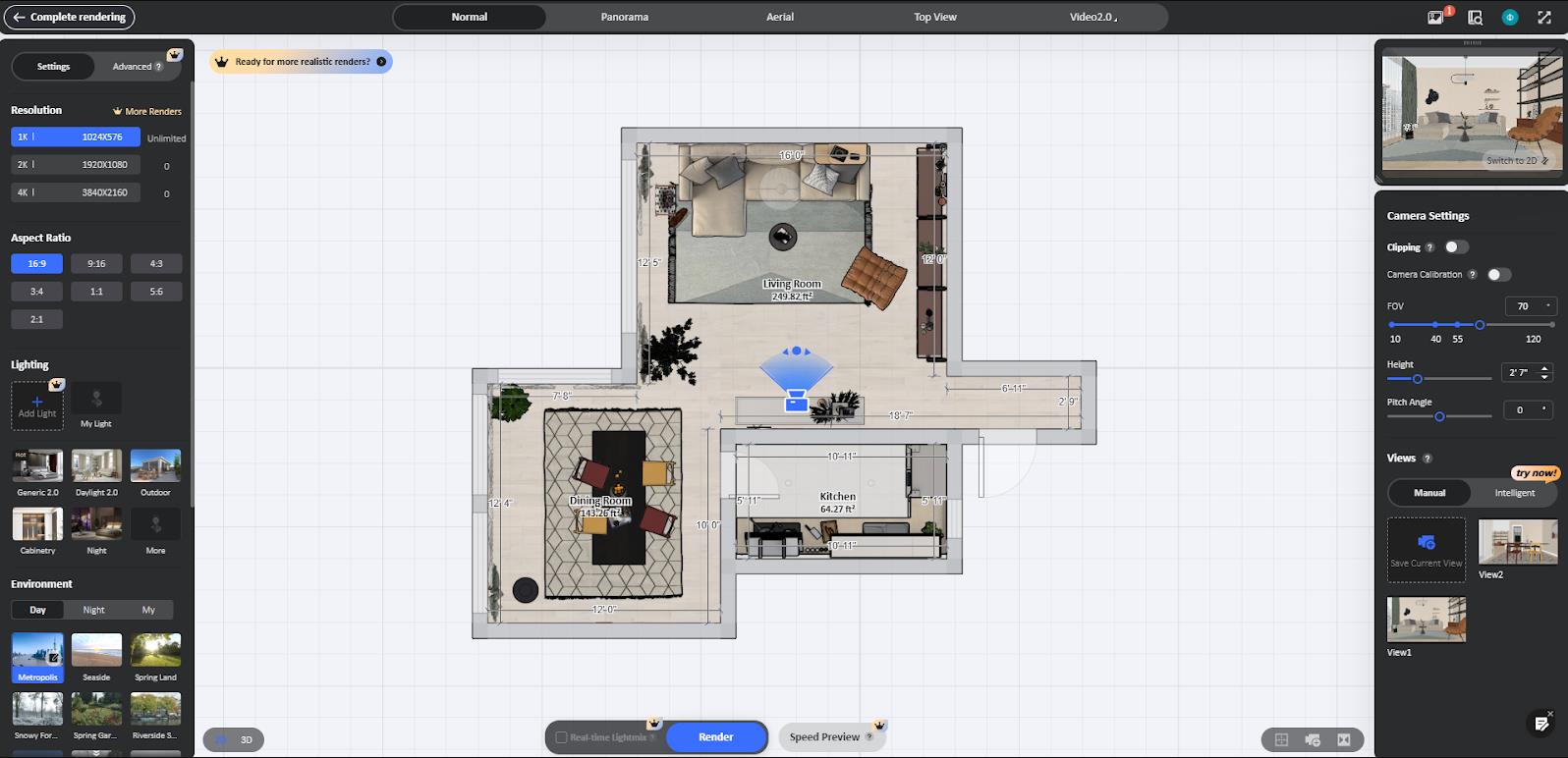
While this is not a Feng Shui-specific tool, it is a very capable 3D home design platform that has some Feng Shui capabilities built into its design. A user uploads a floor plan of their actual home and then overlays the Bagua map. From there, they can experiment with furniture placement, colors, and decor, instantly seeing the effects of the changes on the “energy” in the space.
Homestyler draws upon both Classical Chinese and Tibetan styles of Feng Shui and includes tutorials. It offers a free version and a number of upgraded paid plans based on feature needs.
Feng Shui AI (Mobile App)
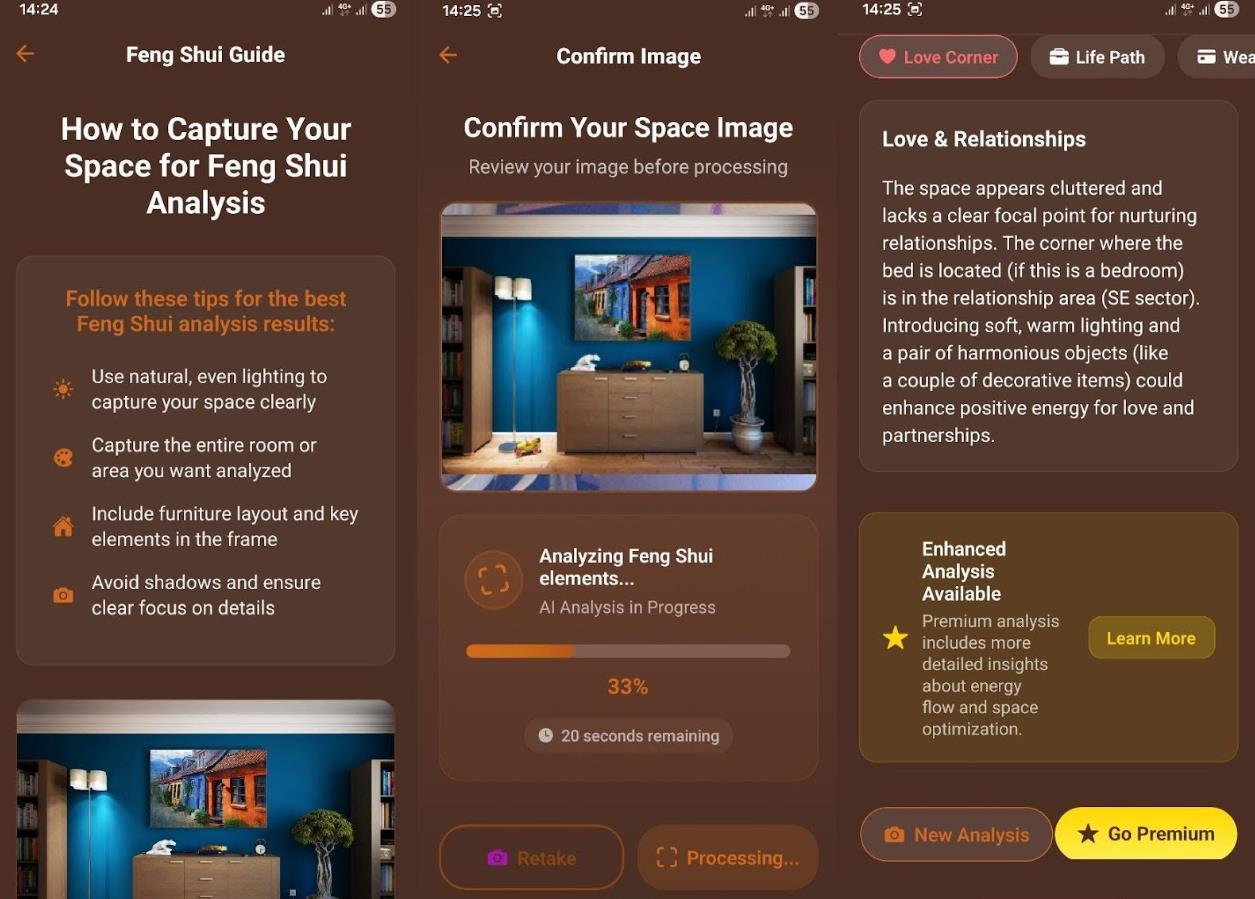
A mobile application that allows you to quickly evaluate the Feng Shui of any room simply by taking a photo. Once you take a photo of the space, the AI analyzes the location of your furniture, your color palette, and the flow of chi, delivering personalized recommendations.
The application comes pre-loaded with templates for most room types (bedroom, office, living room). The initial functionality is free, with premium upgrades available to remove limitations.
Target User Groups and Industries
These applications serve various target audiences, each solving distinct problems. With the addition of Feng My Shui, the potential user base grows even larger. The table below assists you in identifying which tool type best meets your needs.
| User Type |
Primary Focus |
Key Objective |
|
Homeowner / Renter |
Analysis & Optimization |
Improve home environment, attract positive energy, enhance relationships. |
|
Interior Designer |
Generation & Visualization |
Offer clients scientifically grounded Feng Shui layout options; differentiate from competitors. Generate aesthetically pleasing visuals for portfolios and presentations using AI image generation. |
|
Architect / Developer |
Project Audit |
Verify a future home’s compliance with Feng Shui principles at the design stage to increase property appeal. |
|
Feng Shui Consultant |
Analysis Automation |
Speed up routine layout analysis and focus on developing strategic recommendations for clients. |
|
Marketing / Creative Professional |
Visual Content Creation |
Create visually appealing, Feng Shui-aligned images for social media, websites, and ads while respecting copyright and platform standards. |
|
Feng Shui Beginner |
Learning & Basic Adjustments |
Receive simple, easy-to-understand recommendations for arranging personal space without extensive study of Feng Shui philosophy. |
Legal Considerations and Security
The responsible use of AI Feng Shui applications (or any image generator, for that matter) is important. Legitimate use cases include personal improvement of one’s home and professional applications by designers and consultants. As layout generators primarily deal with spatial data, data security remains an important issue to consider.
Important security considerations when using such applications:
- Encryption: Data uploaded to the platform (i.e., photos and blueprints) should be sent through encrypted protocols (HTTPS).
- Retention Policy: Check how long the application retains the images you upload. Reputable platforms either delete them after processing or enable users to delete them manually.
- Privacy: Pay close attention to the privacy policy, especially if you upload a floor plan of your home. Your data should not be shared with third parties without your explicit permission.
❓ Frequently Asked Questions
Answers to relevant questions about this AI tool



A neat concept for quick home decor inspiration. It’s much faster than reading entire books on Feng Shui.