OpenAI’s ChatGPT: Conversation, Text, and Code Generation with a Cutting-Edge Language Model
ChatGPT by OpenAI
On this page
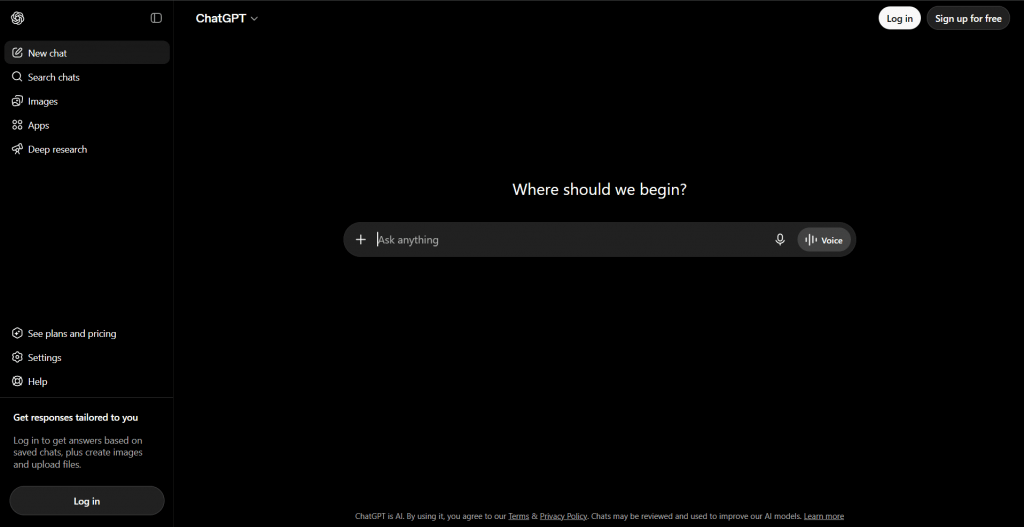
ChatGPT is the AI assistant from OpenAI that helps you write, code, analyze information, and work through almost any text-based task in plain conversation. You type a question or request, and it responds in seconds, which is a big part of why it became one of the most widely used AI tools in the world.
Think of it as an extremely well-read assistant you can talk to. It was trained on a huge amount of text, books, articles, code, and conversations, so it can help with everything from writing an essay to debugging a function to explaining a difficult concept in simple terms. Unlike the earliest versions, today’s ChatGPT can also search the web for current information, analyze files and images, and generate images, so it is no longer limited to what it learned during training.
What ChatGPT Can Do
ChatGPT is a general-purpose assistant, which is what makes it so versatile. Its core strengths include:
-
Conversation and explanation. It holds a back-and-forth discussion, remembers the context of your chat, and can break down a complex topic the way a patient tutor would.
-
Writing. It drafts articles, emails, scripts, summaries, and marketing copy and can adjust tone from formal to casual.
-
Coding. It writes, explains, and debugs code across many languages and can suggest optimizations or write tests.
-
Analysis. It reads uploaded documents like PDFs and spreadsheets, pulls out the key points, and summarizes long material.
-
Web search and images. It can look up current information online and both analyze and generate images, depending on your plan.
How ChatGPT Works
Under the hood, ChatGPT runs on a type of AI model called a transformer, trained on a vast amount of text. That training lets it understand your request and respond with words that logically continue the thought, producing answers that read as coherent and natural.
Using it is simple:
-
Ask. Type your question or request into the chat box. No setup needed.
-
Get a response. It processes your input and replies in seconds, and you can keep the conversation going with follow-ups.
-
Add files or images. Upload a document or picture and it will read the text, interpret the content, and work with it.
The quality of the answer depends a lot on the quality of your prompt: the clearer and more specific your request, the better the result.
Who ChatGPT Is For
-
Writers and marketers drafting posts, ad copy, scripts, and product descriptions, or brainstorming ideas and slogans.
-
Developers generating code templates, debugging errors, and automating repetitive tasks like tests and documentation.
-
Students getting complex topics explained simply, drafting summaries, and working through problems, with the output used as a study aid rather than a final submission.
-
Researchers extracting key points from academic papers, organizing sources, and formatting citations.
-
Analysts and managers processing information, structuring reports, and polishing business writing.
A note for students: ChatGPT is a strong learning and drafting aid, but submitting its output as your own work is considered academic dishonesty at most schools. Use it to understand material and improve your own writing, not to replace it.
Key Features
- Conversational memory. It keeps track of context across a conversation, so you can refine and build on earlier answers.
- Content generation. It writes articles, emails, scripts, and more, in a range of styles and tones.
- Code help. It writes and reviews code in many languages, explains errors, and suggests fixes.
- File and data analysis. It reads PDFs, Word documents, and spreadsheets, summarizes them, and extracts the important points.
- Web search. It can pull current information from the internet, so answers are not limited to its training data.
- Image tools. It can analyze images you upload and generate new ones, depending on your plan.
ChatGPT Pros & Cons
-
High-quality writing and code generation across many tasks
-
Simple, conversational interface with no learning curve
-
Explains difficult topics clearly, like a tutor
-
Reads and summarizes documents and data
-
Web search keeps answers current, not stuck at a training cutoff
-
Regular updates add new models and features
-
The free plan uses a more limited model and has usage caps
-
It can still make mistakes, so important facts and calculations need checking
-
It may sound confident even when it is wrong, which can mislead
-
The most advanced features and highest limits require a paid plan
ChatGPT Pricing
ChatGPT has a capable free plan plus several paid tiers for heavier use. Exact model names and limits change often as OpenAI updates its lineup, so check the current details on OpenAI’s site, but the broad structure is:
|
Plan |
Price |
Best for |
|
Free |
$0 |
Everyday use with a capable model, with usage limits |
|
Plus |
$20/mo |
Higher limits, faster responses, latest models and features |
|
Pro |
$200/mo |
Power users needing the highest limits and most advanced capabilities |
|
Team / Enterprise |
Varies / custom |
Teams and organizations needing collaboration, admin, and security controls |
The free plan is enough for most people to get real value and to see how ChatGPT fits their work. Plus is the common upgrade for regular users who want the newest models and fewer limits, while Pro and the business plans target heavy and organizational use. There is also a lower-cost entry tier in some regions, so it is worth checking what is available where you are.
Final Thoughts
ChatGPT earns its popularity not through hype but through genuine usefulness: it saves time on writing, coding, research, and everyday questions, and it does so through a simple conversation anyone can start. The free plan is a great place to begin, and it is now capable enough for most tasks, including web search. If you use it heavily or need the latest models and highest limits, a paid plan is worth considering. Just keep its limits in mind: it can be confidently wrong, so for anything important, treat its answers as a strong first draft and verify before you rely on them.
❓ Frequently Asked Questions
Answers to relevant questions about this AI tool
Sources
-
ChatGPT — openai.com
-
Pricing — openai.com
-
Terms & policies — openai.com
-
ChatGPT Privacy Settings — openai.com