SMM Specialists

AI21 Labs by OpenAI: Conversation, Text, and Code Generation with a Cutting-Edge Language Model
T&Cs Apply
Pricing Model: Free trial ($90 for 3 months), paid plans starting at $29/month Developer: AI21 Labs (Israeli-American company, founded in 2017)

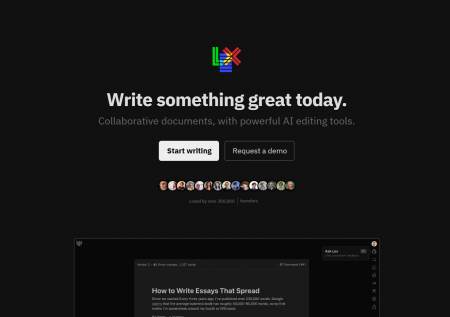
Lex AI: An intelligent text editor to overcome writer's block
T&Cs Apply
Pricing: Free (trial), paid subscription from $20-$30/month. Developer: Lex, Inc. (spin-off of Every).
A quick overview of Seedream: it's your personal AI-powered content generator that writes text, creates images, and helps you optimize them for search engines.
T&Cs Apply
Pricing model: Freemium (basic functionality free, paid subscription for advanced features). Developer: Seed from ByteDance

Perplexity AI is a smart AI chatbot that searches for and answers questions with relevant...
T&Cs Apply
Pricing: Free (Pro version: $20/month). Developer: Perplexity AI Inc. (founders: former Meta, OpenAI, Quora employees).

ElevenLabs: Leader in realistic speech generation (Text-to-Speech) and voice cloning.
T&Cs Apply
Pricing model: Free plan + paid subscriptions starting at $1/month Developer: ElevenLabs (founded by Piotr Dabkovsky and Mati Stanishevsky)

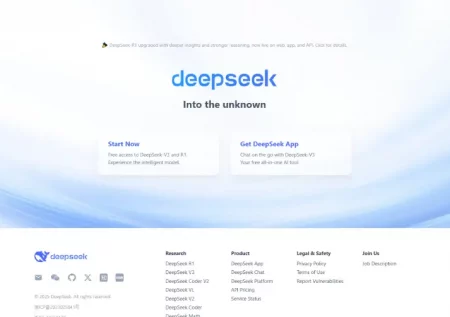
DeepSeek AI is a smart AI chatbot from a Chinese company that helps with communication and text generation.

T&Cs Apply
Pricing: Free. Developer: Hangzhou DeepSeek Artificial Intelligence Co., Ltd. (China).
Synthesia is a service that turns regular text into video. You simply write what you want to say, and the system creates a video of a digital human speaking it. It looks completely natural, as if a live presenter were reciting your text. It's convenient when you need to quickly create a video without a camera or editing.
T&Cs Apply
Pricing model: Paid subscription (Personal plan starts at $30/month, Enterprise – customized pricing). A free trial demo is available upon request. Developer: Synthesia.
Claude AI is an advanced AI assistant from Anthropic for complex text, data, and programming tasks.
T&Cs Apply
Pricing model: Freemium (free with limits, paid Claude Pro subscription). Developer: Anthropic.
Kling AI is a neural network that can create videos directly from text. That is, you just write what you need to see, and she turns your words into a moving picture.
T&Cs Apply
Price model: Freemium (free with daily credits, paid subscription starting at $6.99/month). Developer: Kuaishou Technology.
Gemini is a multi-functional AI assistant from Google for generating and analyzing text, code, and images.
T&Cs Apply
Pricing model: Freemium (free with limits, paid Gemini Advanced subscription). Developer: Google (DeepMind).

Are you familiar with WriteSonic? It is one of the most advanced neural networks for text generation.

T&Cs Apply
Pricing model: Free plan with limitations, paid subscriptions from $16/month. Developer: Writesonic (founded by Samanyou Garg, San Francisco).

Working with text? Wordtune AI is your indispensable smart online assistant. This neural network for generating text (or rather, its enhanced versions) is a powerful AI for writing texts that becomes your co-author.

T&Cs Apply
Pricing: Free plan (limited functionality), paid subscriptions starting at $6.99/month. Developer: AI21 Labs.

AI Tools for SMM Specialists: Automating Social Media Management, Content Creation, and Audience Analytics

Social media managers, content creators, and digital brand strategists balance multiple complex workflows daily, including audience engagement, performance tracking, trend monitoring, and high-volume media production. Consistently publishing relevant, channel-specific updates while managing multi-platform publication calendars often leads to operational fatigue and creative bottlenecks. Dedicated AI tools for SMM specialists address these pressures by serving as data-driven automated assistants. These specialized software suites use natural language processing, predictive performance analysis, and automated scheduling systems to simplify content creation, optimize publishing schedules, and track consumer interactions across diverse social networks.

Integrating artificial intelligence into social media workflows fundamentally changes how digital marketing teams plan and execute their online campaigns. Instead of manually spending hours writing unique text variants for different social platforms, formatting image layouts, or sorting through chaotic web analytics metrics, managers deploy automated platforms to handle time-consuming editorial tasks. The core objective of these applications is to eliminate administrative delays and lower the technical barriers to large-scale data monitoring. This structural support allows boutique agencies, solo creators, and corporate marketing departments to scale their digital footprint, compress production timelines from days to seconds, and focus on overall product positioning, community building, and brand strategy.


Core Operational Functions of Social Media AI Software

The primary value of artificial intelligence within the social media optimization sector lies in its capacity to process heavily structured engagement metrics alongside unstructured user comments and media files at an expansive scale.

  • Multi-Channel Content Generation: AI writing engines generate targeted headlines, email subject lines, short captions, and promotional text variations based on specific target demographic profiles or established brand guidelines.
  • Automated Publishing and Timing Optimization: Advanced machine learning algorithms evaluate historical engagement data to predict optimal posting windows, automatically scheduling updates when target audiences are most active.
  • Semantic Audience Sentiment Mining: Instead of processing text reviews or customer comments manually, data tools run automated text-mining models to categorize audience feedback and isolate precise sentiment scores instantly.
  • Visual Asset Generation and Resizing: Generative image networks produce unique post graphics, background assets, or video templates from description prompts, automatically formatting them to match exact platform dimension requirements.

Target Audience and Practical SMM Workflows

Implementing specialized social media automation systems helps diverse creative and marketing departments eliminate production bottlenecks by replacing slow, manual research loops with fast, automated optimization pipelines.

Social media managers and digital agency coordinators use these platforms to coordinate multi-account campaigns across separate client profiles. Instead of manually drafting unique caption variants for five different social networks from scratch, professionals feed core project briefs into software setups to produce distinct creative text and graphic options, enabling teams to launch cross-platform initiatives with fewer operational delays.

E-commerce growth specialists and brand marketers rely on machine learning applications to handle massive volumes of optimized product promotions simultaneously. When an online storefront adds a large batch of new seasonal inventory, automated content assistants help writing teams generate engaging product posts, structured meta text, and tracking links, ensuring all promotional updates maintain uniform formatting rules and clear call-to-action signals.

Influencer coordinators and public relations teams employ autonomous tracking systems to monitor online brand mentions and industry trends in real time. By linking automated tracking engines directly to live social networks, professionals quickly identify relevant user conversations, respond to urgent product queries, and address negative feedback before it impacts public brand reputation.


Architectural Classification of Social Marketing Tools

The broader market for social media artificial intelligence features several clear product classifications based on data handling, processing design, and primary marketing goals.

System Classification Primary Data Inputs Standard Workflow Output
Content Generation Frameworks Campaign briefs, brand guidelines, target audience profiles Social media captions, promotional updates, visual layouts
Data Analytics Systems Engagement histories, click metrics, traffic logs Optimal posting hours, reach projections, conversion curves
Social Listening Networks Public web posts, keyword trackers, user review texts Real-time trend alerts, brand mention summaries, sentiment charts

Marketing teams must evaluate the operational benefits of cloud-hosted web applications versus specialized plugins that embed directly into existing communication infrastructures. Standalone cloud setups offer extensive feature lists and immense processing power for heavy competitor research, macro data modeling, and seasonal campaign forecasting. Conversely, direct software integrations—such as specialized browser extensions or application add-ons for enterprise messaging frameworks—allow social managers to access real-time editing advice, check engagement metrics, and run quick optimization checks without leaving their primary analytical dashboards.


Key Technical Features and Quality Selection Parameters

When constructing an efficient social media marketing tech stack, creative directors and team leads must look past generic marketing claims and prioritize concrete functional capabilities.

  • Live Platform API Interactivity: High-tier social media platforms must connect natively with primary network ecosystems via standard REST APIs, making it simple to transfer performance data, image layouts, or audience metrics directly into corporate tracking dashboards.
  • Custom Brand Voice Calibration: Advanced publishing software allows marketing departments to upload past company documents, style sheets, or explicit vocabulary filters, ensuring all generated post variations match the brand's unique style rules perfectly.
  • Multi-Format Media Exporting: The platform must support flexible data exports, allowing creators to download clean structured spreadsheets, markdown briefs, or web-optimized images directly into content management setups without forcing manual file conversions.

Step-by-Step AI-Assisted SMM Management Pipeline

To extract consistent enterprise value from artificial intelligence while keeping total editorial and technical control over campaign quality, marketing professionals should follow a clear five-step operational pipeline.

  1. Scope Gathering and Strategy Mapping: Define your specific promotional goals and gather the necessary target assets, such as brand style sheets, historical performance logs, or targeted competitor search data.
  2. Boundary Setup and Context Anchoring: Input your target demographic parameters, platform destination choices, and specific formatting guidelines into the software application, establishing clear boundary rules for the processing engine.
  3. Autonomous Generation and Production: Run the software engine to automatically produce an initial batch of creative assets, generating complete post outlines, platform-specific captions, and adjusted graphic layouts based on your input parameters.
  4. Human Editorial Review and Adjustment: Carefully check every text variation against real product specifications, verify mathematical calculation accuracy in data analytics logs, and inject personalized professional insights, technical polish, and creative hooks.
  5. Campaign Deployment and Verification: Finalize the verified asset formats through optimization check tools and export the clean text or media files directly into your active social media schedule manager or distribution network.

"Artificial intelligence cannot substitute for the emotional intelligence, deep cultural understanding, and authentic relationship building of an experienced social media manager. Instead, it eliminates the operational drag of repetitive drafting and manual text formatting, allowing specialists to function as high-level editors and strategic coordinators of automated marketing pipelines."