Speech

Main page » Speech

A web-based AI face swap platform for creating realistic photo and video without software installation.

T&Cs Apply
Pricing Model: Freemium.  Developer: Miocreate
AI-driven text-to-speech platform for listening to documents, articles, and books on any device.
T&Cs Apply
Pricing Model: Freemium. Developer: Speechify Inc.
A web-based aggregator offering AI image generation, video creation, face swap, and study utilities in one interface.
T&Cs Apply
Pricing Model: Freemium. Developer: Arting AI
A platform offering GPT-4, Claude-3.5, Gemini, and DALL-E for content, code, and design work.
T&Cs Apply
Pricing Model: It offers one free tier and three paid plans. Developer: No information available.

A well-known machine translation service from Google that supports multiple languages ​​and uses neural networks to improve translation quality.

T&Cs Apply
Pricing: Free (for personal use). Developer: Google LLC.

ElevenLabs: Leader in realistic speech generation (Text-to-Speech) and voice cloning.

T&Cs Apply
Pricing model: Free plan + paid subscriptions starting at $1/month Developer: ElevenLabs (founded by Piotr Dabkovsky and Mati Stanishevsky)
TwinMind is a personal assistant that's always on hand. You simply engage in a normal conversation at a meeting, a lecture, or even just casual conversation, and the app silently records and instantly analyzes everything.
T&Cs Apply
Pricing model: Freemium (free with limitations, paid subscription starting at $10/month). Developer: ThirdEar AI Inc.

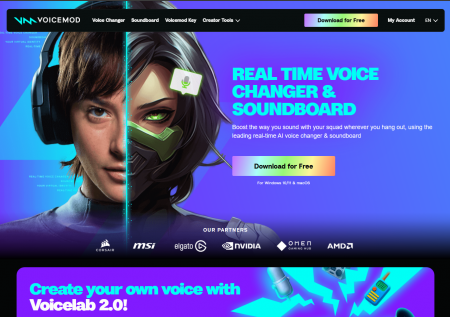
In the following article, we will go into detail on how to set up and get the most out of this powerful voice editor for streamers and gamers.

T&Cs Apply
Pricing model: There is a free version with limitations. Full access (Pro) - by subscription. Developer: Voicemod SL Company.

D-ID is a tool to "bring to life" a photo or even just a description of a person. You take an ordinary photo - say, a portrait of a colleague from the last corporate party or even a picture of Napoleon from a textbook - and literally in a couple of minutes the person in this image comes to life and starts speaking your words.

T&Cs Apply
Pricing Model: Paid subscription, free trial (14 days, 5 minutes of video with watermark). Developer: D-ID (founded 2017, headquartered in Tel Aviv, Israel).

AI speech tools are software solutions designed to process, generate, and transform human voice using artificial intelligence. This category covers a wide range of technologies, from converting text into lifelike narration to transcribing complex meetings in real-time. By utilizing deep learning and neural networks, these tools can capture the nuances of human speech, including tone, emotion, and regional accents, making digital interactions feel more natural and productive.

The primary goal of this category is to bridge the gap between written and spoken information. Whether a user needs to listen to a long report while commuting or generate a professional voiceover for a video without a recording studio, AI speech software provides the technical framework to handle these tasks efficiently.

Core Functions of AI Speech Tools

These tools handle various workflows related to audio production and information consumption. Their functions are generally divided into three main areas:

Speech Synthesis and Voice Cloning

Text-to-speech (TTS) technology has moved beyond robotic voices to create high-fidelity, human-like narration. Tools like ElevenLabs allow users to generate audio that includes realistic breathing and emotional inflections. A key feature in this area is voice cloning, which lets creators produce a digital twin of a specific voice. This is used extensively in podcasting, game development, and video production to maintain a consistent voice without needing the original speaker for every update.

Automated Transcription and Meeting Assistance

Capturing spoken information in written form is essential for business and legal environments. Tools like Otter.ai record and transcribe conversations in real-time, identifying different speakers and highlighting key topics. These assistants do more than just type; they summarize meetings, extract action items, and allow users to search through months of past conversations using keywords.

Auditory Learning and Accessibility

Speech tools serve as a critical interface for people with reading challenges or those who prefer consuming information by ear. Speechify is a leading example in this niche, capable of reading aloud any text—from physical books and PDFs to web articles—at high speeds. This helps students and professionals process heavy reading loads without eye strain, transforming static text into a portable audio experience.

Target Audience and Use Cases

The versatility of AI speech software makes it applicable across many professional and personal sectors:

  • Content Creators and YouTubers: These users rely on tools like ElevenLabs to create voiceovers in multiple languages. This allows them to reach a global audience by dubbing their content into different accents and tongues while keeping the voice quality professional.
  • Students and Researchers: Academic users use Speechify to listen to research papers or textbooks. By converting text into "AI podcasts," they can study while performing other tasks, significantly increasing their information intake.
  • Business Professionals: Managers use ai to ensure no details are lost during client calls or internal syncs. The ability to generate a summary immediately after a meeting ends saves hours of manual note-taking.
  • Individuals with Dyslexia or ADHD: Originally built for accessibility, these tools remove barriers to reading. By listening to text and following along with highlighted words, users with learning differences can manage information more effectively.

Classifications of Speech AI

To choose the right tool, it is helpful to understand their technical focus:

  • Generative Voice Platforms: These are "creator-first" tools like ElevenLabs that focus on the quality and realism of the output. They are best for dubbing, storytelling, and high-end marketing visuals.
  • Productivity and Reading Assistants: Tools like Speechify are designed to help users consume existing information. They focus on speed, cross-device syncing, and the ability to turn any document into a listenable file.
  • Transcription Engines: Software like ai focuses on the "input" side of speech. Their technical priority is accuracy in speech-to-text conversion and the ability to integrate with video conferencing platforms like Zoom or Microsoft Teams.
  • All-in-One Voice Assistants: Some platforms are expanding to handle both sides of the coin. For instance, recent updates have seen Speechify move into voice typing and meeting summaries, attempting to serve as a complete voice-first workspace.

Key Features and Selection Criteria

When exploring the tools in this catalog, focus on these technical and practical factors:

  1. Voice Realism and Bitrate: For creative projects, the naturalness of the voice is the most important factor. High-end tools provide modulation controls and high-bitrate audio (like the 192 kbps or 44.1kHz PCM options in ElevenLabs) to ensure the sound is clear and professional.
  2. Language and Accent Support: If you work in a global environment, check how many languages the tool supports. Some platforms now offer over 60 languages and dozens of regional accents, which is vital for accurate localization.
  3. Pricing and Credit Systems: Most speech tools follow a freemium model but differ in how they charge for usage. ElevenLabs uses a character-based credit system where different models (like "Turbo") cost different amounts. ai often limits the number of transcription minutes per month on its free tier.
  4. Integration with Existing Workflows: Look for tools that offer browser extensions or mobile apps. Being able to start a PDF on a laptop and continue listening to it in the car via a mobile app is a major factor for daily productivity.

The Future of Voice Interaction

The speech AI sector is shifting from simple utilities to interactive assistants. We are seeing a transition where tools no longer just read or write; they discuss. With features like conversational AI assistants built into your reading flow, you can now ask a tool like Speechify questions about the document you are listening to and get spoken answers in return.

Whether you need to clone a voice for a production with ElevenLabs, transcribe a high-stakes meeting with Otter.ai, or speed through a reading list with Speechify, these tools provide the technical base for a voice-driven world. The best choice depends on whether your priority is creating new audio content or managing the spoken information that already exists in your daily routine.