Canny.io turns scattered user feedback into a ranked, votable list your product team can build from. We cover how it works, its Autopilot AI, who it fits, and the tracked-user pricing model that decides whether it stays affordable as you grow.
Canny.io: Feedback Management & Feature Voting
On this page
Every product team drowns in the same problem: feedback arrives everywhere, in support tickets, sales calls, and emails, and none of it is ranked. Canny.io collects user requests into public or private boards, lets users vote on what matters, and turns the result into a roadmap and changelog, so the team builds what customers want rather than what shouted loudest.
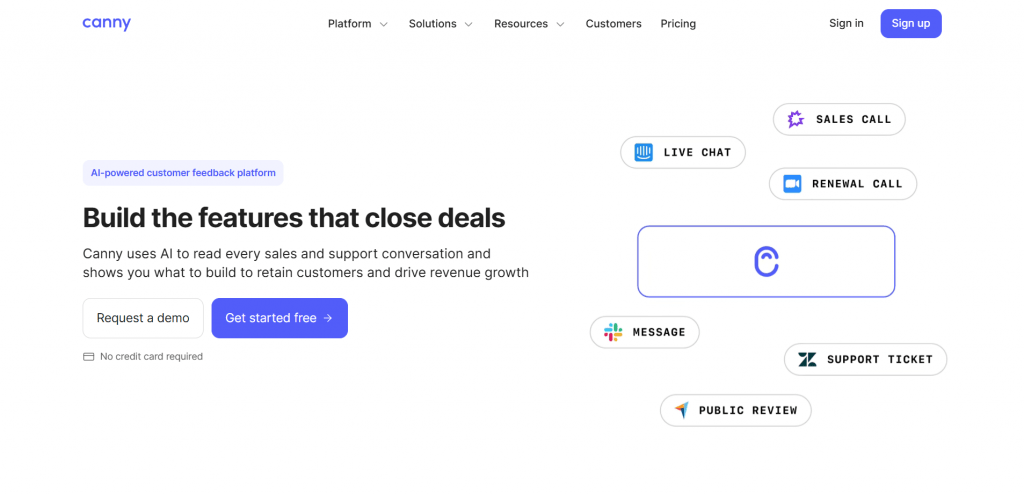
Founded in 2017 and used by thousands of SaaS teams, Canny.io has grown from a simple feature-voting board into a full feedback system with an AI layer called Autopilot. This review covers what it does, who it fits, and the pricing model that shapes the real cost.
How Canny.io Works
Canny.io runs the full feedback loop, from capture to closing the loop:
-
Collect feedback. Users submit ideas to boards through a portal, widget, or your team logging it on their behalf.
-
Let users vote. Requests gather votes and comments, so demand becomes visible rather than guessed.
-
Prioritize. Sort by votes, segment, or business value to decide what to build next.
-
Build a roadmap. Move chosen items onto a public or private roadmap so users see what is planned.
-
Close the loop. Publish a changelog when features ship, and Canny notifies the people who asked.
The point is the loop: users who see their idea move from request to roadmap to shipped feel heard, the retention argument for the category.
Autopilot: The AI Layer
Canny’s Autopilot AI is included on every plan, including free, which is unusual in this category. It handles the tedious parts of feedback management:
-
Feedback discovery. Automatically captures feedback from support conversations and other sources, attributing it to users.
-
Deduplication. Merges duplicate requests so one idea does not fragment across ten posts.
-
Smart replies and summaries. Drafts responses and summarizes long comment threads into the core point.
-
MCP connectors. Hooks into AI agents like OpenAI, Claude, ClickUp, and Cursor, so feedback flows into your AI tooling.
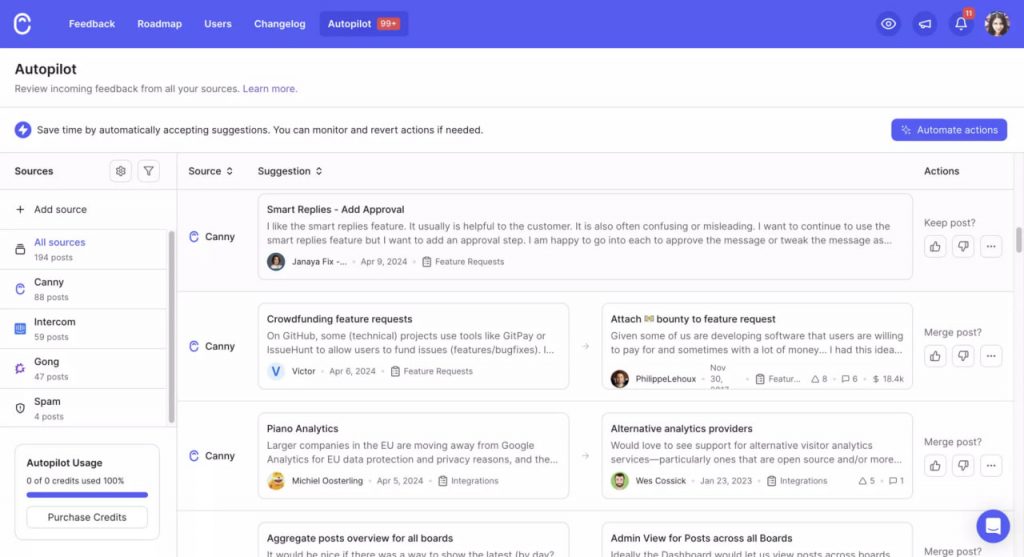
This automation is the strongest reason to pick Canny over a simpler voting board, turning scattered, repetitive feedback into a clean, deduplicated list without manual sorting.
Who It’s For
Canny.io fits product-led SaaS teams that treat feedback as a real roadmap input:
-
Product managers who need a single ranked source of truth for what to build.
-
SaaS startups and scale-ups wanting a public roadmap and changelog to show momentum.
-
Customer-facing teams that want support and sales feedback funneled into one place.
-
Teams on Jira or Linear who want feature requests synced to their issue tracker.
Who should think twice: very small teams or those on a tight budget, since the cheapest paid plan is now $79/month and the tracked-user model climbs from there.
Canny.io Pricing
Canny.io has three plans, but the billing model matters more than the sticker price. Canny bills by tracked users, meaning anyone who posts, votes, or comments, so the cost grows with engagement rather than with your team size.
|
Plan |
Price |
Key features |
|
Free |
$0 |
25 tracked users, 5 managers, unlimited feedback, boards, Autopilot AI |
|
Pro |
$79/mo (billed yearly) |
100+ tracked users, PM integrations, advanced privacy, 10 managers, MCP connectors |
|
Business |
Custom |
5,000+ tracked users, SSO, CRM integrations, SOC 2, custom roles |
Here is the honest catch. Canny recently dropped its cheaper entry tier, so the first paid step is now Pro at $79/month billed yearly, and the price scales upward as tracked users grow past the plan’s floor. Because Canny auto-upgrades you when you exceed your limit unless you set a monthly spend cap, the feedback program you are building is what raises the bill. Set a spend limit, and weigh flat-rate rivals like Featurebase if you expect high engagement on a budget.
-
Clean, proven workflow from feedback capture to public roadmap and changelog
-
Autopilot AI included on every plan, even free, for discovery and deduplication
-
Public roadmaps and changelogs that show users they are heard
-
Strong integrations with Jira, Linear, Intercom, and Zendesk on higher tiers
-
Polished, widely adopted, and reliable
-
Tracked-user billing means costs scale with engagement, not team size
-
Auto-upgrades can raise the bill unless you set a spend limit
-
No cheap entry tier: the first paid plan is now $79/month after Canny dropped its $19 option
-
SSO and CRM integrations are locked to the custom-priced Business plan
Languages and Access
Canny.io is a fully cloud-based platform accessed through any browser, with no app to install, plus a widget that embeds it into your own product. The interface is English-first, with content translations on paid plans for multilingual users. Access starts with a genuinely free plan, no card required, so you can test the workflow before the tracked-user model becomes a cost factor.
Final Thoughts
Canny.io is the category standard for good reason: the capture-vote-roadmap-changelog loop is polished, the integrations are solid, and bundling Autopilot AI into every plan, including free, is a genuine advantage. For a team that wants one ranked source of truth for what to build, it delivers.
Sources
-
Pricing — canny.io
-
Privacy Policy — canny.io
-
Billing plans — help.canny.io
-
What personal information does Canny collect? — help.canny.io
-
Canny Reviews (2026) — producthunt.com
-
Canny Pricing 2026 — g2.com
❓ Frequently Asked Questions
Answers to relevant questions about this AI tool
Sources
-
Pricing — canny.io
-
Privacy Policy — canny.io
-
Billing plans — help.canny.io
-
What personal information does Canny collect? — help.canny.io
-
Canny Reviews (2026) — producthunt.com
-
Canny Pricing 2026 — g2.com