JobHire AI: a Review of the Automated Job Search Tool
On this page
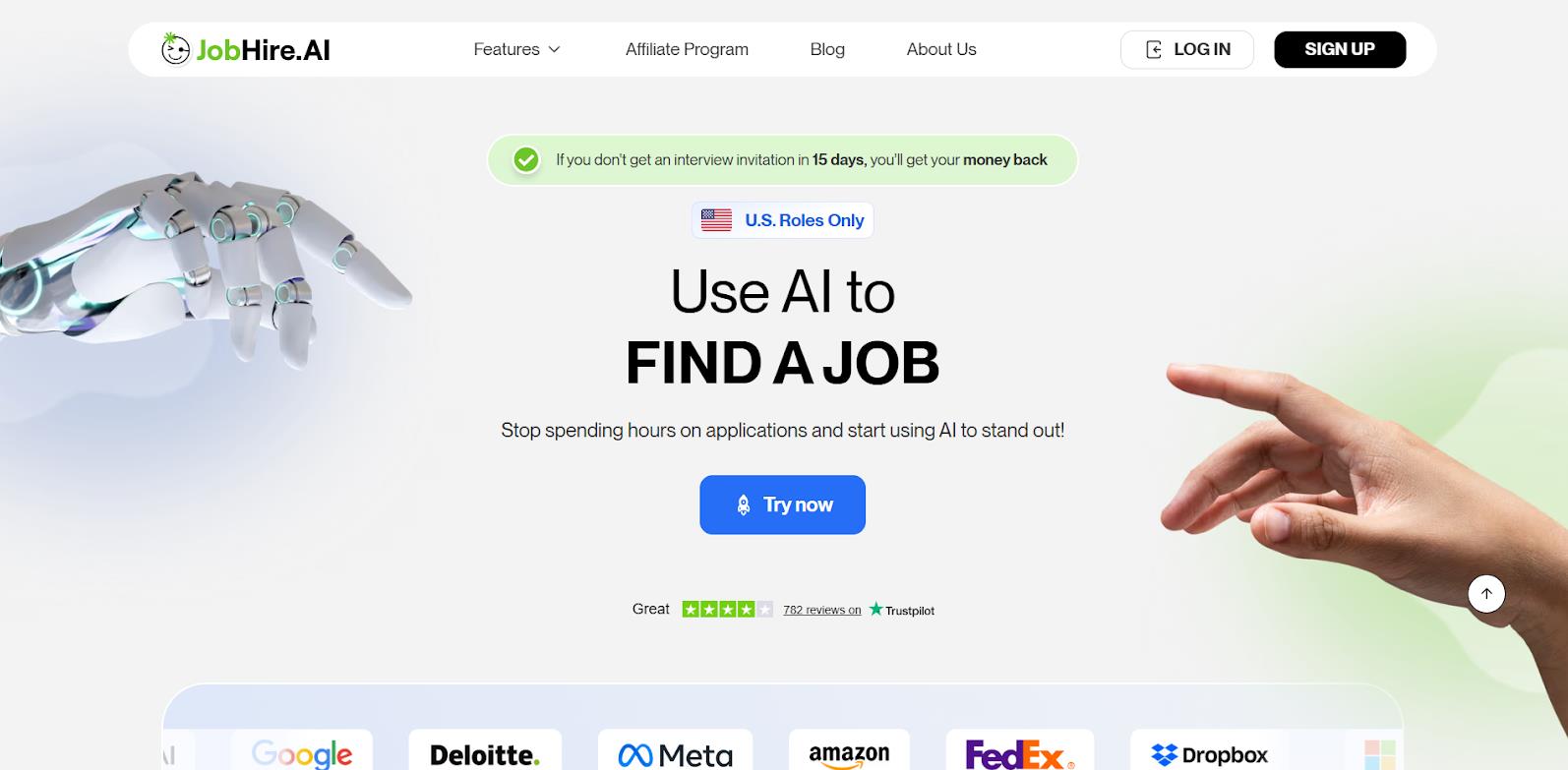
If you’ve ever had to look for a job, you know how tedious it can be: sending out resumes and collecting rejections while waiting for that magical match. Sometimes you dream of a hardworking assistant with strong nerves to take over. JobHire AI is exactly that kind of assistant. It is designed not for recruiters, but for those who are looking for jobs.
The platform takes on all the routine work: analyzing requirements, tailoring resumes to specific positions, and sending out thousands of applications in bulk. All you have to do is monitor the process and wait for your moment.
How JobHire AI works
Using the service follows a “set it and forget it” principle, though it does require some initial setup. The logic is broken down into several steps.
- Registration and data upload. Users create an account via email or Google, upload their current resume, and fill out their profile: desired job title, location, salary expectations, and key skills.
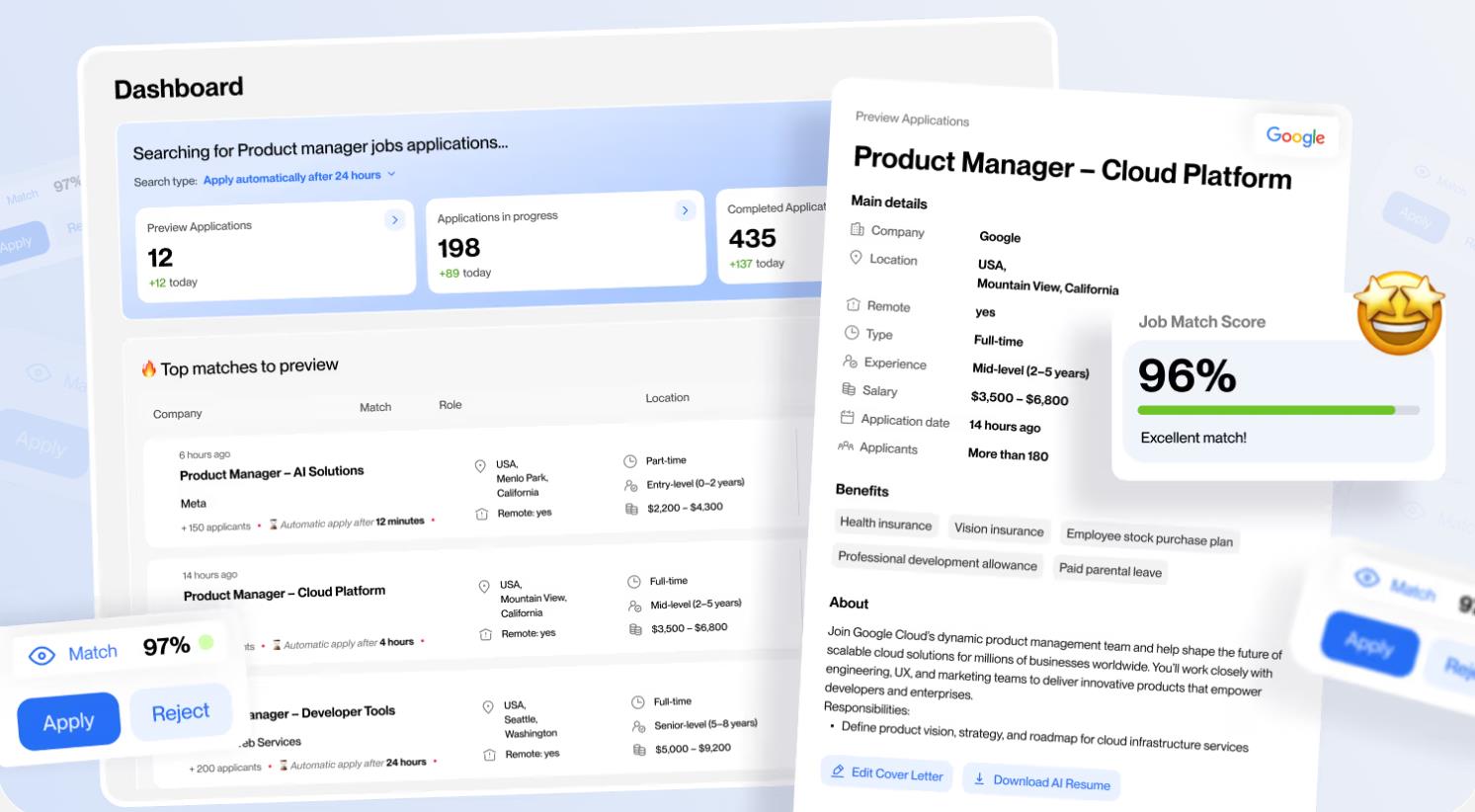
- AI analysis. The AI analyzes the resume and compares it against open job boards (Indeed, Glassdoor, LinkedIn), assigning a match score to each potential position.
- Mode selection. Users choose their strategy: either automatically approve all applications or use manual mode, where each application requires confirmation before being sent.
- Tailoring and submission. For each job, the AI rewrites the cover letter and fine-tunes the resume by adding keywords to help pass applicant tracking systems (ATS). The application is then sent to the employer.
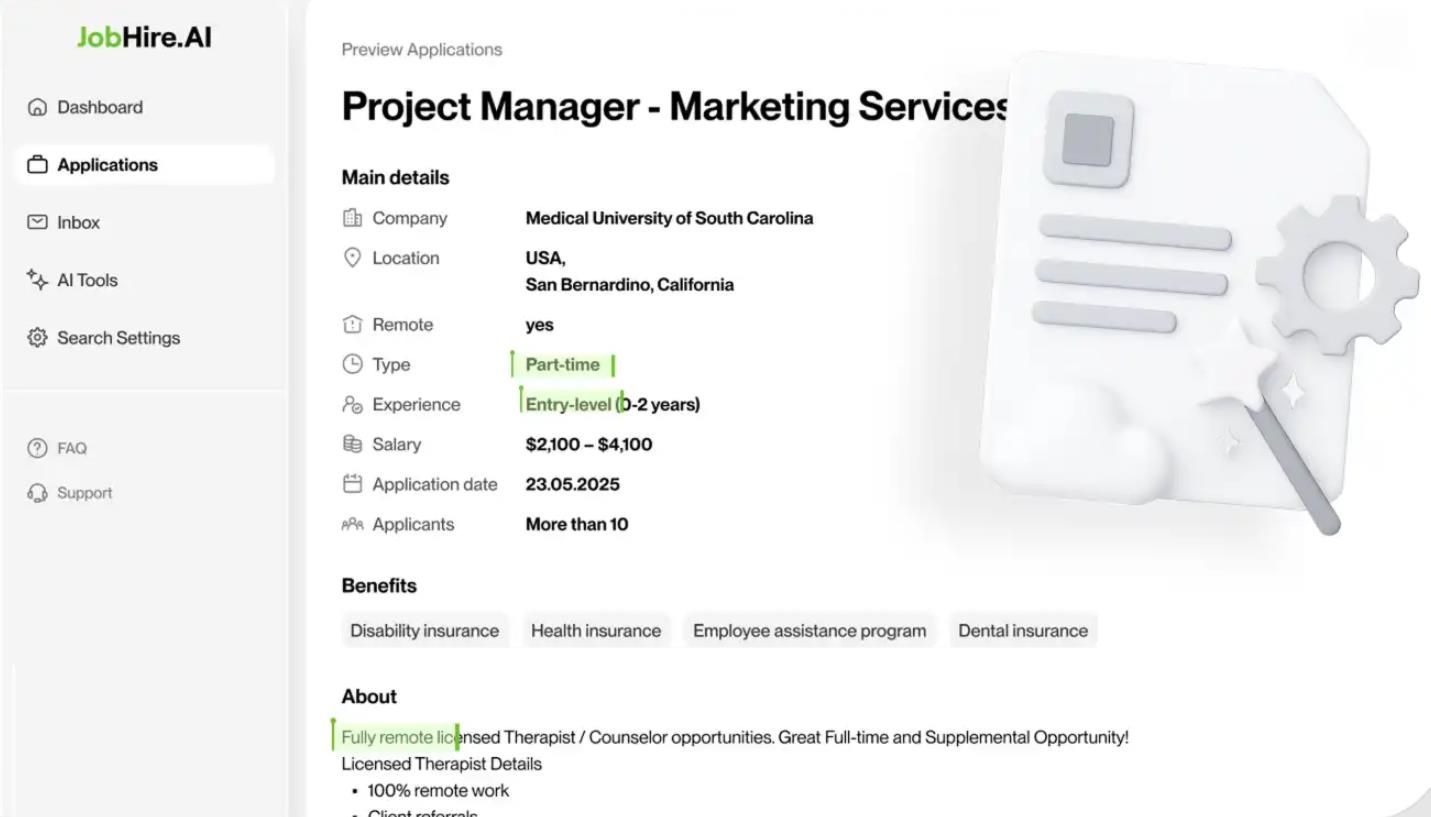
- Tracking. All applications, status updates, and incoming messages from recruiters are collected in a single dashboard.
According to the developers, the first interview invitations usually come within 7–14 days, provided the profile is set up correctly.
Who this tool is for
The company is registered in Cyprus, but its infrastructure and job database are focused exclusively on the US market (“U.S. Roles Only”). The target audience includes entry- and mid-level professionals in IT, sales, and marketing, as well as anyone open to remote work. JobHire AI is built to save time: instead of 5–10 manual applications a day, the system can send hundreds of applications per week, working around the clock.
JobHire AI helps scale your efforts. It can be useful in the following situations:
- For active job seekers. When the main goal is to get as many applications out as quickly as possible to increase the chances of landing an interview.
- For busy professionals. Those already working full-time and unable to spend 2–3 hours a day scanning job boards and sending applications.
- For graduates and junior specialists. Early in a career, it often takes a high volume of attempts to gain initial experience.
- For those changing career paths. When switching industries or returning after a long break (e.g., parental leave or layoffs), it helps to test the market with a large number of applications.
On the other hand, this tool is probably not a good fit for anyone targeting 2–3 highly specific roles at top companies (Google, Meta, etc.). In those cases, a manual approach, personalized communication, and networking tend to work better. The service is also ineffective for the European or Russian markets, since it is tailored exclusively to the US.
Testing results
Like any automation tool, JobHire AI has its strengths and limitations. We tested it to identify its pros and cons, and also reviewed user feedback from public sources. Here is what we found.
- The AI does a good job of restructuring resumes, incorporating keywords from job descriptions, which is critical for passing ATS filters at large companies. The unified dashboard lets you track your application history and correspondence in one place, avoiding email clutter.
- The main value of JobHire AI lies in volume. The ability to send 1,000+ applications per month significantly increases the likelihood of your resume being noticed. The system works 24/7, sending out dozens of applications while you focus on other tasks.
- However, it is not a magic bullet. The tool requires close monitoring, and using it comes with financial risks due to a disputed refund policy and poor customer support. Yes, the service advertises a money-back guarantee if you don’t receive any interview invitations within 15 days. But in practice, many users report that the guarantee is not honored. This has even earned the service an F rating from the Better Business Bureau.
- We also noticed that the system often ignores filter settings, sending applications for positions that don’t match the user’s qualifications. For instance, a mid-level developer’s resume might end up being submitted to a fast-food restaurant or a job with a salary below what was specified.
And unfortunately, you have to pay upfront for all this. You cannot fully test the platform without paying.
Pricing
JobHire AI operates on a subscription model with automatic renewal. There is no free plan, only a short trial period that is difficult to cancel. Current plans start at $49 per month (up to 40 applications per day, using ChatGPT-4o mini).
Occasionally, partner sites (like aitoptools) offer promo codes that lower the cost of the first week to $19, but the core payment model is built around long-term subscriptions.
User feedback and ratings
Public opinion about JobHire AI is as mixed as our own findings. On Trustpilot, the average rating is 4.2/5. However, negative reviews, while a minority (around 14–20%), are often quite harsh.
- Positive experiences: Users report that after months of manual searching, the service helped them land 5–20 interviews within 1–2 weeks. Some reviews read: “23 responses, 8 screenings, 4 finals, and 2 offers.”
- Negative experiences: Most complaints are about the algorithm working incorrectly (“it applies to fast-food positions, ignoring my settings”) and the inability to cancel a subscription or get a refund. On Reddit, posts with tags like “ripoff” and “scam” appear regularly, with users reporting unauthorized charges.
One reviewer called the service a “sophisticated scam.” Still, the general consensus is that the platform itself is legitimate. It’s just that the quality of its performance and support has declined significantly recently due to scaling.
- Saves time.
- High volume.
- ATS optimization.
- Money-back guarantee.
- Easy tracking.
- Low matching accuracy.
- Refund issues.
- Geographic restrictions: the service does not work outside the US.
- No free plan.
Comparison with competitors
The market for AI-powered auto-apply tools is growing fast. JobHire AI is not the only player in this space, and it’s worth considering alternatives:
| LazyApply |
A browser extension. Cheaper, but offers less personalization for each job. |
|
AIApply.co |
Similar auto-apply functionality, with a focus on interview preparation. |
|
Scale Jobs |
A hybrid approach (AI + human). Higher one-time fee ($199+), but better match quality. |
|
Teal |
A powerful resume builder and search tracker, but without auto-apply functionality. |
|
Sonara / ApplyIQ |
Niche competitors with stricter job selection algorithms (less spam, but lower volume). |
Conclusion
JobHire AI is a legitimate but technically imperfect tool. It is suitable for active job seekers in the US who are willing to accept the risks of automation and manage the process manually. It is not a good fit for targeted “dream job” searches or for use outside the US job market.
If your job search strategy is based on the idea that “quantity turns into quality,” this service could be a helpful assistant. It genuinely saves dozens of hours and helps you get past ATS filters at large companies. But we recommend starting with the lowest-tier plan, setting up filters carefully (excluding unwanted roles and locations), and monitoring the dashboard closely during the first few days.
❓ Frequently Asked Questions
Answers to relevant questions about this AI tool
Sources
-
JobHire AI — jobhire.ai
-
Trustpilot reviews for JobHire AI — trustpilot.com
-
JobHire AI review on JobCopilot — jobcopilot.com
-
JobHire AI review on ResuFit — resufit.com
-
JobHire AI update/review on Reddit — reddit.com
-
JobHire AI review on Reddit — reddit.com