AI for Image Morphing: Technical Insights and Top Tools
On this page
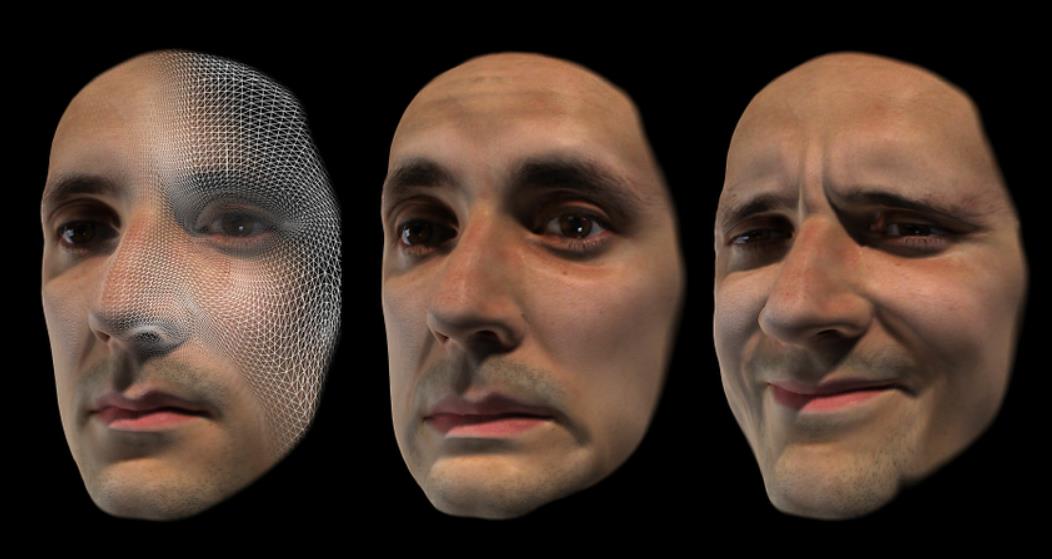
Traditionally, creating a smooth transition between two distinct faces required graphic designers to manually anchor hundreds of corresponding control points across facial features, followed by a linear cross-dissolve process. Modern artificial intelligence streamlines this pipeline by leveraging generative adversarial networks and specialized diffusion models. These neural networks analyze structural characteristics natively, allowing both creative professionals and casual operators to generate high-fidelity, fluid transformations. This updated review breaks down the underlying operational mechanics of contemporary morphing systems and evaluates the leading platforms currently available for commercial and personal deployment.
Latent Interpolation: How Modern Neural Morphing Operates
Current generation AI morphing software handles image transformation within the abstract mathematical boundaries of a model’s latent space. When two source photographs are uploaded into the execution pipeline, a convolutional neural network compresses the visual pixels into highly detailed vector coordinates. These coordinates capture deep structural variables, including geometric jawlines, precise orbital spacing, and local skin textures. Instead of physically stretching the image surface, the algorithm calculates a mathematical trajectory between the two vectors. This methodology allows the engine to generate intermediate frames that remain atomically stable and visually realistic throughout the entire sequence, eliminating the ghosting artifacts and unnatural distortions that characterized historical cross-warping software layers.
Verified Selection of Leading AI Morphing Platforms
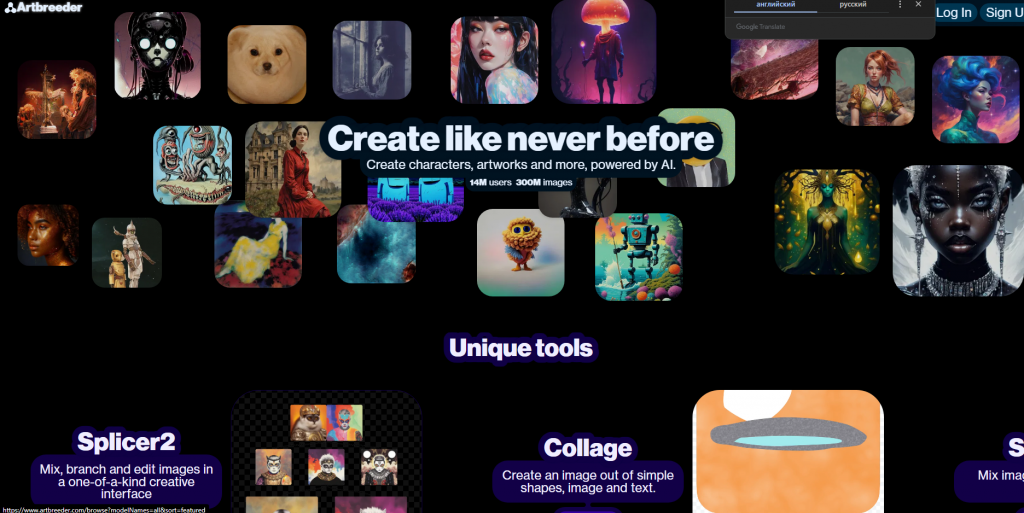
Artbreeder stands as one of the most powerful web-based environments for executing non-linear facial and conceptual image morphing. Utilizing a highly optimized BigGAN and StyleGAN infrastructure, the platform allows users to blend multiple parental images using precise genetic sliders that dictate specific structural weight ratios. This approach enables deep editing and customization capabilities, making it possible to modify localized facial traits like age or expression directly during the morphing trajectory. Because the interface relies on complex multi-variable sliders, new users often face a brief learning curve when trying to secure absolute predictability, though a free registration tier provides immediate access to baseline generation tools.
Visit the official Artbreeder website
FaceApp represents the industrial standard for mobile-first facial modification and high-resolution portrait morphing. The engine uses proprietary deep neural networks that analyze individual facial landmarks to apply realistic age, gender, and structural transitions. Its dedicated morphing tool seamlessly merges two faces while maintaining correct anatomical alignment and consistent lighting matrices across the generated frames. The system delivers exceptionally high-quality output, though its algorithmic focus is strictly limited to human portraits, rendering it unusable for non-human objects or landscapes. Many advanced filters and uncompressed video exports are restricted behind a premium monthly subscription framework.

Visit the official FaceApp website
Runway provides a professional-grade web environment designed for advanced motion synthesis and image-to-image video morphing. By utilizing generative diffusion models, the software allows digital artists to define a starting image and a target asset, autonomously rendering fluid cinematic transitions that bridge the two states. The platform features native frame-rate interpolation, enabling smooth output exports at up to 60 frames per second, which is critical for television and film production pipelines. Accessing these heavy cloud-based computation layers requires a commercial subscription package, making it an investment optimized primarily for production studios and creative agencies.

Visit the official Runway website
Fotor functions as a versatile, consumer-grade online graphic editor that integrates basic AI-powered face morphing tools into a larger design ecosystem. The simplified web interface allows users to instantly blend portraits, apply artistic filters, and correct overall exposure values using automated one-click operations. While the system is highly user-friendly and includes an accessible free tier for quick asset generation, it lacks the underlying deep-learning architecture needed to compute complex structural transformations between images shot from highly divergent angles, often resulting in minor alignment errors if the source photos are not perfectly front-facing.

Visit the official Fotor website
DeepArt utilizes neural style transfer parameters to execute stylistic image morphing, blending the spatial structure of a photograph with the aesthetic textures of classical artwork. The framework treats style as a distinct dataset layer, allowing users to morph a standard portrait into an oil painting or a complex abstract illustration. Because the engine processes global texture patterns across the entire canvas, rendering high-resolution files requires significant cloud processing time, sometimes resulting in prolonged system queues for users on the baseline service tier. It remains an ideal choice for expressive, fine-art exploration rather than literal frame-by-frame anatomical transitions.
Visit the official DeepArt website
Matrix of Technical Specifications for Morphing Engines
To optimize production speed and ensure export compatibility, technical operators must evaluate how different artificial intelligence frameworks distribute computational resources and format final file types. Selecting the appropriate software requires evaluating your workflow volume against localized platform constraints.
| Platform Title | Processing Environment | Primary Output Format | Resolution Limits | Core Architectural Focus |
|---|---|---|---|---|
| Artbreeder | Web Cloud Interface | JPEG, PNG | Standard Web Resolution | Multi-parent GAN vector blending and customization |
| FaceApp | Mobile Application | JPEG, MP4, GIF | High Definition (App Tier) | Anatomical human portrait modification |
| Runway | Web Cloud Dashboard | MP4, ProRes, GIF | Up to 4K Ultra HD | Generative diffusion-based video motion synthesis |
| Fotor Editor | Web Cloud / Mobile App | JPEG, PNG, PDF | Standard Web Resolution | All-in-one consumer photo editing and filters |
| DeepArt | Web Cloud Server Queue | JPEG, PNG | Premium HD Upgrades | Neural style transfer texture processing |
Operational Criteria for Image Infrastructure Selection
Operational success requires matching the specific visual assets of your project with the technical training focus of the underlying neural network. When your primary objective is generating high-fidelity video transitions for multimedia marketing or commercial video production, choosing advanced multi-frame diffusion tools like Runway is necessary to ensure proper time-space consistency. Projects centered strictly around human genealogical research or interactive mobile application design are most efficiently routed through FaceApp due to its specialized face-landmark tracking. For creative asset generation where the objective is exploring completely unique, synthetic faces, Artbreeder provides superior latent vector manipulation.
Furthermore, operators must account for source material constraints. Even advanced generative networks can experience processing failures if input photographs feature poor lighting matrices, compressed low-resolution profiles, or heavily turned profile angles. To avoid these transformation errors, production teams should deploy crisp, front-facing source media captured under neutral studio conditions. Implementing a clear quality-control checklist before initializing cloud rendering sequences ensures that the AI engine maps structural coordinates accurately, reducing visual artifacts and preserving the verifiable realism of your digital output across commercial distribution pipelines.
Systematic rendering depends directly on baseline data clarity; feeding high-resolution source imagery into a latent router prevents the network from synthesizing incorrect anatomical geometry.
Conclusion
Deep learning technologies have successfully democratized the field of dynamic image morphing, transforming a once-laborious animation task into an efficient, algorithmic workflow. By leveraging advanced latent space interpolation, modern platforms allow users to execute highly fluid image transitions while maintaining structural accuracy throughout the generation cycle. Each application features distinct performance boundaries, requiring operators to select tools that match their exact resolution and formatting criteria. Combining automated machine-learning passes with rigorous manual quality control ensures your generated media maintains strong visual authority and precise operational utility.